
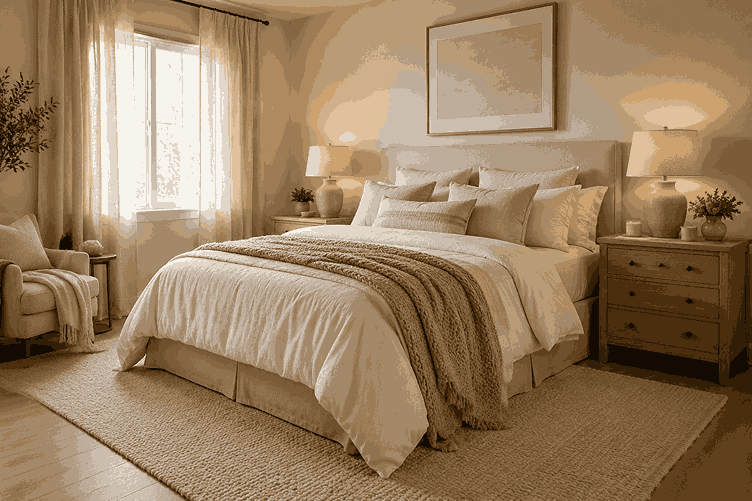
15 Cozy Neutral Bedroom Ideas for a Warm, Relaxing Space
A neutral bedroom should feel calm and comfortable not cold, flat, or unfinished. The difference usually comes down to how you combine color, texture, lighting, and natural materials.
Instead of decorating everything in the exact same shade of beige, build the room in layers. Start with warm whites, creams, oatmeal, taupe, or soft beige, then add tactile fabrics, natural wood, a comfortable rug, and gentle lighting.
These cozy neutral bedroom ideas will help you create a bedroom that feels soft and inviting while keeping the clean, peaceful look that makes neutral interiors so appealing.
What Makes a Neutral Bedroom Feel Cozy?
A cozy neutral bedroom relies less on bold color and more on warm undertones, varied textures, natural materials, soft lighting, and subtle contrast.
Think of the room as several layers rather than one matching color scheme:
- Warm white or cream creates a soft base.
- Beige, oatmeal, taupe, and brown add depth.
- Linen, cotton, knits, and woven materials add texture.
- Wood brings natural warmth.
- Soft lighting makes the palette feel more inviting in the evening.
- A few darker details keep the room from looking washed out.
You don’t need all of these elements in equal amounts. Even a simple bedroom can feel much cozier when two or three of them work together.
If you’re still deciding on the overall look of your space, explore these cozy bedroom ideas for more ways to use soft bedding, warm lighting, layered textures, and comfortable details throughout the room.
1. Start With Warm White, Cream, or Beige
The background color sets the mood for everything else in the bedroom.
If you want a warm neutral look, consider shades such as warm white, ivory, cream, oatmeal, sand, beige, mushroom, or soft taupe. These colors give you a quiet foundation without requiring the whole room to look identical.
Pay attention to undertones, especially with whites and grays. A very cool white beside cool gray furniture can make a bedroom feel sharper than intended.
Before committing to a wall color, look at the sample in both daylight and evening light. The same neutral can appear noticeably different as the light changes.
If painting isn’t an option, you can still warm up plain walls with bedding, curtains, artwork, rugs, and wooden furniture.

2. Layer Different Neutral Shades
One of the easiest mistakes to make is choosing one beige shade and repeating it everywhere.
Instead, create gentle tonal variation.
For example, combine:
- warm white walls
- ivory bedding
- oatmeal pillows
- a beige throw
- a taupe rug
- medium or light wood furniture
The colors remain quiet and cohesive, but the slight differences stop the room from looking flat.
A useful rule is to choose a light base, a medium neutral, and one slightly deeper grounding tone. You can repeat those shades around the room rather than trying to make every item match exactly.
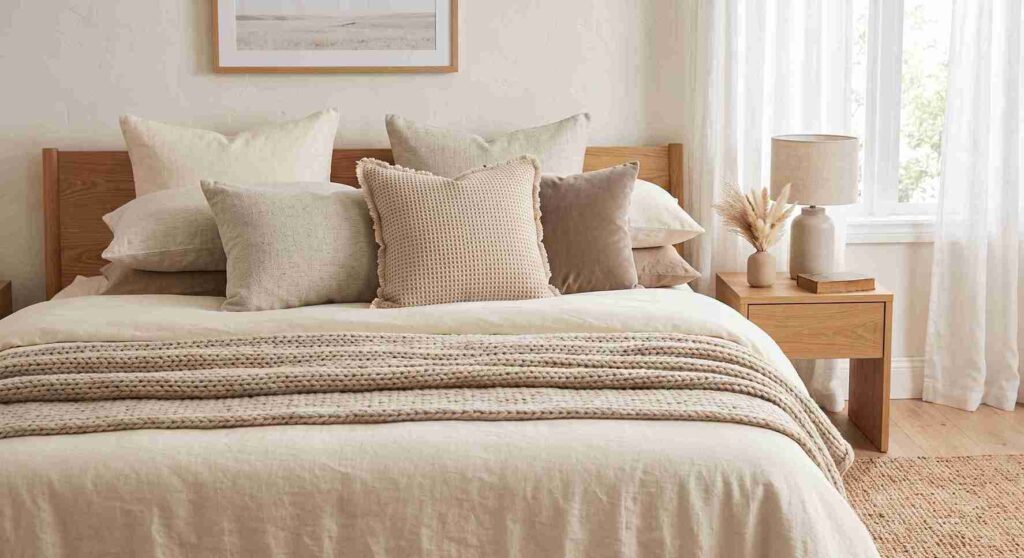
3. Make the Bed the Cozy Focal Point
The bed is usually the largest visual element in a bedroom, so start your cozy styling there.
You don’t need a mountain of pillows and blankets. A simpler combination can look just as inviting:
- Start with comfortable sheets.
- Add a duvet or comforter in cream, warm white, beige, or another soft neutral.
- Fold one textured throw or lightweight blanket near the foot of the bed.
- Add a small number of pillows in slightly different tones or fabrics.
For example, smooth cotton sheets can sit beside a linen duvet and a woven or knit throw.
The colors stay restrained while the different surfaces create visual interest.
For a small bedroom, keep the number of decorative pillows under control. Too many layers can make the bed and therefore the entire room feel crowded.

4. Use Texture Instead of Adding More Color
When a neutral bedroom looks boring, the first instinct is often to add more colors.
Try adding texture first.
A room containing cream linen, smooth cotton, natural wood, a woven basket, an upholstered headboard, and a textured rug can have plenty of depth even if almost everything stays within a narrow neutral palette.
Easy places to introduce texture include:
- bedding
- throw blankets
- pillow covers
- curtains
- rugs
- upholstered furniture
- baskets
- lampshades
- wall art
You don’t need every texture at once. A few noticeably different materials are usually enough to keep the room interesting.

5. Bring in Natural Wood
Wood works especially well in neutral bedrooms because it adds warmth without introducing a loud new color.
Depending on the style you want, you could use wood through:
- a bed frame
- nightstands
- a small bench
- a dresser
- picture frames
- floating shelves
- a stool or side table
Light wood can create an airy, organic look, while walnut and other deeper wood tones add stronger contrast.
If the room currently feels too pale, one medium or dark wood element can help anchor it without taking away from the neutral aesthetic.
You also don’t need a matching furniture set. Repeating a similar wood tone in two or three places can be enough to make the room feel connected.
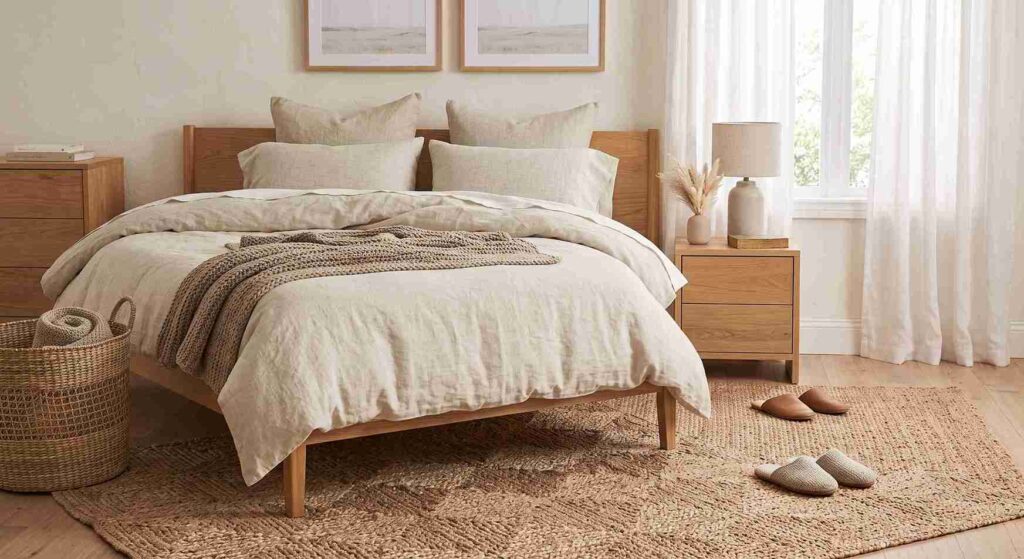
6. Ground the Bed With a Soft Rug
A rug can make a bedroom feel visually and physically softer, particularly if you have hard flooring.
Neutral rugs don’t have to be plain. Look for interest through weave, pile, subtle pattern, or small variations in tone.
Cream, oatmeal, beige, taupe, and natural-fiber looks can all work with a cozy neutral palette.
The rug should relate to the size of the bed and room rather than appearing like a tiny isolated mat. In a small bedroom, however, don’t choose an oversized heavy-looking rug simply because bigger is considered more luxurious. The goal is balance.
If the room already contains several strong textures, choose a simpler rug. If the rest of the bedroom is very smooth and minimal, the rug can carry more of the texture.

7. Use Soft, Layered Bedroom Lighting
A beautifully decorated neutral bedroom can still feel cold under harsh lighting.
Instead of depending only on one bright ceiling fixture, use smaller light sources where practical.
A simple setup might include:
- a main ceiling light for general illumination
- bedside lamps for evening light
- a reading light or wall sconce where needed
- daylight through curtains during the day
Warm-toned light generally complements cream, beige, wood, and other warm neutrals more naturally than very cool, blue-looking light.
Lampshades can also contribute to the room’s texture. Linen, fabric, ceramic, and other understated finishes fit easily into a neutral scheme.
The aim isn’t to make the bedroom dark. It’s to give yourself control over the mood instead of having only “bright overhead light” or “no light.”

8. Keep Wall Decor Calm but Personal
Neutral doesn’t have to mean empty walls.
The key is choosing wall decor that adds personality without creating unnecessary visual noise.
Ideas include:
- one larger artwork above the bed
- muted abstract prints
- botanical sketches
- simple line art
- a mirror
- a small coordinated gallery arrangement
- a textured wall hanging
The best wall decor should complement the room rather than compete with it. If your walls still feel unfinished, browse these wall decor ideas for more inspiration, from simple artwork and mirrors to balanced gallery-style arrangements.
Frames in wood, black, bronze, cream, or other quiet finishes can introduce subtle contrast.
Before filling every empty section of wall, consider whether the room actually needs it. One appropriately scaled piece often looks more intentional than several small unrelated decorations.

9. Add Natural and Woven Materials
Natural materials can soften a neutral bedroom and prevent it from feeling overly polished.
Try incorporating one or two elements such as:
- woven storage baskets
- linen curtains
- cotton bedding
- ceramic accessories
- a wooden tray
- rattan details
- natural-looking rugs
These materials work particularly well because their imperfections and visible texture add character to a simple palette.
Use them selectively. A neutral bedroom doesn’t need to become completely rustic or bohemian unless that’s the style you’re aiming for.
If you love natural wood, woven textures, relaxed fabrics, and earthy details, you can take the look in a slightly more eclectic direction with this boho bedroom inspiration while still keeping the overall space soft and calming.

10. Add Contrast Without Losing the Neutral Look
A cozy neutral room doesn’t need to be pale from floor to ceiling.
A little contrast can make the lighter colors look more intentional.
Try details such as:
- a walnut nightstand beside cream bedding
- dark picture frames against a warm white wall
- a chocolate-brown throw
- a black or bronze lamp
- a deeper taupe accent pillow
- darker wood at the foot of the bed
The contrast doesn’t need to dominate the room.
Think of it as punctuation: a few deeper details give the eye somewhere to rest and keep the overall palette from becoming washed out.

11. Choose Curtains That Add Softness
Windows are an easy place to add another layer of fabric.
Neutral curtains in linen-look, cotton, cream, oatmeal, or beige can soften hard window edges and help the room feel more finished.
If privacy and light control are important, consider combining a lighter curtain with an appropriate blind or other window treatment rather than expecting one decorative panel to do everything.
Curtains also provide another opportunity to adjust the balance of the room. If your walls and bedding are very light, slightly deeper beige curtains can add definition. If the room already has plenty of contrast, softer cream curtains may keep it airy.
12. Create a Cozy Neutral Bedroom in a Small Space
Small bedrooms benefit from the calmness of a neutral palette, but they can become cluttered quickly.
Focus on a few high-impact elements:
- a light, warm neutral foundation
- comfortable but controlled bedding layers
- one useful bedside surface
- warm lighting
- storage that keeps everyday clutter contained
- a rug or curtains for softness
- one intentional wall feature
Avoid filling every corner simply because you saw a decorative item you liked.
In a small bedroom, empty space is part of the design.
Choose pieces that either serve a purpose or noticeably improve the room. A basket that stores extra blankets, for example, may be more useful than several purely decorative objects occupying the same floor space.
If your bedroom is part of a smaller home or apartment, carry the same warm and uncluttered feeling into the rest of your space with these cozy apartment decor ideas.
13. Make a Rental Bedroom Feel Warmer Without Painting
You don’t need to repaint the walls to create a cozy neutral bedroom.
If you’re working with plain white or cool-toned rental walls, bring warmth closer to eye level through furnishings.
Try:
- cream or beige bedding
- warm wood furniture
- neutral curtains
- a soft rug
- warm bedside lighting
- removable decor where permitted
- framed artwork
- woven accessories
The advantage of this approach is that most of the visual warmth comes from items you can take with you later.
Instead of fighting the existing wall color, create enough warmth around it that the wall becomes a background rather than the defining feature of the room.
14. Create a Cozy Neutral Bedroom on a Budget
A full bedroom makeover isn’t necessary if the main problem is that the space feels unfinished or cold.
Start with the changes that will have the greatest visual impact.
If your bed looks flat:
Change the throw or pillow covers before replacing the entire bedding set.
If the room feels harsh:
Review the lighting before buying more decor.
If everything looks too pale:
Add one warm wood or deeper brown element.
If the floor makes the room feel empty:
Consider whether a rug would add the softness that’s missing.
If the room feels cluttered:
Remove and rearrange before purchasing anything new.
You can also move useful pieces between rooms. A lamp, small table, framed print, basket, or throw that’s being overlooked elsewhere in your home may work perfectly in the bedroom.
A good neutral bedroom depends more on cohesion than on having expensive matching furniture.
15. Keep the Final Styling Simple
Once the main pieces are working together, resist the urge to decorate every surface.
A nightstand might only need a lamp and one small personal or decorative item.
A dresser could hold a mirror or artwork plus one grouped arrangement rather than a collection of unrelated objects.
The bed itself can provide most of the softness and texture, which means the rest of the room doesn’t have to work as hard.
This is especially helpful in neutral interiors. Because the palette is quiet, every object becomes more noticeable.
A smaller number of well-placed items usually creates a calmer result.
Why Does My Neutral Bedroom Still Feel Cold?
If you’ve chosen neutral colors but the room still doesn’t feel cozy, the problem may not be the color palette itself.
Use this quick check:
| If the room feels… | Possible reason | Try this |
|---|---|---|
| Cold | Too many cool whites or grays | Add cream, beige, warm wood, or warmer textiles |
| Flat | Everything has the same finish | Mix smooth, woven, linen, knit, wood, and other textures |
| Washed out | No visual contrast | Add a deeper wood, brown, taupe, bronze, or black detail |
| Harsh at night | Lighting is too strong or cool | Use softer, layered evening lighting |
| Empty | Large surfaces have no anchor | Consider a rug, curtains, artwork, or a stronger headboard |
| Cluttered | Too many small accessories | Remove some pieces and create fewer, stronger arrangements |
| Too beige | Similar colors dominate everything | Introduce tonal variation and material contrast |
Before buying anything, identify which problem best describes your bedroom.
Sometimes changing one element such as the lighting or bedding texture does more than adding five new decorative accessories.
A Simple Cozy Neutral Bedroom Formula
If you’re starting from scratch and aren’t sure how to combine everything, use this as a flexible formula:
Base: warm white, cream, beige, or soft taupe
Bed: two or three closely related neutral shades with varied textures
Furniture: at least one warm wood or grounding element
Floor: a soft or textured rug where appropriate
Lighting: gentle bedside lighting plus practical general lighting
Walls: one intentional artwork, mirror, or small coordinated arrangement
Finishing details: a few ceramics, woven elements, books, greenery, or personal objects
You don’t need to follow the formula perfectly. Its purpose is to make sure the room has enough variation to feel warm without losing the peaceful neutral aesthetic.
A neutral palette is only one direction you can take your space. If you want to compare different colors, aesthetics, layouts, and decorating styles before choosing a look, explore more bedroom ideas for inspiration.
Final Thoughts
The best cozy neutral bedroom ideas aren’t about turning every surface beige. They’re about creating warmth within a restrained palette.
Start with warm neutrals, then build depth through bedding, texture, wood, rugs, curtains, lighting, and a small amount of contrast. If the bedroom is small or you’re working with a rental, focus on changes that add warmth without adding clutter.
Most importantly, work with the room you already have. A few thoughtful changes can often make a bigger difference than replacing everything at once.
A cozy neutral bedroom should still feel personal. Keep the calm palette, but choose the textures, artwork, furniture, and details that make the space feel comfortable to you.
Frequently Asked Questions
What colors are best for a cozy neutral bedroom?
Warm white, ivory, cream, oatmeal, beige, taupe, mushroom, soft brown, and warm gray can all work. Instead of choosing only one color, combine several related neutrals so the room has depth.
How do I make a beige bedroom look less boring?
Add variation through texture and tone. Linen bedding, woven fabrics, a textured rug, wood furniture, ceramics, and a slightly darker accent can create interest without introducing bright colors.
How can I make a neutral bedroom feel warmer?
Look at the room’s undertones, materials, and lighting. Warm wood, cream textiles, layered fabrics, rugs, curtains, and softer evening lighting can all make a neutral palette feel more inviting.
Can a small bedroom use neutral colors?
Yes. Neutral colors work particularly well in small bedrooms when paired with good storage and controlled decor. Keep the foundation relatively light, add warmth through texture, and avoid overcrowding the room with decorative pieces.
Do all the neutral colors in a bedroom need to match?
No. Slight differences are often what make the room interesting. Cream, beige, oatmeal, taupe, and warm brown can work together as long as the overall palette feels intentional.
How do I decorate a neutral bedroom without buying everything new?
Start by rearranging what you own. Then identify the biggest weakness such as lighting, bedding, texture, contrast, or clutter. Update that area first rather than replacing the entire room.