15 Fun & Safe Gymnastic at Home Ideas for Kids (Without Trashing Your Living Room)
If your child treats the sofa like a balance beam and the hallway rug like an Olympic runway, you’re definitely not alone.
Kids who fall in love with gymnastics want to flip, roll, and stretch literally everywhere. But as parents, our hearts stop every time they attempt a backbend inches away from the coffee table corner.
You don’t need an expensive commercial setup or a giant barn to make home practice work. With a few thoughtful gymnastic at home ideas, a bit of soft padding, and clear safety rules, you can create a safe, engaging practice zone right in your living room, basement, or backyard.
Why Practicing Gymnastics at Home Matters (And Where to Start)
Let’s be honest for a second. An hour of recreational gymnastics class once a week is great, but muscle memory builds when kids repeat the basics throughout the week.
Practicing at home helps young gymnasts:
- Build core strength and balance without feeling like it’s a chore
- Gain confidence on basic skills like cartwheels and handstands
- Burn off that endless evening energy on rainy days
And no, you don’t have to remodel your entire house. Integrating a play zone fits right alongside practical home ideas that keep your living space neat and functional.
Setting Up a Safe Home Gymnastics Space
Safety comes first—always. Before attempting any tricks, make sure your practice space is properly prepped.
Clear the Hazard Zone
Push back the coffee tables, tuck away floor lamps, and keep clear of sharp furniture corners. If your training area doubles as a shared family living space even one styled with quiet personal touches like catholic home decor or framed family photos make sure wall frames and breakables are safely out of reach of swinging feet.
Choose the Right Floor Surface
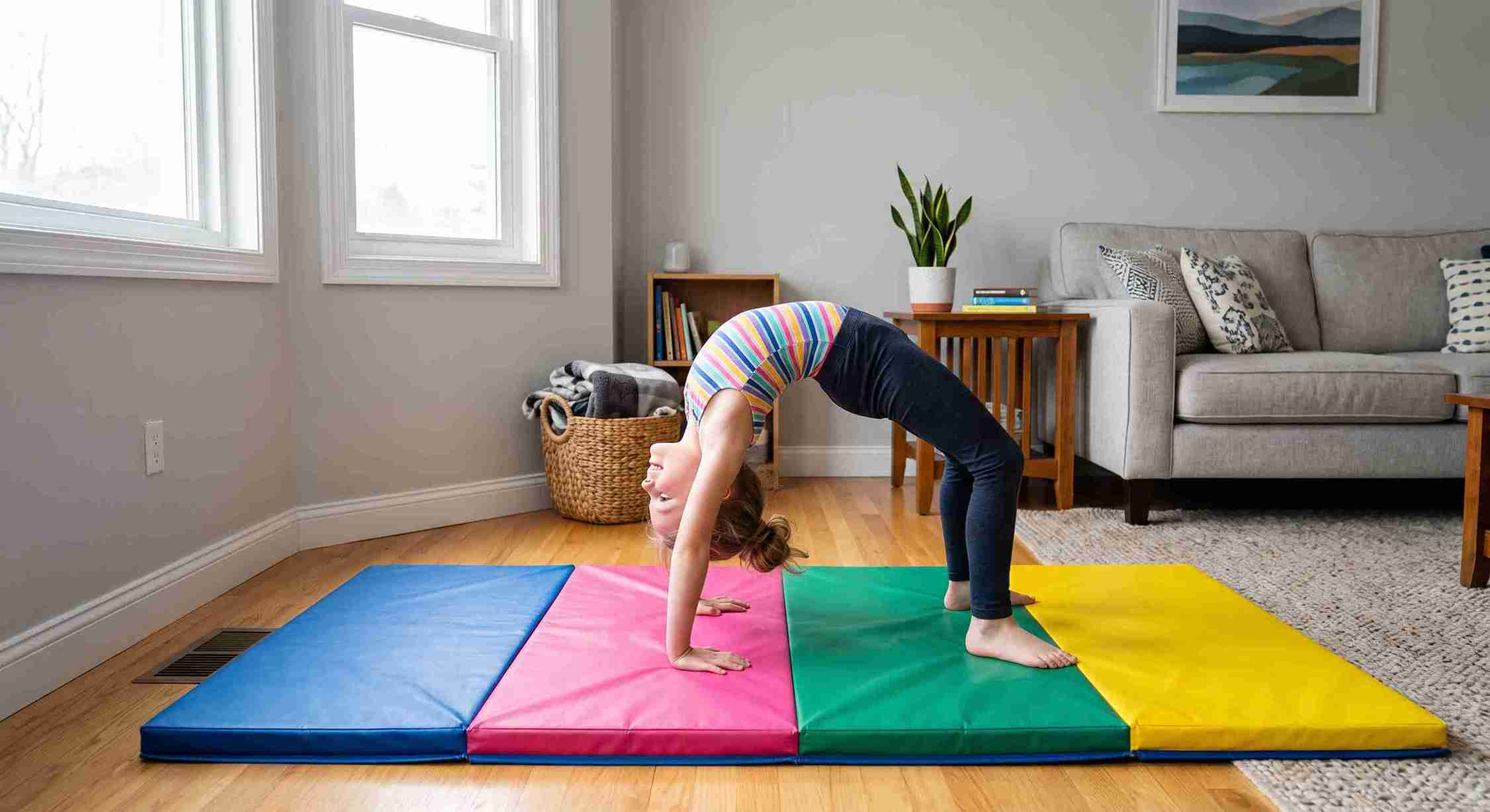
Hardwood and tile are tough on little wrists and heels. Stick to carpeted rooms or lay down high-density foam tiles. A standard yoga mat is okay for basic stretches, but it’s too thin for landings and rolls.
Essential Beginner Gear vs. Budget DIY Alternatives
You don’t have to drop hundreds of dollars on day one. Start small, and upgrade gear as your child progresses.
| Equipment Type | Commercial Option | Cheap / DIY Alternative | Best For… |
| Landing Surface | 2-inch folding panel mat | Layered yoga mats + thick wool rug | Rolls, bridges, safe landings |
| Balance Beam | Floor balance beam (foam/wood) | Painter’s tape on carpet / 2×4 wood board | Walking drills, arabesques, pivot turns |
| Inversion Support | Air barrel / Octagon block | Stacked firm sofa cushions | Back handspring prep, bridges |
| Strength & Grip | Doorway pull-up bar | Low sturdy tree branch outside | Grip endurance, hollow body hangs |
| Target Markers | Spotting dots / Vinyl markers | Washable chalk (outside) / Painter’s tape | Foot placement during cartwheels |
5 Safe Floor Skill Ideas for Living Rooms
Floor drills build fundamental body control and require very little equipment.
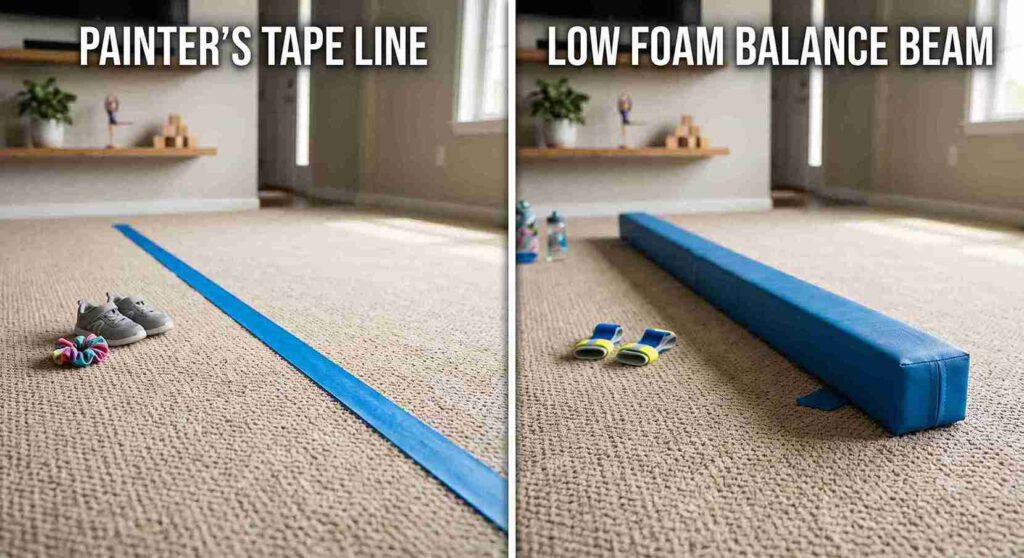
1. The Painter’s Tape Balance Beam
Tear off a straight 8-foot strip of blue painter’s tape and stick it directly to your carpet or rug.
- Have your child practice heel-to-toe walking, backward walks, and high-knee steps.
- Challenge them to freeze on one foot in an arabesque for 5 seconds without stepping off the tape.
- It costs almost nothing, but it trains foot precision remarkably well.
2. Forward and Backward Roll Progression
Never let beginners roll on bare floors. Use a foldable mat or a firm mattress topper.
- Forward Roll: Remind them to tuck their chin deeply to their chest—the back of the head should touch the mat, never the top of the crown.
- Backward Roll: Start on a slight incline (prop the mat up with a folded blanket underneath) to make pushing off easier on their neck.
3. Hollow Body and Arch Holds
These look simple, but they are tough.
- Have your child lie flat on their back, pressing their lower spine into the floor, and lift their shoulders and feet a few inches off the ground.
- Hold for 10 to 15 seconds, then flip over into “superman” (arch hold).
- Core strength here makes every future gymnastics skill ten times easier.
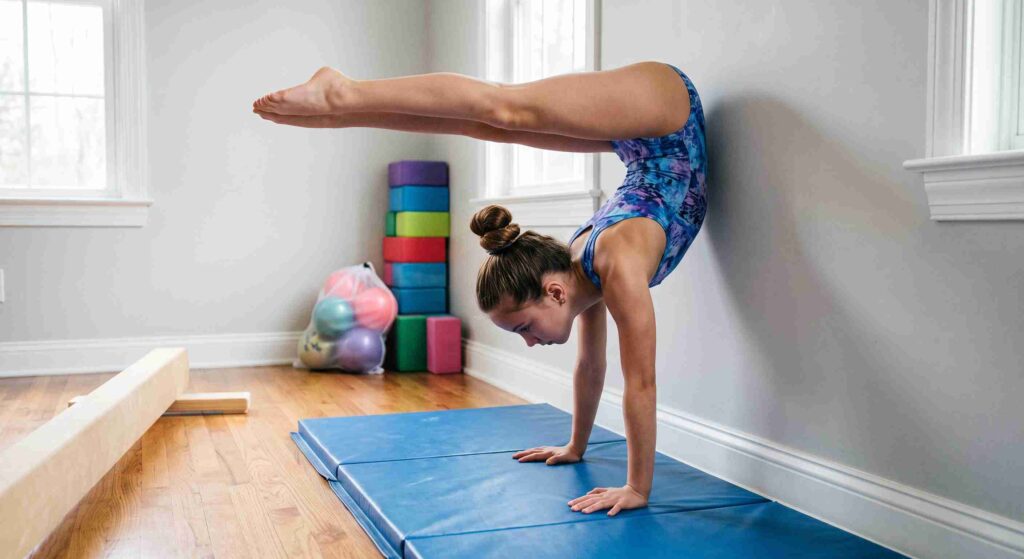
4. Wall-Supported Handstands (Stomach to Wall)
Most kids kick up with their back to the wall, which forces a sloppy banana shape.
- Instead, have them place hands on the mat and “walk” their feet backward up the wall until their belly faces it.
- This naturally forces flat hips, tight glutes, and straight shoulders.
5. Candlestick to Stand-Up
Lie back, shoot straight legs straight toward the ceiling supporting weight on the upper back, then roll forward cleanly onto feet without using hands to push off the floor. Great for leg drive and agility.
Fun Conditioning Games (Sneaking in the Workout)
Drills get boring fast when kids feel like they’re just doing drills. Turn conditioning into a game:
- The Animal Walk Circuit: Bear crawls for shoulder stability, frog hops for explosive leg power, and crab walks for triceps and shoulder extension.
- The Stuffed Animal Pass: Lie down in a hollow position holding a teddy bear between ankles. Crunch up, grab the toy with hands, reach overhead, tap the floor, and reverse.
- Freeze Dance Balance: Put on music. When it stops, they must freeze instantly on one foot in a gymnastics pose (relevé, scale, or passée).
3 Low-Risk Outdoor Gymnastics Ideas
When the weather is clear, take practice out to the grass:
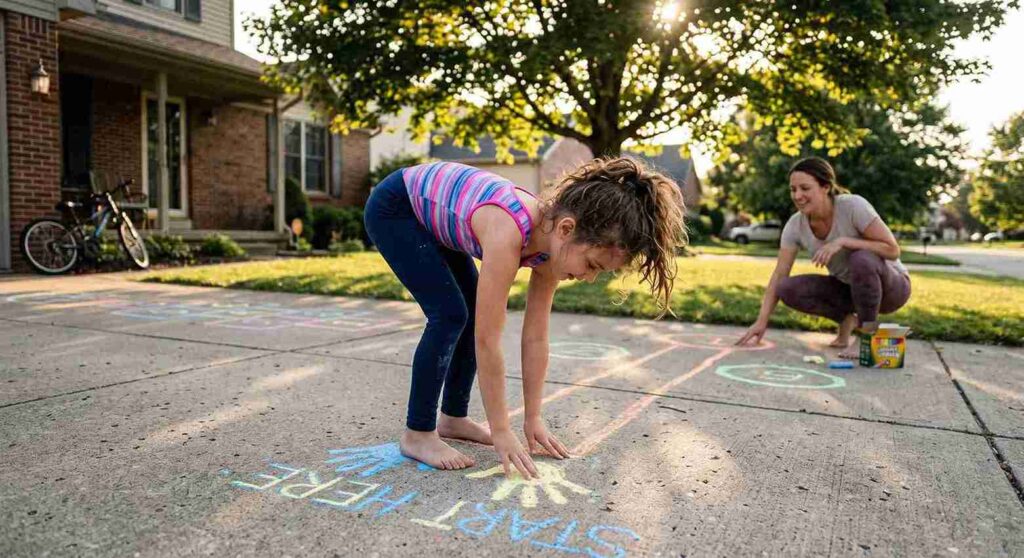
- Chalk Cartwheel Tracks: Draw hands and feet outlines on the driveway with sidewalk chalk to teach proper hand placement and hip turn.
- Sprint & Freeze Drills: Practice explosive running starts onto grass mats to mimic vault approaches.
- Slackline Balance Practice: String a low slackline 6 inches above soft grass to build ankle strength and core stability.
Important Rules: What NEVER to Try at Home
Home practice should reinforce skills learned in class, not experiment with dangerous high-level acrobatics. Keep these boundaries non-negotiable:
- No Flips Without Spotters: Back tucks, layouts, and front flips belong on spring floors under professional coach supervision.
- No Unpadded High Drops: Never let kids jump off bunk beds or counters onto random pillows—pillows shift, and ankles roll.
- Respect Fatigue: Most home injuries happen when kids are tired and sloppy. Cap home practice sessions at 20 to 30 minutes.
Frequently Asked Questions
What equipment is best for beginner gymnastics at home?
A 2-inch folding tumbling mat and a low foam floor balance beam are the two best investments. They store easily and provide adequate cushion for rolls, jumps, and handstand practice.
Can kids learn gymnastics safely at home?
Yes, as long as they focus on conditioning, flexibility, and basic foundation drills (like bridge holds, balance walks, and tight-body positions) rather than unspotted aerial flips.
How do I protect my furniture during home gymnastics practice?
Keep a designated 6×8 foot clear perimeter. Use folding mats that fold away behind doors or under beds when practice is over, and anchor unstable floor furniture to walls.