There’s something about getting your hands in the dirt that just feels right. Whether you’ve got a sprawling backyard in the suburbs or a tiny strip of soil outside a city apartment, gardening has this way of pulling you in — and once you start, it’s hard to stop.
But here’s the thing: a lot of people get stuck at the beginning. They want a beautiful, functional outdoor space but don’t know where to start or feel overwhelmed by all the choices. This guide breaks it down into real, doable garden ideas — from simple weekend projects to bigger seasonal overhauls — so you can actually get moving.
Start With What You Have
Before buying anything, take a hard look at your space. Is it mostly shaded, or does it get full sun most of the day? Is your soil hard and clay-heavy, or does it drain well after rain? These two things — light and soil — will shape every decision you make.
A lot of first-time gardeners skip this step and end up planting sun-loving tomatoes in deep shade, then wonder why nothing grows. Spend a few days just observing your yard before you dig anything up.
Once you know what you’re working with, you can start matching plants to conditions instead of forcing conditions to match plants. It’s a much easier way to garden.
Raised Bed Garden Ideas
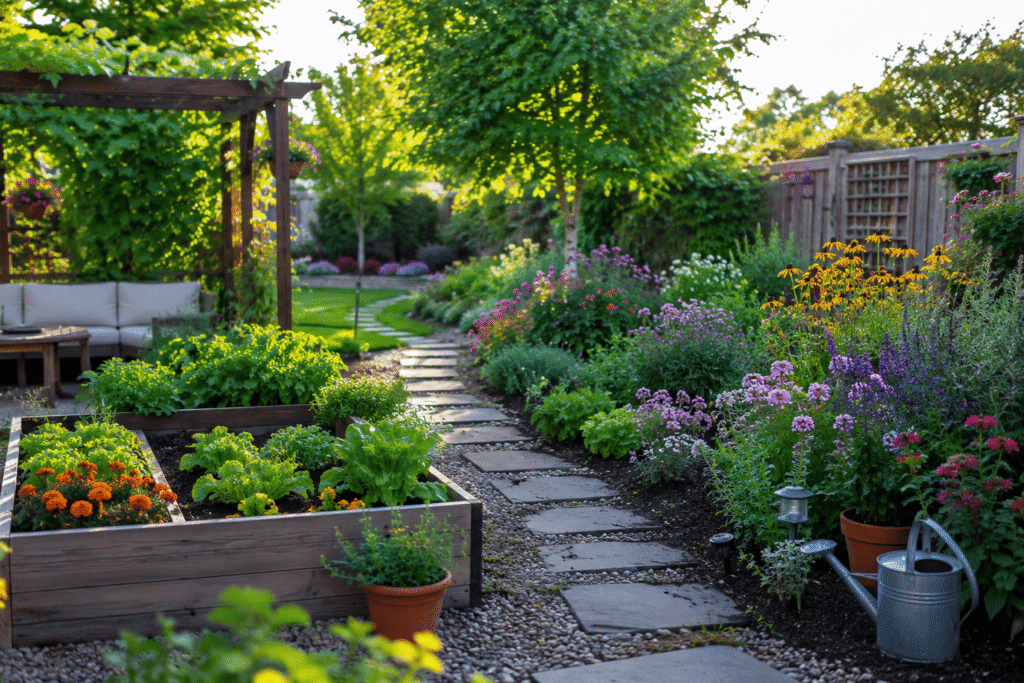
Raised beds have taken over American backyards for a reason — they work. You control the soil quality, drainage is better, and they’re genuinely easier on your knees and back. They also look clean and intentional, even in a fairly casual yard.
Basic raised bed setup:
- Use untreated cedar or redwood (they resist rot naturally)
- Fill with a mix of topsoil, compost, and a bit of perlite for drainage
- Aim for beds no wider than 4 feet so you can reach the center without stepping in
- Position them where they’ll get at least 6 hours of sun daily
You don’t have to spend a fortune either. A simple 4×8 foot bed can hold everything from herbs and lettuce to squash and peppers. Some people build multiple smaller beds with paths in between — it makes the whole garden feel more organized and is a lot more practical for harvesting.
If you’re in a tight space, try tiered raised beds or L-shaped designs along a fence line. Both maximize planting area without taking over the whole yard.
Backyard Vegetable Garden Ideas
Growing your own food is one of those things that sounds like a lot of work but pays off in ways that aren’t just practical. There’s real satisfaction in eating a tomato you grew from seed.
For beginners, start small. Seriously — a 4×4 bed of easy vegetables will teach you more than a massive plot that becomes impossible to manage.
Best beginner vegetables for most U.S. climates:
| Vegetable | Difficulty | Sun Needed | Days to Harvest |
|---|---|---|---|
| Zucchini | Easy | Full sun | 50–60 days |
| Cherry tomatoes | Easy | Full sun | 60–70 days |
| Lettuce | Easy | Partial shade OK | 30–45 days |
| Green beans | Easy | Full sun | 50–60 days |
| Cucumbers | Moderate | Full sun | 55–65 days |
| Bell peppers | Moderate | Full sun | 70–85 days |
Succession planting is a trick worth learning early. Instead of planting all your lettuce at once, plant a few seeds every two weeks. That way you’re not drowning in greens one week and out of them the next.
Flower Garden Ideas for Color All Season
A vegetable garden feeds you. A flower garden feeds your soul — and your pollinators. The goal with flower gardening is to have something blooming from early spring through late fall, which takes a bit of planning but is totally achievable.
Spring bloomers: tulips, daffodils, hyacinths (plant bulbs in fall)
Early summer: peonies, salvia, foxglove
Mid to late summer: black-eyed Susans, coneflowers, zinnias, dahlias
Fall: asters, sedum, ornamental grasses
Mixing annuals and perennials is the smart play. Perennials come back every year and form the backbone of your garden. Annuals fill in the gaps and give you big color through the season without a long-term commitment.
Don’t overlook native plants. Native wildflowers and shrubs are adapted to your local climate, need less water once established, and attract native pollinators like bees and butterflies that really make a garden feel alive. Black-eyed Susans, coneflowers, and bee balm are great examples for much of the country.
Small Yard and Patio Garden Ideas
Not everyone has a big yard, and that’s honestly fine. Some of the most creative gardens happen in tight spaces.
Container gardening is the obvious move for patios and small balconies. You can grow almost anything in a pot — tomatoes, herbs, strawberries, even dwarf citrus trees in warmer climates. The keys are using a large enough container, keeping up with watering (containers dry out fast), and feeding plants regularly since nutrients flush out with watering.
Vertical gardens open up wall space you weren’t using. A simple trellis against a fence can support climbing cucumbers, beans, or flowering vines like morning glory. Wall-mounted pocket planters work well for herbs and succulents.
A few other small-space ideas worth trying:
- Hanging baskets for trailing plants like sweet potato vine or nasturtiums
- A small herb spiral near the kitchen door (looks great, incredibly useful)
- Window boxes for curb appeal and quick color
- A single statement planter with a small tree or ornamental grass as a focal point
Low-Maintenance Garden Ideas
Look, not everyone wants to spend every weekend in the garden. Some people want it to look good with minimal fuss. That’s completely valid, and it’s more achievable than you’d think.
- Choose the right plants. Native plants and drought-tolerant varieties like lavender, ornamental grasses, sedum, and yarrow look great without much babying.
- Mulch generously. A 2–3 inch layer of mulch around plants holds moisture, suppresses weeds, and slowly improves soil. It’s one of the highest-return things you can do.
- Install drip irrigation. A basic drip system connected to a timer is genuinely life-changing. Plants get consistent moisture, you spend less time watering, and water goes where it’s actually needed.
- Group plants by water needs. Put thirsty plants together and drought-tolerant ones together. Makes watering way more efficient.
- Let some things go wild. A small meadow section with native grasses and wildflowers can be deliberately low-maintenance and looks beautiful in an informal, natural way.
Backyard Garden Design Tips
Design doesn’t have to mean hiring a landscape architect. It just means thinking about your space intentionally before you start digging.
A few things that make a real difference:
- Create clear paths. Even stepping stones or a simple gravel path makes a garden feel intentional and makes it easier to move around without compacting the soil in planting beds.
- Layer plants by height. Put tall plants at the back of beds, medium in the middle, low growers at the front. It sounds basic but it’s why some gardens look polished and others look chaotic.
- Add a focal point. A birdbath, a garden bench, a large planter, or even a specimen plant gives the eye somewhere to land. Without one, gardens can feel scattered.
- Repeat colors or plant types. Repeating the same plant or color in a few different spots creates visual rhythm and makes the space feel cohesive.
FAQ: Garden Ideas
What are the easiest garden ideas for beginners?
Start with a small raised bed filled with a mix of vegetables like lettuce, zucchini, and cherry tomatoes. They’re forgiving, grow fast, and give you early wins that build confidence.
How do I start a garden with no experience?
Pick a small area, test your soil, amend it with compost, and choose easy plants suited to your climate and sun conditions. Starting small is genuinely better than going big too fast.
What can I grow in a shaded garden?
Shade gardens aren’t a lost cause. Hostas, ferns, astilbe, impatiens, and many herbs like mint and parsley all do well in partial to full shade. Lettuce and spinach actually prefer some shade in hot climates.
How do I make my garden look nice on a tight budget?
Grow plants from seed instead of buying starts, divide perennials you or neighbors already have, use mulch from a local tree service (sometimes free), and shop end-of-season sales for bulbs and perennials at steep discounts.
What’s the best time to start a garden in the U.S.?
It depends on your USDA hardiness zone, but for most of the country, spring is when the action starts. Cool-season crops like lettuce can go in early spring; warm-season crops like tomatoes and peppers go in after your last frost date.
Wrapping Up
Gardening doesn’t have to be complicated or expensive. Start with one corner of your yard, one raised bed, or even one big container on your porch. See how it goes. Most people find that the first small success is enough to get hooked.
The best garden is the one you actually do — not the perfect one you’ve been planning in your head for three years. Pick an idea from this list, grab a shovel, and go for it.
Leave a Comment