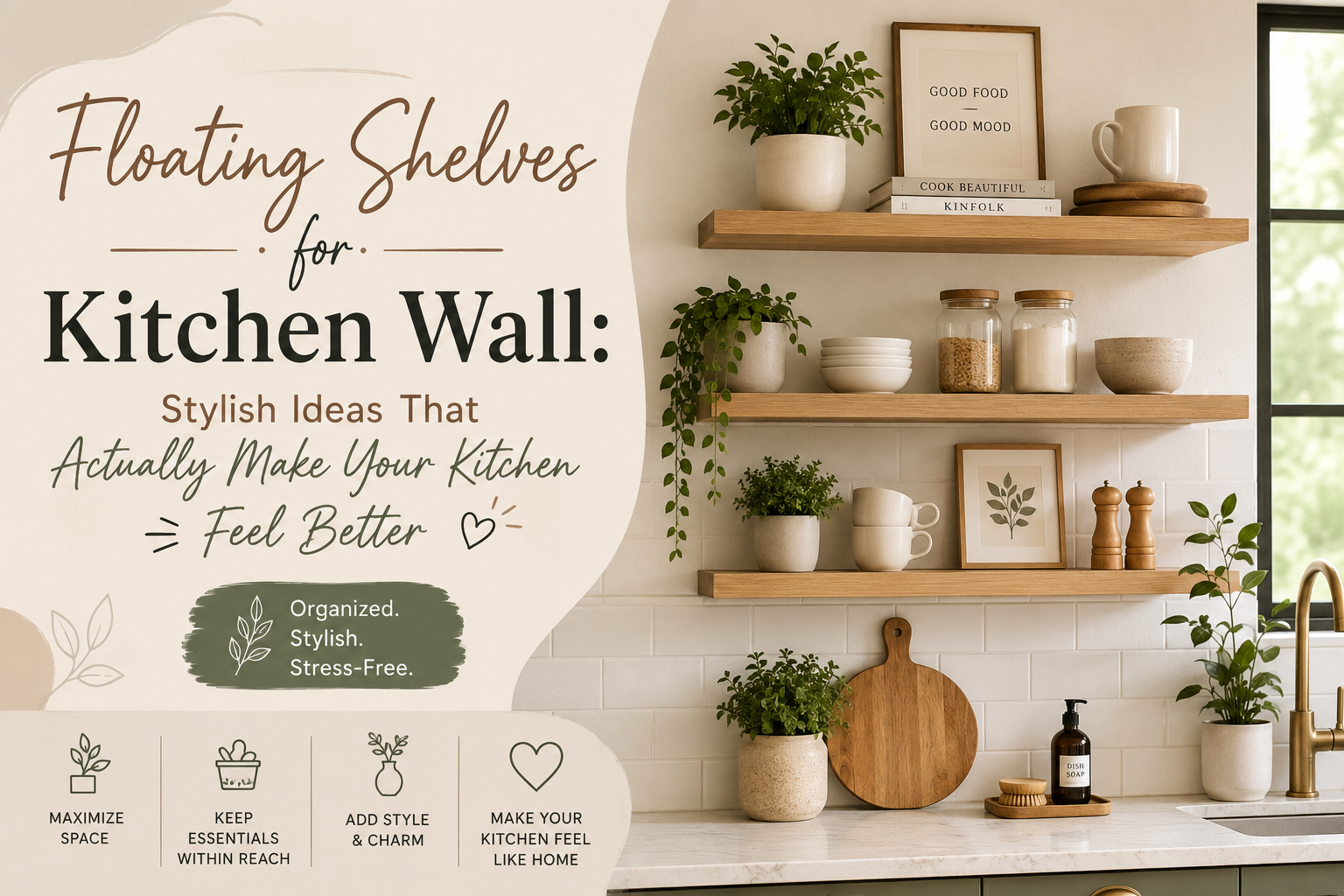
Floating Shelves for Kitchen Wall: Stylish Ideas That Actually Make Your Kitchen Feel Better
There’s something about a kitchen with floating shelves that just feels… lighter. More open. Less boxed in.
Maybe it’s because bulky cabinets can sometimes make a kitchen feel heavy, especially in smaller homes. Or maybe floating shelves simply make everyday things, like plates, mugs, jars, and plants, look more personal and lived-in. Not overly designed. Just real.
And honestly, that’s why so many homeowners are switching to floating shelves for kitchen wall setups lately. They’re practical, yes. But they also make a kitchen feel warm in a way traditional upper cabinets sometimes don’t.
Design websites like Houzz and HGTV continue showing floating shelves as one of the most popular kitchen design choices because they blend storage and style together naturally.
But… there’s a right way to do them.
Badly placed shelves can look cluttered fast. Wrong materials can sag. And shelves overloaded with random kitchen stuff? Yeah. That ruins the whole clean aesthetic people want in the first place.
So let’s talk about it properly.
Why Floating Shelves Work So Well in Kitchens
Floating shelves aren’t just trendy Pinterest decor anymore. They actually solve real kitchen problems.
Especially if your kitchen feels cramped.
Here’s why people love them:
- They make small kitchens feel bigger.
- Everyday items stay easy to grab
- Open shelving creates visual depth.
- They cost less than full upper cabinetry.
- You can style them based on your personality.
- They work with almost every kitchen style
However, if you have designed your kitchen with a blend of farmhouse and modern styles, you can certainly use floating shelves.
Moreover, in accordance with the prevailing trend in the field of kitchen design, open shelves are preferable to upper cabinets, as the latter can create a cramped atmosphere in the kitchen.
Best Materials for Floating Shelves in Kitchen Walls
Not all shelves are equal. This part matters more than people think.
Kitchens deal with:
- Heat
- Steam
- Moisture
- Heavy dishes
- Grease
Cheap materials usually don’t survive long.
Here’s a simple breakdown:
| Material | Best For | Pros | Cons |
|---|---|---|---|
| Solid Wood | Warm modern kitchens | Durable, timeless | More expensive |
| Reclaimed Wood | Farmhouse style | Rustic character | Can feel heavy visually |
| MDF | Budget kitchens | Affordable | Less moisture-resistant |
| Metal | Industrial kitchens | Strong and modern | Can feel cold |
| Glass | Small kitchens | Makes space feel airy | Needs frequent cleaning |
Interior experts from Real Simple recommend solid wood for kitchens because it handles daily wear better than lighter materials.
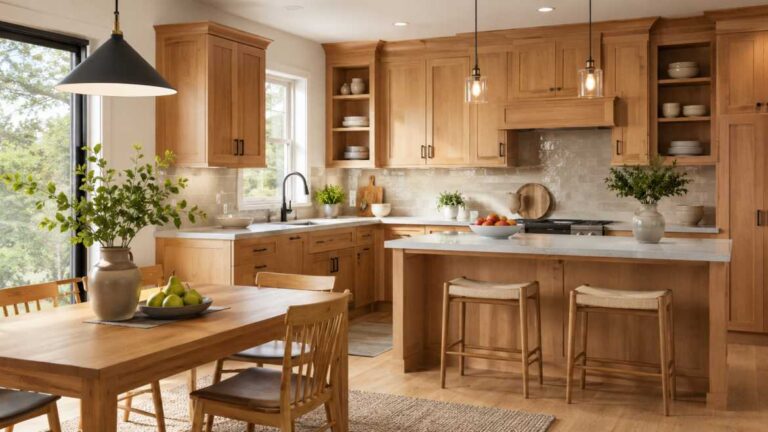
Oak, walnut, maple, and teak are especially popular right now.
And honestly… natural wood shelves against white tiles? Hard to mess that up.
Where Should You Place Floating Shelves in a Kitchen?
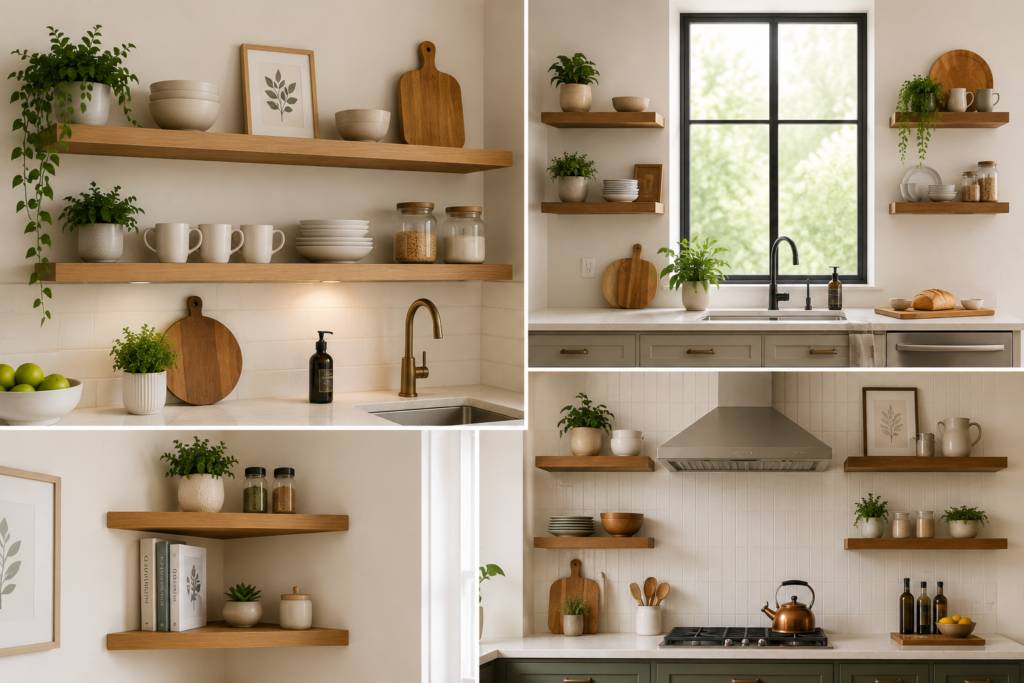
Placement changes everything.
Some shelves look amazing online but make zero sense in real kitchens.
Here are the most functional spots:
Above Countertops
This is the classic setup.
Perfect for:
- Plates
- Bowls
- Coffee mugs
- Small plants
- Daily-use items
It keeps things accessible without cluttering counters.
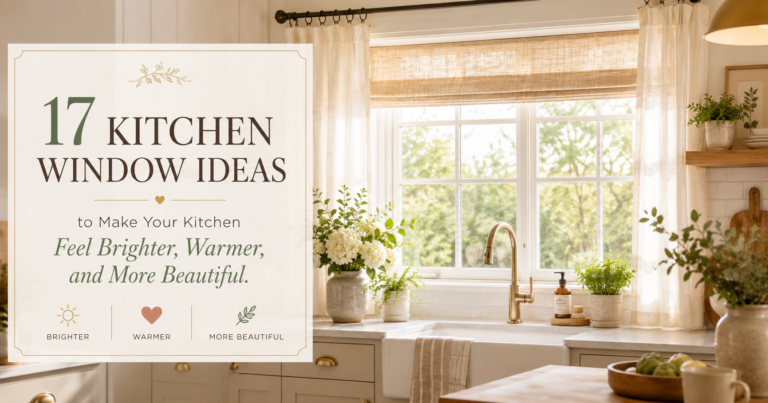
Around Kitchen Windows
A lot of designers now place floating shelves beside windows or even partially across them.
Sounds weird at first. But it actually works beautifully because the shelves don’t block much natural light.
Small kitchens especially benefit from this trick.
In Empty Corners
Corners are usually wasted space.
Floating corner shelves turn awkward kitchen angles into useful storage.
Great for:
- Spice jars
- Tea containers
- Mini decor
- Cookbooks
And they visually soften hard kitchen edges, too.
Replacing Upper Cabinets
This one feels scary initially.
But removing even ONE section of upper cabinets and replacing it with floating shelves can completely open the room visually.
Not every kitchen needs fully open shelving, though. A mix of cabinets and shelves usually works best.
Floating Shelf Styling Ideas for Different Kitchen Styles
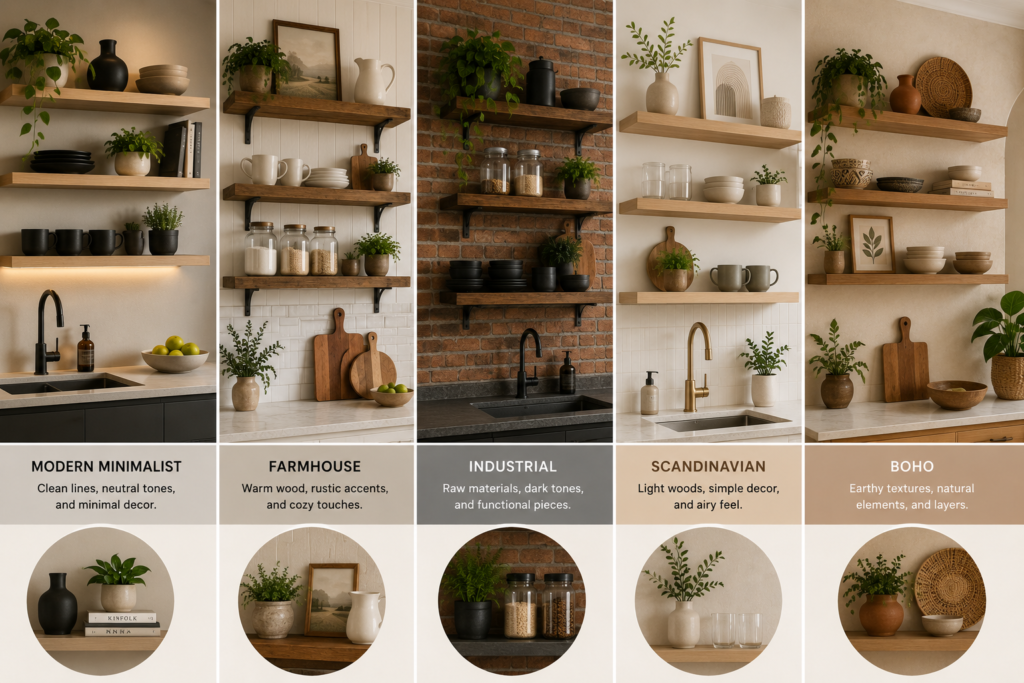
Modern Minimal Kitchen
Keep it clean.
Think:
- White dishes
- Neutral tones
- Thin wood shelves
- Hidden brackets
- Matte black accents
Minimal kitchens work best when shelves aren’t overcrowded.
Space matters here.
Farmhouse Kitchen
This style practically belongs to floating shelves.
Use:
- Reclaimed wood
- Vintage jars
- Woven baskets
- Ceramic pitchers
- Wooden boards
Slight imperfections actually improve the look.
Too polished? It starts feeling fake.
Industrial Kitchen
Metal brackets. Dark wood. Black frames.
Industrial floating shelves usually look stronger and heavier visually.
Perfect for loft-style kitchens or darker interiors.
Scandinavian Kitchen
Simple. Bright. Calm.
Use lighter woods like oak or pine.
Add:
- Neutral ceramics
- White dishes
- Soft textures
- Small plants
And don’t over-style it.
Scandinavian design always feels a little unfinished on purpose.
That’s what makes it cozy.
Common Mistakes People Make With Floating Shelves
This part matters.
Because floating shelves can quickly go from “beautiful kitchen inspiration” to “why does this look messy?”
1. Installing Shelves Too High
If you can’t comfortably reach your everyday dishes…
The shelves become decoration instead of storage.
2. Using Weak Wall Anchors
Heavy kitchen shelves need proper support.
Especially solid wood shelves.
Experts recommend attaching shelves directly to wall studs whenever possible for stability.
3. Overcrowding Everything
Not every inch needs objects.
Leave breathing room.
Seriously.
4. Ignoring Color Balance
Too many random colors create visual clutter.
Try sticking to:
- 2–3 dominant tones
- Similar textures
- Repeating materials
It makes shelves look intentional.
5. Styling Without Purpose
Some people place random decor that has nothing to do with kitchens.
And it feels off instantly.
Kitchen shelves should still feel useful.
Are Floating Shelves Practical for Everyday Kitchens?
Short answer?
Yes… if done correctly.
Some people worry about dust or grease buildup. And honestly, that concern is fair.
Open shelves do require more occasional cleaning than cabinets.
But in real life, most homeowners clean frequently used dishes anyway.
And because shelves force you to stay organized, kitchens often end up looking cleaner overall.
Floating shelves are especially practical for:
- Small kitchens
- Apartments
- Rental homes
- Open-concept kitchens
- Coffee stations
- Mini kitchens
They’re less ideal if:
- You store lots of mismatched items
- You prefer hidden storage
- You dislike visible clutter
So it depends on your lifestyle too.
Floating Shelf Size Guide for Kitchens
Here’s a simple sizing table that helps avoid awkward shelf proportions.
| Kitchen Area | Recommended Shelf Depth | Recommended Length |
|---|---|---|
| Small Kitchen | 8–10 inches | 24–36 inches |
| Medium Kitchen | 10–12 inches | 36–48 inches |
| Large Kitchen | 12–14 inches | 48–72 inches |
Depth matters more than people realize.
Too deep? Shelves feel bulky.
Too shallow? Nothing fits properly.
Most kitchen floating shelves sit around 10–12 inches deep because that comfortably holds plates and bowls.
Floating Shelves vs Cabinets
A lot of homeowners ask this question.
So here’s the honest comparison:
| Feature | Floating Shelves | Upper Cabinets |
|---|---|---|
| Visual Openness | Excellent | Limited |
| Hidden Storage | Poor | Excellent |
| Cleaning | More frequent | Easier |
| Budget | Usually cheaper | More expensive |
| Accessibility | Very easy | Moderate |
| Decorative Appeal | High | Lower |
The best kitchens today often combine both.
Not fully open shelving.
Not fully closed cabinetry.
A balanced mix feels the most functional.
Easy Tips to Make Floating Shelves Look Expensive
You really don’t need luxury kitchens to achieve that designer look.
A few small details make a huge difference.
Use Consistent Containers
Matching jars instantly reduces visual chaos.
Add Warm Lighting
Under-shelf lighting looks surprisingly high-end.
Layer Items
Instead of placing everything in straight lines…
Overlap slightly:
- Lean cutting boards behind bowls
- Stack plates
- Add varying heights
It creates depth.
Mix Textures
Wood + ceramic + glass + greenery.
That combination almost always works.
Leave Empty Space
This one’s important.
Expensive-looking shelves rarely feel crowded.
Conclusion
Floating shelves for kitchen wall designs aren’t just about aesthetics anymore.
They genuinely make kitchens feel more open, usable, and personal.
And maybe that’s why people connect with them so much.
A kitchen shouldn’t feel like a storage room. It should feel lived in. Warm. Comfortable enough that someone naturally wants to stay there longer than necessary…
Floating shelves help create that feeling.
Not because they’re trendy.
But because they let kitchens breathe a little.
And honestly… sometimes that small change completely transforms the room.