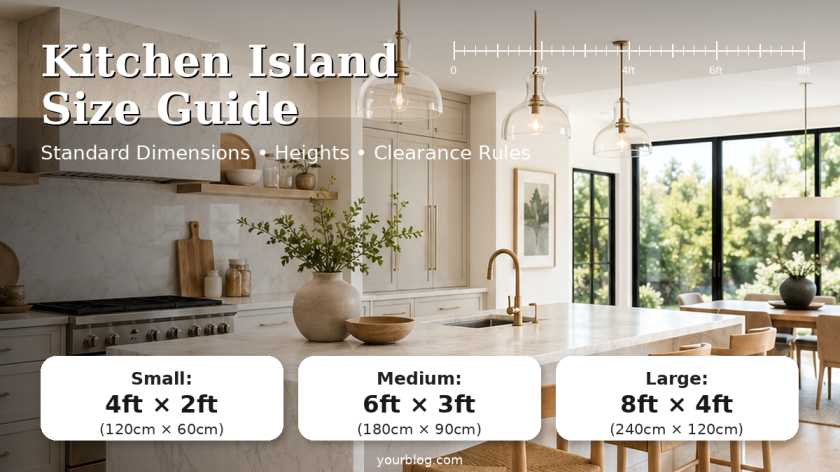
How to Choose the Perfect Kitchen Island Size for Your Space
Most kitchen islands end up the wrong size.
Not because people don’t care. Because they measure the kitchen, pick a number that sounds reasonable, and order. Then the island arrives, and the kitchen feels cramped, the walkways are too tight, and the whole space — which was supposed to feel more functional—actually feels smaller.
Getting kitchen island size right is one of those decisions that looks simple on the surface but has a lot underneath it. The right size depends on your kitchen dimensions, how you use the space, whether you want seating, what appliances might go in the island, and how much clearance you’re willing to live with.
This guide covers everything — standard sizes, height options, clearance rules, seating dimensions, and how to figure out exactly what size works for your specific kitchen.
Standard Kitchen Island Sizes
Before customizing, it helps to understand what standard sizes actually exist and what each one is designed for.
| Island Size | Dimensions | Best For |
|---|---|---|
| Small / Compact | 4ft x 2ft (48″ x 24″) / 120cm x 60cm | Apartments, prep work, mobile units |
| Medium | 6ft x 3ft (72″ x 36″) / 180cm x 90cm | Sink or cooktop, limited seating |
| Large | 8ft x 4ft (96″ x 48″) / 240cm x 120cm | Appliances, entertaining, ample seating |
| Extra Large | 10ft x 4ft+ (120″ x 48″+) / 300cm x 120cm+ | Open plan, multiple functions |
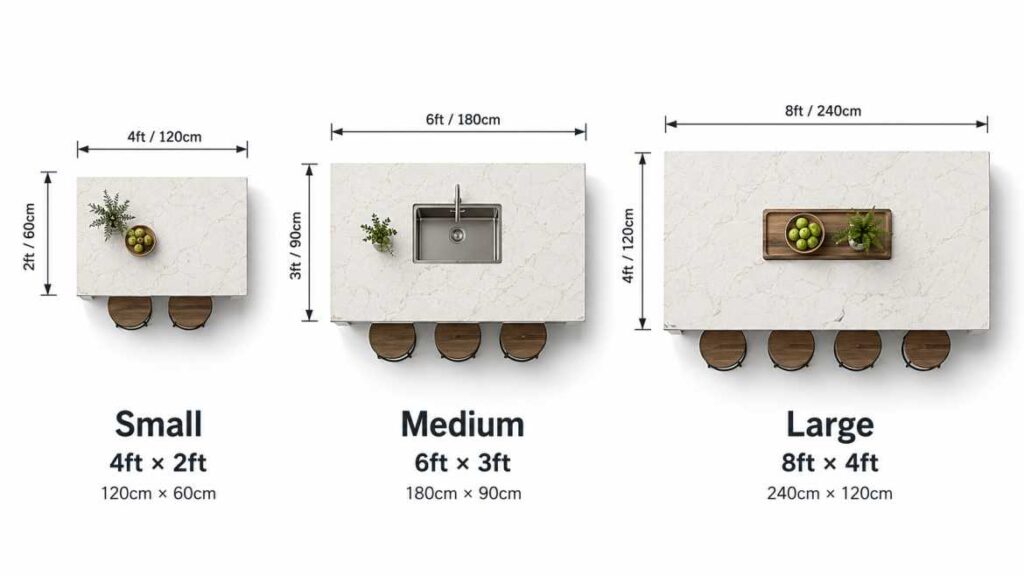
The most common kitchen island size in residential homes sits around 6 ft x 3 ft (180 cm x 90 cm)—large enough to be genuinely useful for prep work and light seating, small enough to fit in most medium-sized kitchens without compromising walkways.
As a general rule widely used by kitchen designers, most kitchen islands sit around 2000mm x 1000mm, with at least 1000–1200mm of clearance on all sides for comfortable movement.
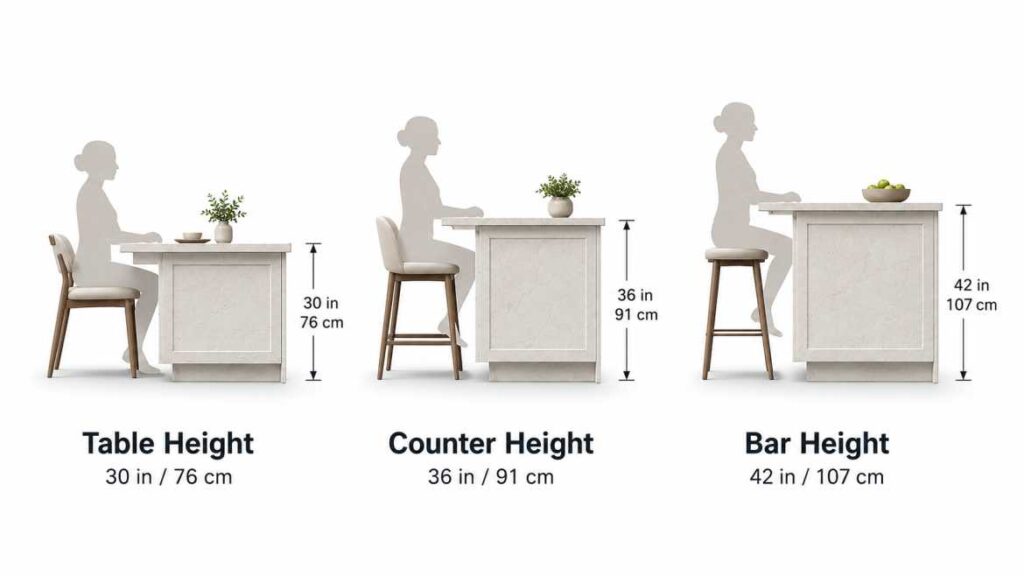
Kitchen Island Height: The Three Options
Height is often treated as an afterthought, but it has a direct impact on the comfort of the island for cooking, eating, and everyday use.
36 Inches (91 cm)—Standard Counter Height
This is the most common kitchen island height, matching standard kitchen countertops throughout the space. It’s the right choice for:
- Food preparation and cooking tasks
- Seating with 24–26 inch counter stools
- Keeping a consistent, cohesive look across the kitchen
- Most everyday kitchen functions
If you’re unsure what height to choose, 36 inches is the default that works for the majority of situations.
42 Inches (107 cm)—Bar Height
Bar-height islands sit 6 inches taller than standard countertops. This creates a visual distinction between the island and the rest of the kitchen—useful for open-plan layouts where you want the island to act as a divider between the kitchen and the living space.
Bar height works well for:
- Entertaining and casual dining
- Hiding kitchen prep mess from guests in an open-plan space
- Dividing open floor plans without a full wall
- Seating with 28–30 inch bar stools
The trade-off: bar height is less comfortable for actual cooking tasks. If your island is primarily for eating rather than prepping, this works well. If it needs to do both, the height compromise can be awkward.
30 Inches (76 cm)—Table Height
Table-height islands are lower than standard countertops. This creates a natural dining extension that feels more like a table than a kitchen surface, which is exactly the point.
Table height is used for:
- Wheelchair accessibility and ADA compliance
- Integrated dining extensions in smaller kitchens
- Multi-level islands where one section is lower for seating
- Households where the kitchen doubles as a dining room
Clearance Rules: The Most Important Numbers in Island Planning
This is where most DIY kitchen planners get it wrong. The island itself matters less than the space around it.
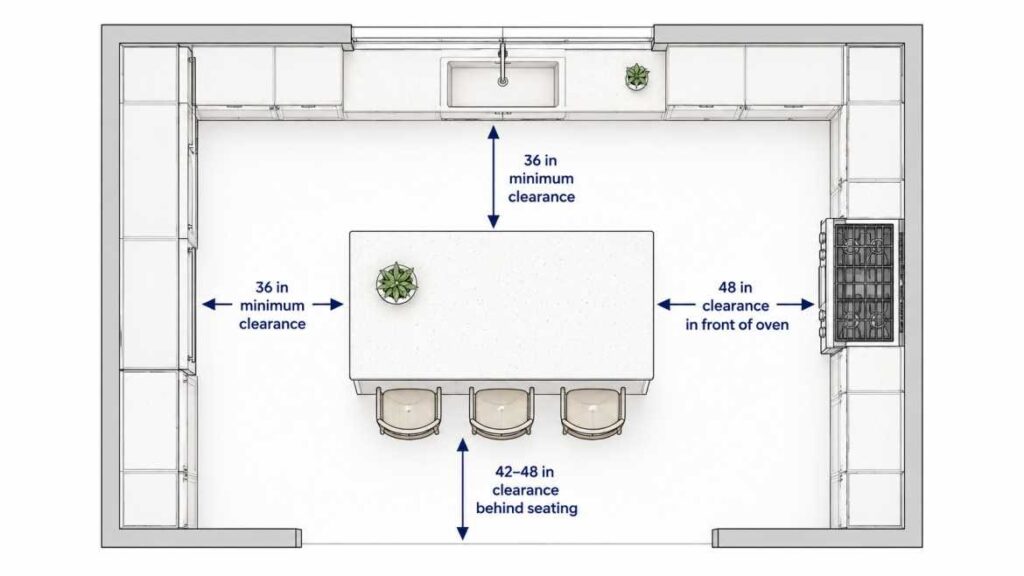
Minimum 36 Inches (91cm) on All Sides
This is the absolute minimum clearance between your kitchen island and any surrounding countertops, appliances, or walls. It allows one person to move through the space comfortably, but only just.
Important: 36 inches is a minimum, not a target. If your kitchen layout only allows 36 inches on one side, that’s acceptable. If it only allows 36 inches on every side, the island is almost certainly too big for the space.
42–48 Inches (107–122cm) for Islands with Seating
When people are seated at an island, they push their chairs back. A chair pushed back from a 24-inch overhang takes up roughly 18–20 additional inches. This means you need more clearance behind the seating side of the island than on the other sides.
The recommended clearance behind bar seating is 42 to 48 inches (107–122 cm). This allows someone to sit comfortably while still letting another person walk behind them without squeezing.
If you can’t achieve 42 inches behind the seating side, consider reducing the overhang rather than compromising the walkway. Seating with a 12-inch overhang is less comfortable but still functional—tight walkways are a daily frustration.
48 Inches (122cm) Minimum Facing Appliances
If your island faces an oven, dishwasher, or refrigerator, the clearance rule gets stricter. Appliance doors open outward and require room to operate — especially a dishwasher door, which opens flat and takes up significant floor space.
Minimum 48 inches (4 feet) between your island and any appliance that opens toward it. This rule is frequently violated in kitchen designs and results in daily inconvenience — you’ll be moving around or waiting every time the dishwasher is open.
Kitchen Island Size by Kitchen Dimensions
The size of your kitchen directly determines what island size is realistic. Here’s a practical guide based on overall kitchen square footage.
Small Kitchen: Under 150 sq ft (Under 14 sq m)
Minimum kitchen width needed for any island: 4.5 to 5 meters (roughly 15 feet). Anything narrower than this and a fixed island will make the kitchen feel impossible to move in.
If your kitchen is smaller than this, consider a rolling kitchen cart instead of a fixed island. A mobile unit gives you the prep surface and storage benefits without permanently committing to the clearance you don’t have.
Maximum island size for small kitchens: 4ft x 2 ft (48″ x 24″) / 120cm x 60cm
Medium Kitchen: 150–250 sq ft (14–23 sq m)
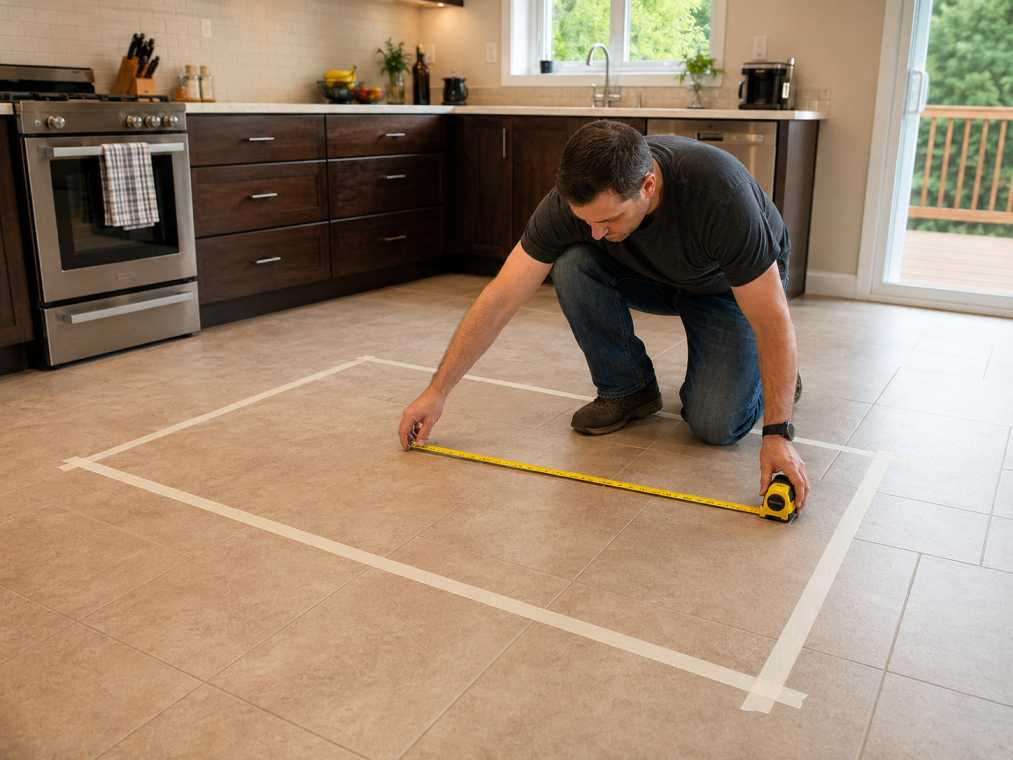
Medium kitchens can comfortably accommodate a standard 6ft x 3 ft island, provided the layout allows for proper clearance on all sides. Before committing, tape out the island footprint on your floor and walk around it with a measuring tape. This simple step reveals clearance issues that drawings often miss.
Recommended island size for medium kitchens: 6ft x 3ft (72″ x 36″) / 180cm x 90cm
Large Kitchen: 250 sq ft+ (23 sq m+)
Larger kitchens can handle islands in the 8 ft. x 4 ft. range and beyond. At this scale, the island often becomes a multi-function space—a prep area on one end, seating on the other, with a sink or additional storage built in.
Recommended island size for large kitchens: 8 ft. x 4 ft. (96″ x 48″) / 240cm x 120cm or larger

Kitchen Island Seating Dimensions
If seating is part of your island plan, there are specific dimensions that determine how many people actually fit and how comfortable they’ll be.
Space Per Seat
Allow 24 inches (60 cm) of counter width per person for comfortable seating. This is the minimum that allows someone to sit, eat, and use their arms without bumping into the person next to them.
| Number of Seats | Minimum Island Length |
|---|---|
| 2 stools | 4ft / 120cm |
| 3 stools | 6 ft / 180cm |
| 4 stools | 7–8ft / 210–240cm |
| 5 stools | 9–10ft / 270–300cm |
Overhang for Seating
The island top needs to extend past the cabinet base to create knee room for seated guests. A standard overhang for counter-height seating is 12–15 inches (30–38 cm). For bar height, 12 inches is typically sufficient because barstools are designed for upright seating.
A 12-inch overhang is workable. A 15-inch overhang is comfortable. Anything less than 10 inches makes seating genuinely uncomfortable over longer meals.
Stool Height by Island Height
| Island Height | Correct Stool Height |
|---|---|
| 36 inches (counter height) | 24–26 inch stools |
| 42 inches (bar height) | 28–30 inch stools |
| 30 inches (table height) | Standard dining chairs |
Getting stool height wrong is one of the most common kitchen island mistakes. A 24-inch stool at a 42-inch bar height leaves guests hunched at an awkward angle—uncomfortable within minutes.
L-Shaped Kitchen Islands
L-shaped kitchen islands are larger-format solutions for open-plan spaces. They work well in kitchens where the layout allows for an extended run along two perpendicular walls.
Standard L-shape island sizes require a kitchen area of roughly 115 square feet (10.7 square metres) dedicated to the island zone. Common lengths for L-shaped layouts range from 8 to 13 feet (2.4 to 4 metres) along the longer arm.
These are best suited for high-activity kitchens where multiple people cook simultaneously or for open plan homes where the island serves as both kitchen and living room divider.
Kitchen Island Worktop Sizes
The material and slab size of your worktop can actually limit your island dimensions.
For stone worktops, the most common constraint is quartz slab size—standard quartz slabs typically measure 3200 mm x 1600mm. This means the island width generally cannot exceed 1600mm (about 63 inches) if you want a seamless single-slab surface without a visible join.
For islands wider than 1600 mm, you’ll either need the following:
- A joined worktop (seam in the middle)
- A custom-cut slab (more expensive)
- A different material — butcher block, solid wood, or stainless steel often come in wider dimensions
Most kitchen designers won’t mention this limitation until you’re deep into the planning process. Knowing it upfront saves significant back-and-forth.
How to Measure for a Kitchen Island
Before finalizing any island dimensions, take these measurements from your actual kitchen:
Step 1 — Measure total kitchen width and length. Write down the exact dimensions in both directions.
Step 2 — Identify all appliances and doors. Note every oven, refrigerator, dishwasher, and cabinet door. Mark how far each opens and in which direction.
Step 3 — Subtract clearance on all sides. Subtract your minimum clearance (36 inches on non-seating sides, 42–48 inches on seating sides, 48 inches facing appliances) from your total kitchen dimensions. What’s left is your maximum island footprint.
Step 4 — Tape it out on the floor. Use masking tape to mark the exact island footprint on your floor. Live with it for a day or two before ordering anything. Walk around it loaded with groceries. Open your oven. See how it actually feels.
This last step catches more problems than any floor plan drawing. What looks fine on paper often feels very different in the actual space.
Kitchen Island Size in Different Units
For reference, here are standard kitchen island sizes across different measurement systems:
Standard medium island (most common):
- Inches: 72″ x 36″
- Feet: 6ft x 3ft
- Centimetres: 183cm x 91cm
- Millimetres: 1830mm x 914mm
- Metres: 1.83m x 0.91m
Standard large island:
- Inches: 96″ x 48″
- Feet: 8ft x 4ft
- Centimetres: 244cm x 122cm
- Millimetres: 2440mm x 1220mm
- Metres: 2.44m x 1.22m
Frequently Asked Questions
What is a good size for a kitchen island?
For most medium-sized kitchens, a 6 ft x 3 ft (72″ x 36″) island—approximately 180 cm x 90 cm—is the most practical all-around size. It provides enough surface for prep work, fits a small sink or built-in appliance, and allows seating for two to three people comfortably.
What is the 3×4 kitchen rule?
The 3×4 rule refers to minimum clearance requirements — 3 feet (36 inches) on standard sides and 4 feet (48 inches) in front of appliances. Some designers extend this to mean 3 feet minimum between the island and all perimeter walls or countertops for basic traffic flow.
Can I fit an island in a 12×12 kitchen?
A 12×12 foot kitchen (144 sq ft) can fit a small island, but it requires careful planning. With perimeter cabinets taking up roughly 2 feet on each side, your working space is approximately 8×8 feet. A small island of 4ft x 2ft is possible here with 36-inch clearance on the sides — anything larger will create congestion.
Are kitchen islands a standard size?
Standard sizes exist (4ft, 6ft, and 8ft lengths are most common), but the right size for your kitchen is always based on your specific space, layout, and clearance requirements. Standard sizes are a useful starting reference, not a guarantee of fit.
What is the minimum kitchen size for an island?
Most kitchen designers recommend a minimum kitchen width of 4.5 to 5 metres (roughly 15 feet) to accommodate any fixed island with comfortable clearance on both sides. In narrower kitchens, a rolling cart is a better solution than a fixed island.
How much overhang does a kitchen island need for seating?
A minimum of 12 inches (30 cm) of overhang is needed for knee clearance. A 15-inch (38cm) overhang is more comfortable for extended sitting. Never reduce overhang below 10 inches — the seating becomes functionally uncomfortable.
Final Thoughts
Getting the kitchen island size right is less about following a standard and more about understanding your specific space.
Measure carefully. Account for clearance on every side — especially around appliances and seating. Tape out the footprint on your actual floor before committing. And choose a height that matches how you’ll primarily use the island: counter height for cooking, bar height for entertaining, and table height for dining.
A well-sized kitchen island improves how your kitchen looks and how it works every single day. An incorrectly sized one — whether too large or, less commonly, too small — creates daily friction that no amount of good design elsewhere can fully compensate for.
Take the time to get the measurements right. Your kitchen will thank you for it.