Maple Kitchen Furniture: Why It’s Still One of the Best Choices You Can Make
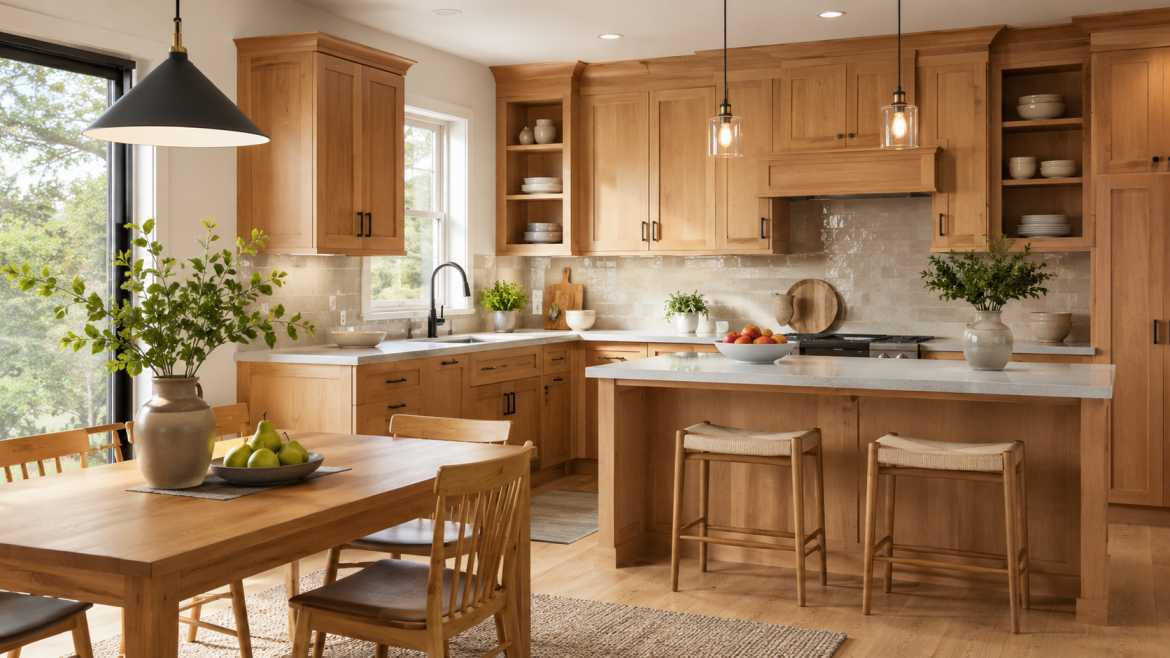
If you’ve spent any time scrolling kitchen renovation photos lately, you’ve probably noticed maple popping up everywhere again. Not the orangey, heavily-stained maple from two decades ago — the newer stuff. Lighter, calmer, sometimes painted, sometimes left totally natural. It’s having a moment. And honestly? It deserves one.
Maple kitchen furniture isn’t new. It’s been a go-to for cabinetmakers for generations. But what’s changed is how people are using it — the finishes, the pairings, the overall vibe. Let’s get into why maple keeps showing up in kitchen after kitchen, and whether it’s actually the right call for yours.
Why Maple, Specifically?
Here’s the thing about maple — it’s just… solid. Literally. It’s a dense hardwood, denser than pine, denser than a lot of the softer woods people use for budget cabinetry. That density is what makes it hold up so well in a kitchen, which is arguably the hardest-working room in the house.
A few reasons maple keeps winning:
- It resists dents and scratches better than softer woods — kitchens take a beating, and maple just shrugs most of it off
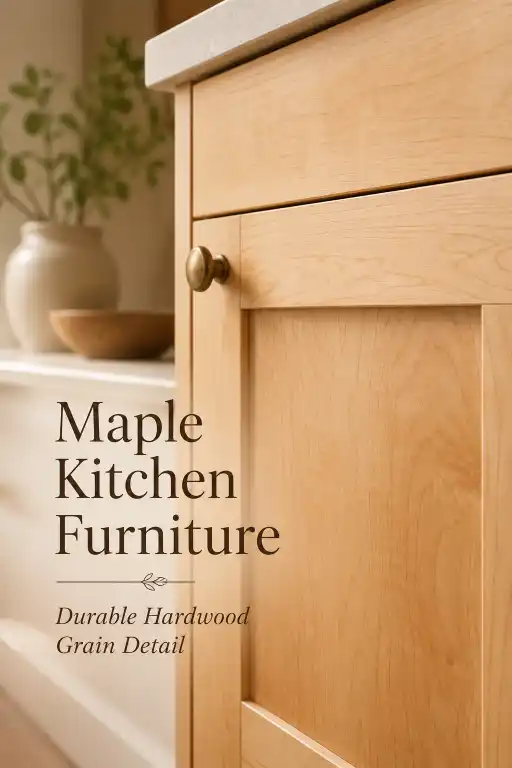
- The grain is smooth and tight, almost closed-looking, which gives it a clean, uniform appearance without a lot of busy knots or swirls
- It takes stain evenly — no blotching, no weird patchy spots, which is a real problem with some other woods
- It ages into a warm amber tone over the years, so even “plain” natural maple develops character over time
- It’s domestically available in most of North America, which keeps cost more reasonable than some imported hardwoods
So it’s not just about looks. It’s a practical, working-kitchen kind of wood — which matters a lot more than people realize until they’ve lived with bad cabinets for a few years.
Natural vs. Stained vs. Painted — Which One’s Right?
This is where most people get stuck, honestly. There’s no single “correct” maple finish — it really depends on the look you’re going for and how much character you want the wood grain to show.
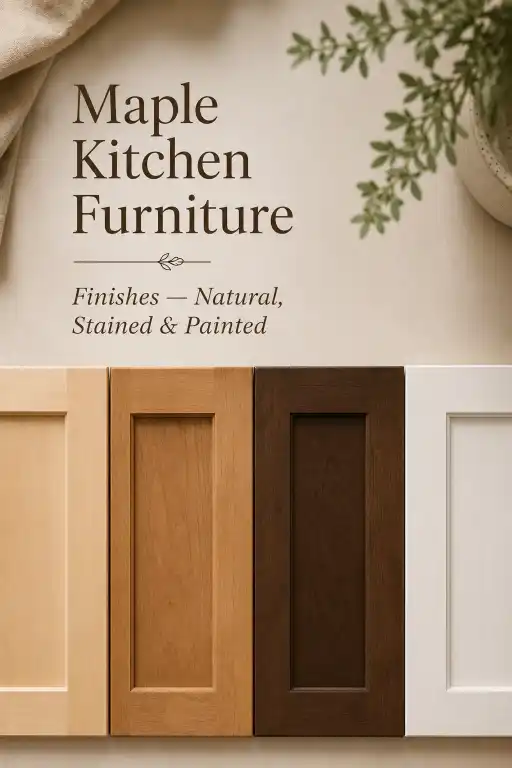
| Finish Type | Look & Feel | Best For |
|---|---|---|
| Natural/Clear Coat | Light, warm, subtle grain visible | Modern farmhouse, Scandinavian-inspired kitchens |
| Light Stain | Honey or golden tones, grain still visible | Traditional or transitional kitchens |
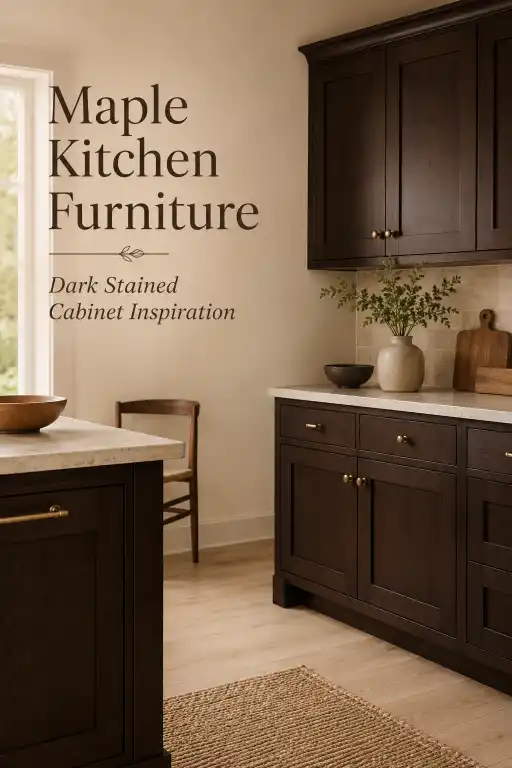
| Dark Stain | Deep espresso or walnut-like richness | Classic, formal kitchen styles |
| Painted (White/Cream) | Crisp, smooth, grain mostly hidden | Coastal, modern farmhouse, minimalist |
| Painted (Navy/Sage/Black) | Bold, moody contrast | Contemporary or eclectic kitchens |
A clear coat finish is probably the most popular pick right now — it lets the natural off-white-to-pale-gold color of the wood do its own thing, without covering it up. But painted maple cabinets are having a real resurgence too, especially in navy and deep green tones. The wood underneath gives painted finishes a smoother base than a lot of other materials, which honestly makes the paint job last longer.
Cabinetry Isn’t the Only Place Maple Shows Up
People hear “maple kitchen furniture” and immediately think cabinets — fair enough, that’s the biggest application. But it goes well beyond that.
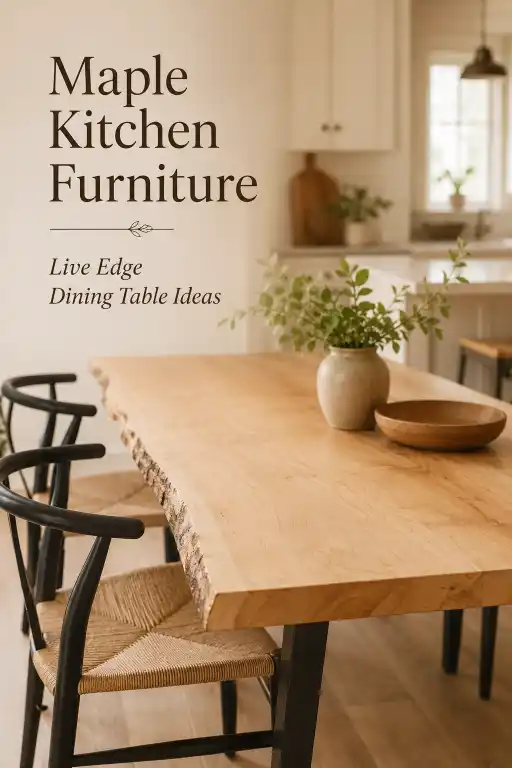
Dining tables and islands. Maple slab tables, especially the live-edge or “wormy maple” style (yes, that’s a real term — it refers to natural markings left by beetles, and it looks way better than it sounds), have become a popular rustic-meets-modern statement piece. Pair one with black metal legs and you’ve got a look that’s everywhere on design boards right now.
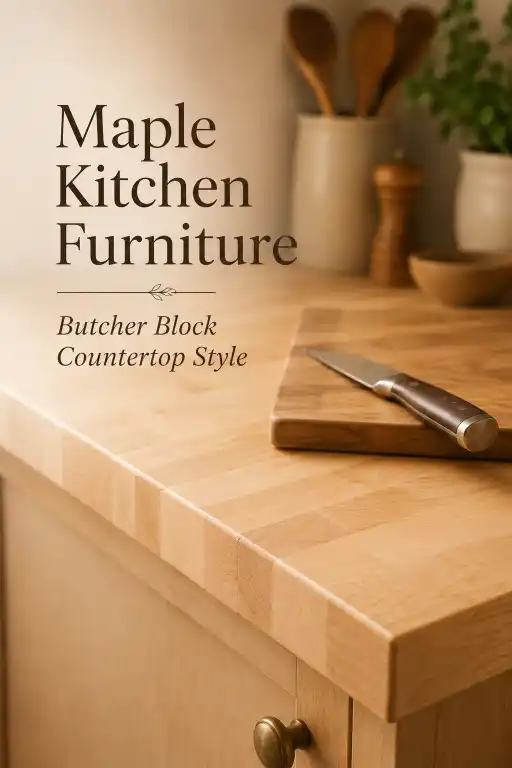
Butcher block countertops. Maple’s basically the industry standard here. It’s dense enough to handle heavy chopping, it’s naturally hygienic when properly sealed, and it just looks… right, in a kitchen. Warm, functional, a little old-school in the best way.
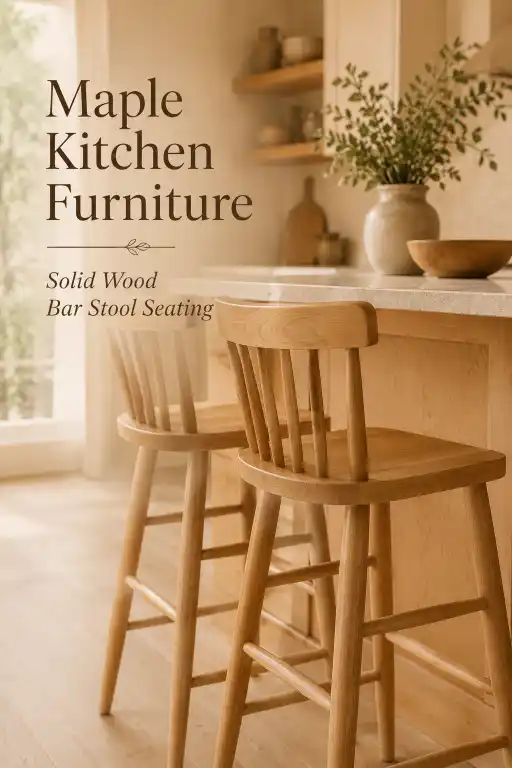
Seating and bar stools. Solid maple chairs and stools show up a lot in kitchens that lean traditional or farmhouse — they’re sturdy enough for daily use and they match cabinetry without looking matchy-matchy.
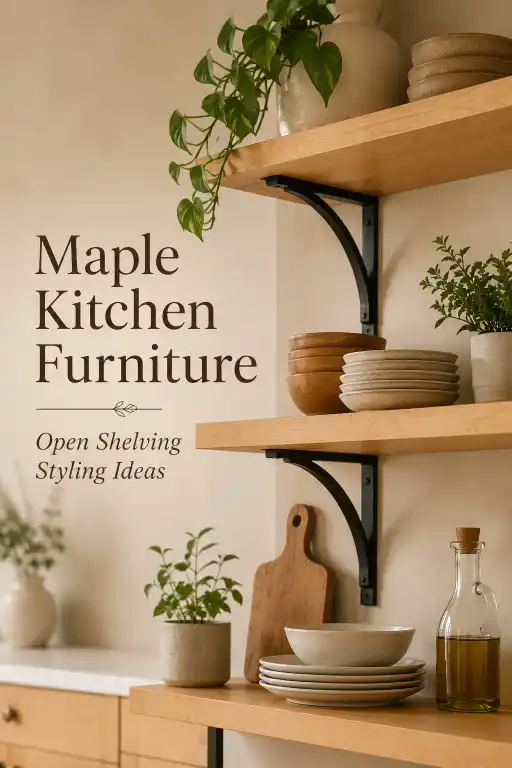
Open shelving. A simpler use, but a popular one. Maple shelves with metal brackets are a common pairing in kitchens going for that “lived-in but intentional” look.
What to Actually Look For When Buying
This part trips people up more than it should. Not all “maple” furniture is created equal — and the differences matter, especially for the price you’re paying.
A few things worth checking before you buy:
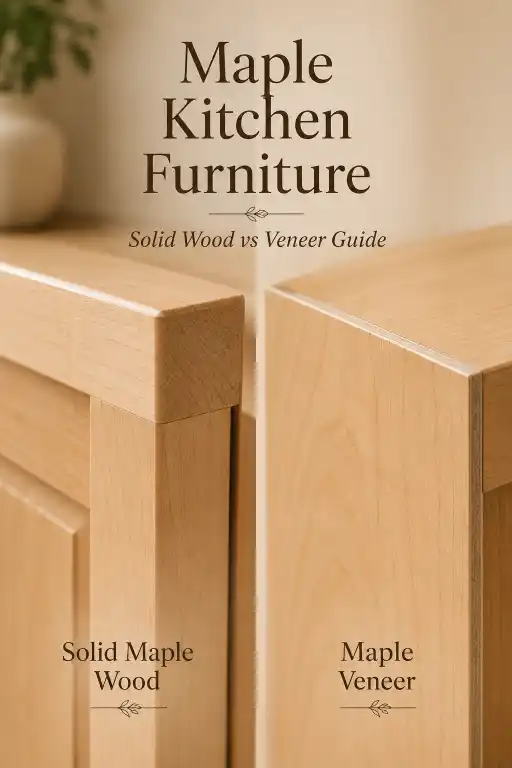
- Solid maple vs. maple veneer. Veneer is maple on the surface over a different core material — cheaper, but less durable long-term, and it can’t be refinished as many times.
- RTA (ready-to-assemble) vs. custom. RTA cabinets from companies offering maple lines are budget-friendly and ship flat — solid option if you’re handy and working within a budget. Custom or Amish-made pieces cost more but you get exact sizing and joinery quality that’s hard to match.
- Grade of the wood. Higher grades have fewer knots and more uniform color; lower grades (sometimes labeled “rustic” or “character” grade) show more natural variation — which some people actually prefer.
- Finish durability. Ask what kind of topcoat is used — a good catalyzed lacquer or conversion varnish will hold up to kitchen wear way better than a basic polyurethane.
And don’t skip checking reviews on whoever you’re buying from. Cabinet quality varies a ton between manufacturers, even when they’re all technically using “maple.”
A Quick Word on Cost
Maple sits in a pretty reasonable middle ground, price-wise. It’s not as expensive as cherry or walnut, but it’s a step up from pine or basic MDF. For most homeowners doing a full kitchen remodel, maple cabinetry tends to land somewhere in the mid-range of the budget spectrum — solid value for the durability you’re getting back.
Custom and Amish-made maple furniture, though, can get pricey fast — especially live-edge tables or anything with intricate joinery. Worth it if you want a true heirloom piece. Maybe not worth it if you’re furnishing a starter kitchen on a tight timeline.
Styling Tips That Actually Work
If you’ve already got maple — or you’re planning to bring it in — here’s what tends to work well alongside it:
- Pair natural maple with matte black or brushed brass hardware for contrast
- Use white or light gray countertops to keep things feeling bright, not heavy
- Mix in some open shelving to break up a wall of solid cabinetry
- For dining tables, lean into the natural edge and grain rather than fighting it with busy linens
- If going dark-stained maple, balance it with lighter walls and flooring so the kitchen doesn’t feel closed-in
So… Is Maple Still Worth It?
Yeah, honestly — it is. It’s not the flashiest wood out there, and it’s not going to make headlines the way some exotic import might. But it’s reliable. It performs well under daily kitchen use, it takes finishes beautifully whether you want natural or painted, and it ages in a way that actually improves the look over time instead of just wearing out.
If you’re renovating and trying to choose between five different wood types with five different price tags — maple’s the one that quietly does everything well without demanding a huge compromise. Not the loudest option in the room. Just a solid one, in every sense.