Rustic Home Decor: Simple Ways to Create a Warm, Lived-In Home
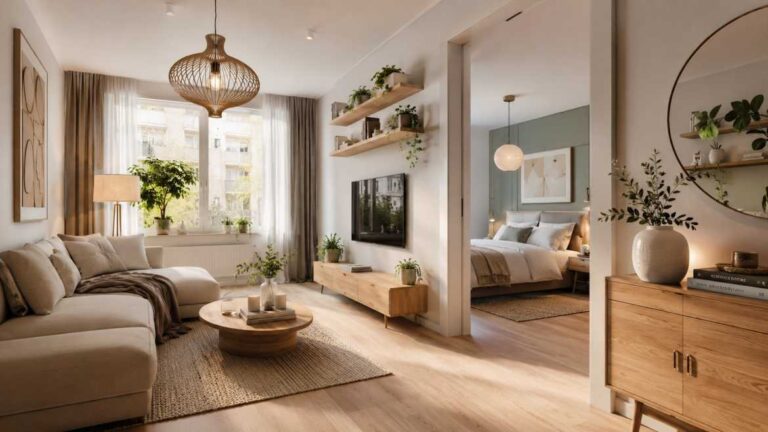
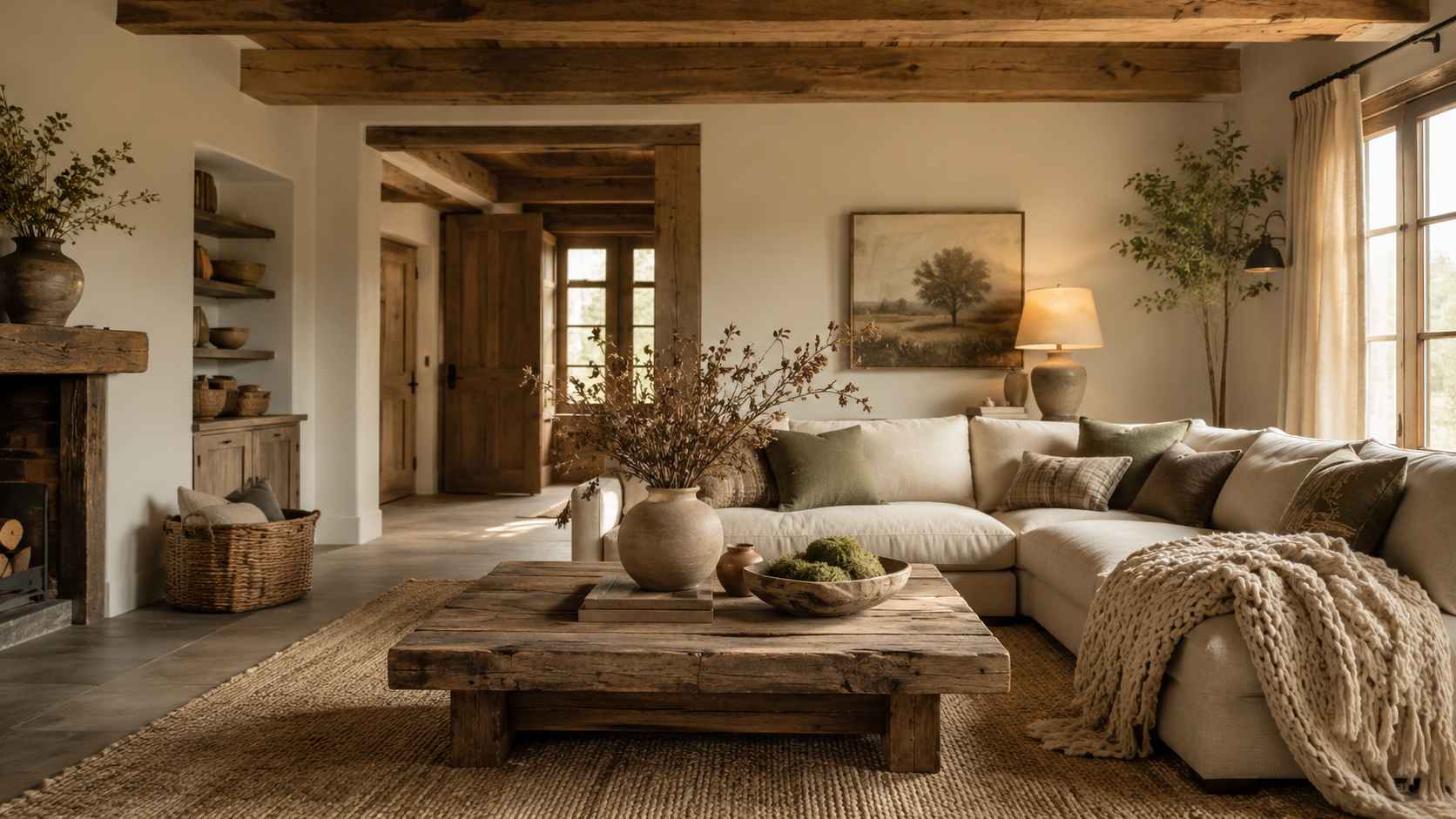
There’s something comforting about a home that doesn’t look too polished. A scratched wooden table, a soft linen throw, an old basket near the door… these details make a room feel real. That’s the quiet appeal of rustic home decor. It brings nature indoors, celebrates imperfect materials, and creates spaces that feel warm instead of staged.
And no, you don’t need a countryside cottage or a huge renovation budget. Rustic style can work in an apartment, a modern house, or one small bedroom. The trick is using texture, warmth, and character without filling every corner with farmhouse signs.
What Is Rustic Home Decor?
Rustic decorating is inspired by natural landscapes, traditional craftsmanship, and homes that seem to have evolved. Wood shows its grain. Stone may be rough rather than glossy. Fabrics feel soft, woven, and practical.
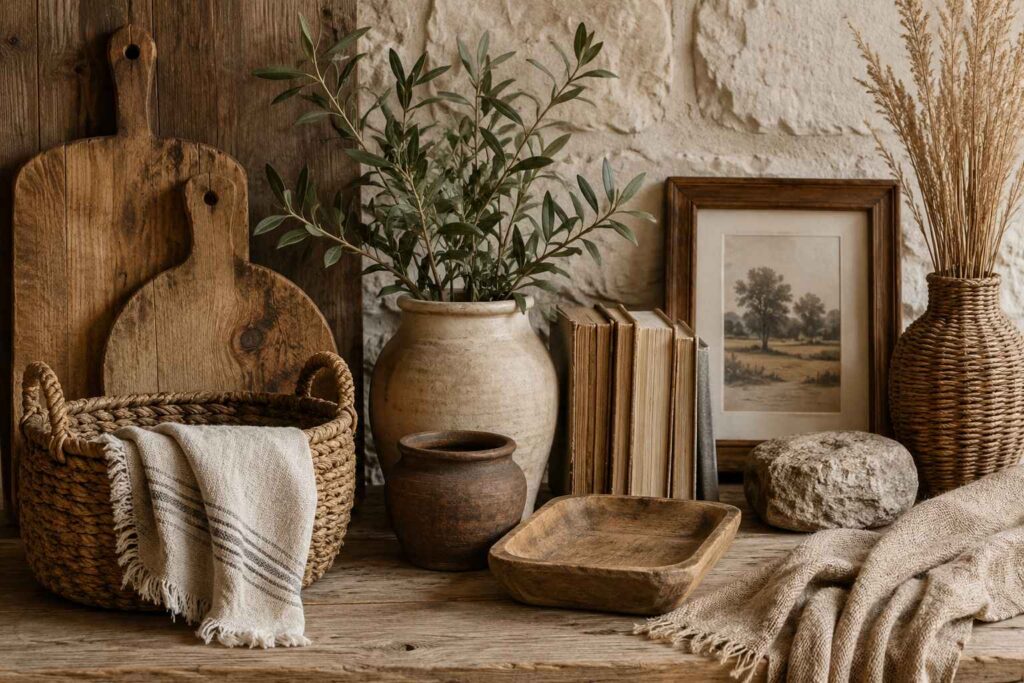
Common elements include:
- Reclaimed or weathered wood
- Stone, brick, clay, and terracotta
- Linen, cotton, wool, jute, and leather
- Handmade pottery and woven baskets
- Vintage furniture with useful storage
- Warm neutrals with earthy accents
- Black, bronze, or aged-brass details
Traditional rustic rooms can feel cabin-like. Modern rustic home decor uses the same materials with cleaner furniture and less clutter. Both work—it depends on how layered you want the room to feel.
A Quick Rustic Decorating Guide
| Element | Good Choices | What to Avoid |
|---|---|---|
| Colors | Cream, taupe, brown, olive, rust | Too many cold grays |
| Materials | Wood, stone, linen, jute, leather | Shiny plastic finishes |
| Furniture | Solid, simple, vintage, slightly worn | Perfectly matched sets |
| Lighting | Warm bulbs, lanterns, fabric shades | Harsh blue-white lighting |
| Accessories | Pottery, baskets, books, branches | Too many themed signs |
Use this table as a filter when shopping. You don’t need to buy everything labelled “rustic.” The best pieces often aren’t labelled at all.
Start With Warm, Earthy Colors
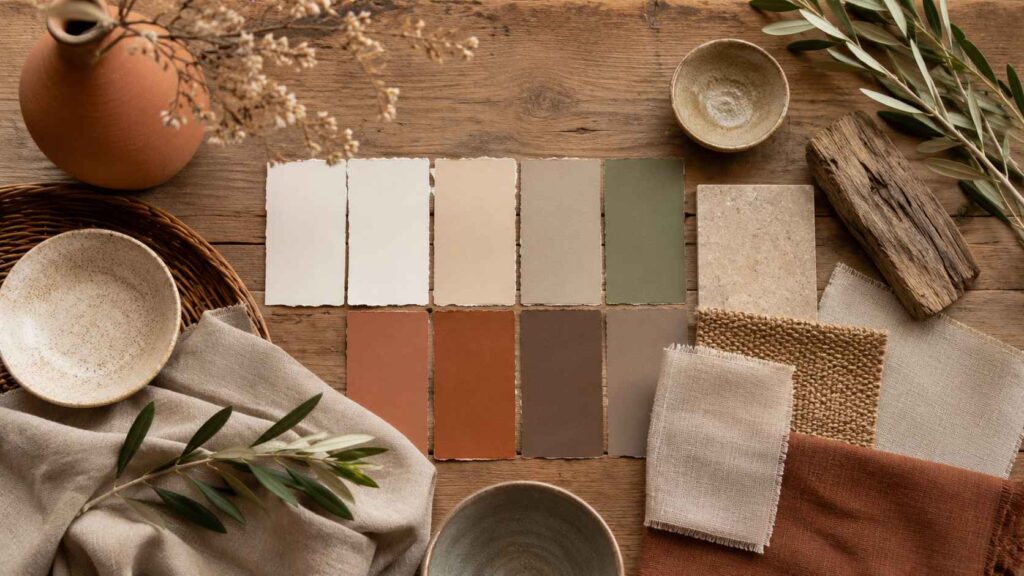
Begin with warm white, oatmeal, beige, mushroom, soft brown, or muted greige. These shades let wood and natural texture stand out without making the room dark.
Then add one or two earthy colors. Olive green works beautifully with warm wood. Rust, clay, deep brown, and faded blue can add depth.
But don’t make every item brown. A rustic room needs contrast—perhaps a creamy sofa, charcoal lamp, or black-framed mirror.
Let Natural Wood Do the Heavy Lifting
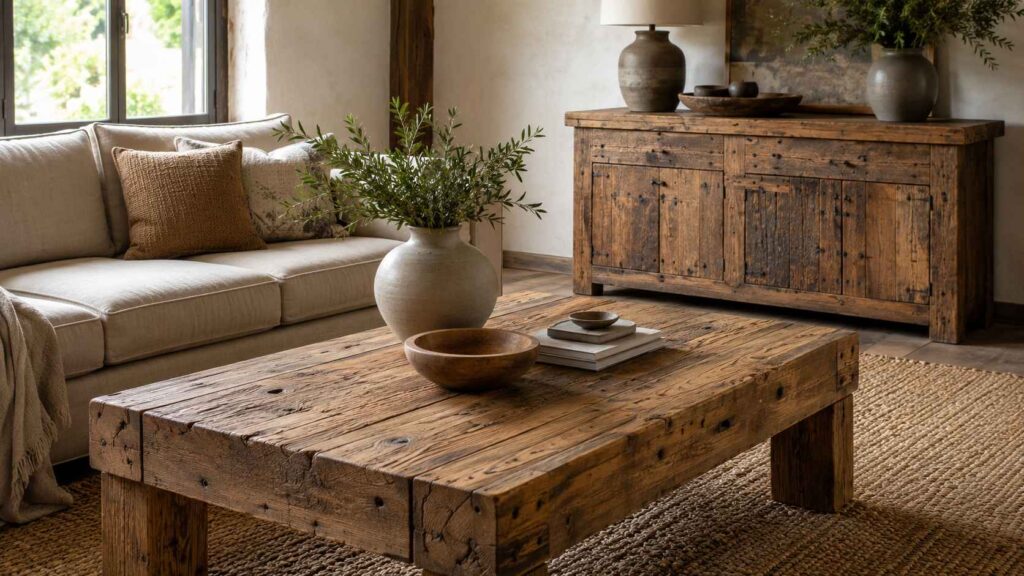
Wood is usually the strongest feature in rustic home decor, but it doesn’t need to cover every wall. One meaningful piece may be enough.
Try a reclaimed coffee table, open kitchen shelves, chunky bedside table, or simple entrance bench. Even a wide wooden frame can add warmth.
Mixing wood tones is fine. Actually, it often looks more natural. Keep one dominant tone, then repeat smaller hints of it around the room.
For a lower-cost approach, read our guide to Indian home decor. It can help you build a cozy look without replacing all your furniture.
Layer Texture Instead of Adding Clutter
Rustic rooms feel rich because of texture—not endless accessories.
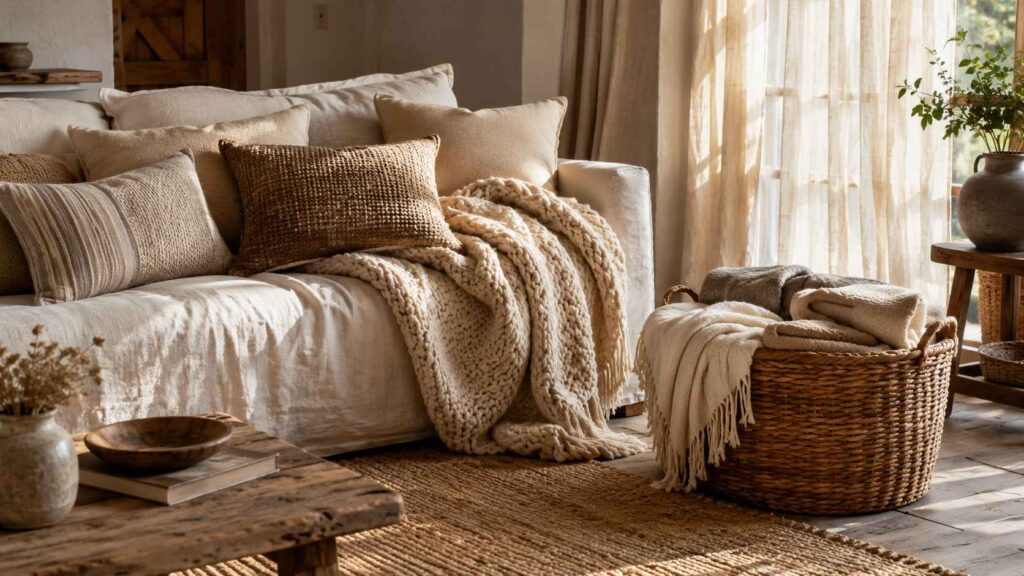
Think of a jute rug under a soft sofa, linen curtains beside a rough table, or a wool blanket over a leather chair. The contrast gives the room depth.
Easy ideas include:
- Place a woven basket beside the sofa for throws
- Mix two or three cushion fabrics
- Use pottery with uneven, matte surfaces
- Display dried branches in a clay vase
- Layer a vintage-style rug over a natural-fiber rug
And leave some space. Rustic doesn’t have to mean crowded.
Choose Furniture That Feels Collected
A room filled with one matching furniture collection can look flat. Rustic home decor feels more believable when pieces appear to have been gathered gradually.
Maybe the dining table is new, but the chairs are vintage-inspired. The sofa is simple, while the side table shows a little age. An old storage chest can replace a standard coffee table.
Look for useful pieces: benches, cabinets, trunks, stools, and dressers. They add character while solving storage problems. Practical beauty… that’s the goal.
“If you love warm wood, leather, and earthy interiors, you may also like these western home decor ideas for a more ranch-inspired look.”
Add Rustic Style Room by Room
Living Room
Choose one anchor piece—a wooden coffee table, vintage rug, leather chair, or stone fireplace. Add warm lamps and soft textiles. Keep the television wall simple.
Kitchen
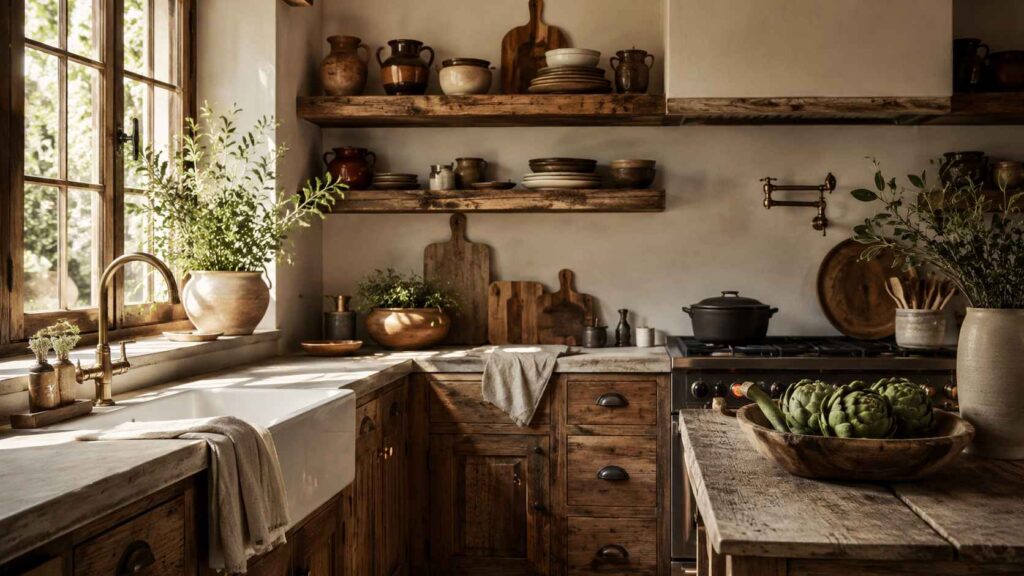
Wooden cutting boards, open shelves, ceramic jars, linen towels, and an aged-brass light can soften a modern kitchen. You don’t need new cabinets. Small changes count.
Bedroom
Use bedding in cream, beige, olive, or faded blue. Add a wooden headboard, textured rug, and warm bedside lamps. The room should feel quiet, not heavily decorated.
Entryway
A narrow bench, basket, peg rail, and mirror create an inviting first impression. And they’re useful—which matters in a small home.
Use Vintage Pieces Carefully
Vintage finds give rustic home decor a sense of history, but too many small objects create visual noise. Choose pieces that have a job. A wooden box can hold remote controls. A vintage crock can store utensils. A worn stool can become a plant stand.
Before buying, ask whether you’ll use it and whether its wear looks charming or simply damaged.
A little age is beautiful. Dusty clutter… not quite.
Bring in Seasonal Rustic Touches
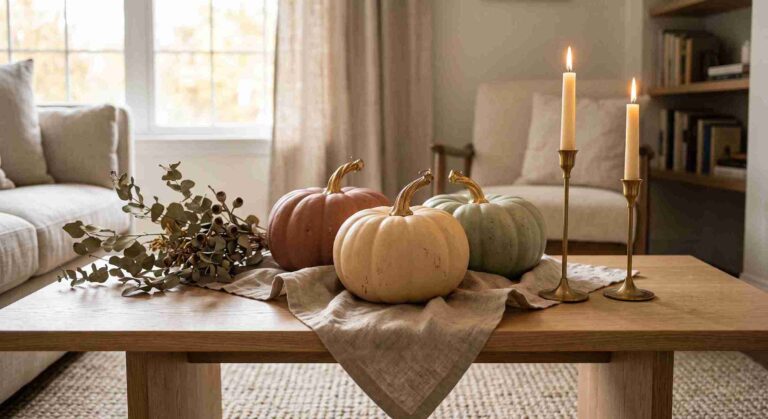
A neutral base makes seasonal decorating easier. In autumn, add dried leaves, amber glass, and rust-colored textiles. In spring, use fresh branches, lighter linen, and simple flowers.
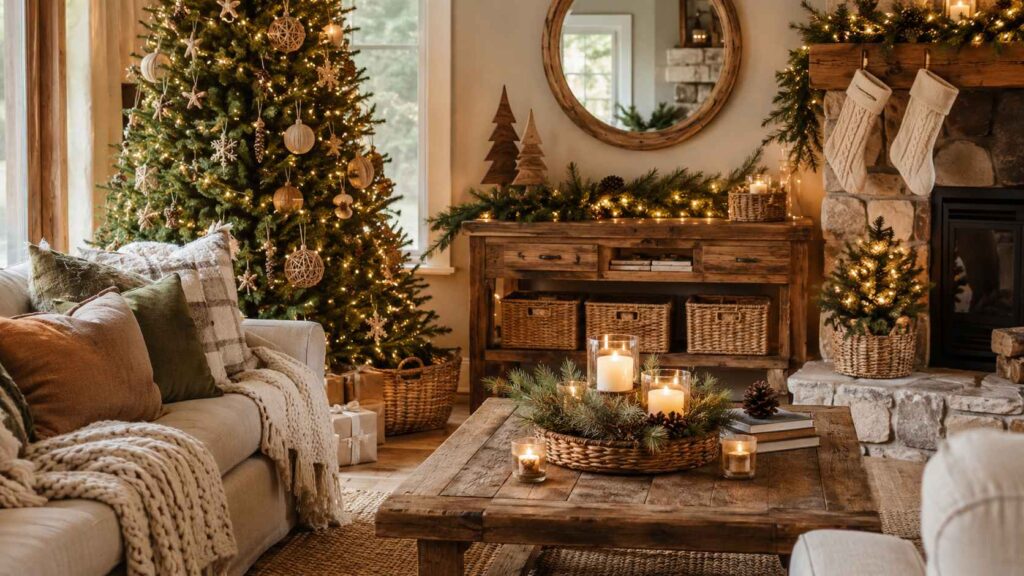
At Christmas, evergreen garlands, wooden ornaments, warm lights, burlap ribbon, and aged metal bells fit naturally into rustic home decor. You can coordinate them with your Home Decorators Collection Christmas tree for a fuller holiday look without changing the entire room.
Common Rustic Decorating Mistakes
The style can feel forced when every item follows the same theme. Avoid covering walls with quotes, distressing every surface, or buying uncomfortable furniture just because it looks old.
Lighting matters too. Cool bulbs can make warm wood and earthy colors look dull. Use softer lighting and more than one light source when possible.
Most importantly, don’t rush. A believable home takes time.
Final Thoughts
Good rustic home decor isn’t about copying a cabin or buying matching accessories. It’s about creating a home that feels grounded, useful, and personal.
Start with what you own. Add natural texture. Choose one strong wooden piece. Bring in a vintage object that means something. Then stop for a moment and look around…
The room may already feel warmer.
Frequently Asked Questions
Is rustic home decor still popular?
Yes. Natural materials, warm colors, and comfortable rooms don’t depend on one short-lived trend. Newer versions simply use fewer themed accessories and cleaner lines.
Can rustic decor work in a small apartment?
Absolutely. Use light walls, one or two wooden accents, compact furniture, woven storage, and a limited palette. Too many dark pieces can make a small room feel heavy.
What colors work best with rustic interiors?
Warm white, cream, taupe, beige, brown, olive, rust, clay, and muted blue are reliable choices. Pick two or three main shades instead of every earthy color at once.
How can I create rustic home decor on a budget?
Shop your own home first, visit thrift stores, repurpose wooden furniture, and focus on textiles. A rug, throw, basket, or lamp can change the mood without a major renovation.