70s Home Decor: How to Bring the Groovy, Cozy Vibe Into Your Modern Home
Let’s be completely honest for a second. Mention the 1970s to most homeowners, and their minds immediately jump to wall-to-wall avocado bathroom suites, plastic sofa covers, and scratchy orange shag carpets that trapped every crumb from 1974.
Fair enough. But look past the extreme kitsch, and you’ll find that 70s home decor was actually one of the warmest, most relaxed, and deeply human design eras we’ve ever had.
After years of cold, stark, ultra-minimalist gray boxes dominating our feeds, people are genuinely craving comfort again. We want spaces that feel lived-in. Homes where you can sink into a deep couch with a cup of coffee, kick off your shoes, and feel wrapped in warmth. And that is exactly why retro styling has staged such a massive comeback in contemporary spaces.
You don’t have to turn your living room into a dusty vintage time capsule to enjoy it. It’s all about taking the soulful textures, soulful colors, and playful shapes of that decade and blending them with clean, modern sensibilities.
Why Is 70s Home Decor Making Such a Massive Comeback?
Trends always move in cycles, usually swinging hard against whatever came right before them. For the past decade, we lived in sterile, all-white kitchens and gray-on-gray living rooms. Clean? Sure. But also a little bit soulless.
The 1970s stood for the exact opposite: self-expression, tactile comfort, and organic warmth.
When you look at current styling, today’s homeowners want interiors that feel tactile. They want wood grains, soft velvet, earthy ceramics, and inviting seating arrangements that encourage people to actually sit and talk. The modern revival of 70s design simply strips away the chaotic clutter and keeps the best parts: the laid-back mood and the grounded aesthetic.
The Signature 70s Color Palette (And How to Update It)
The 70s were unashamedly colorful, yet deeply tied to the natural world. The colors weren’t neon; they were drawn straight from soil, spices, leaves, and sun.
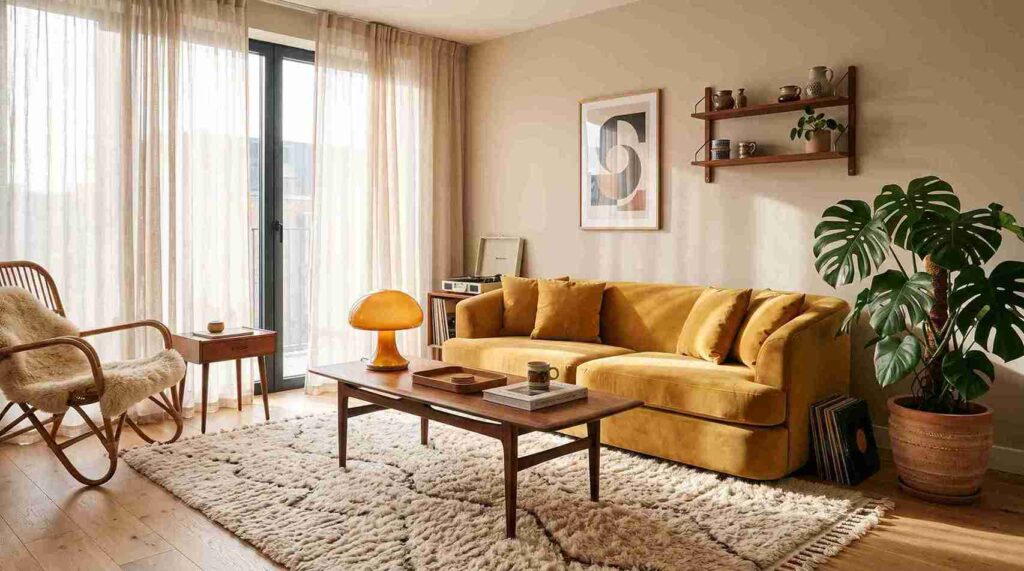
Here is how those classic shades translate into modern living:
- Mustard & Ochre: Instead of covering an entire wall, bring it in through velvet accent pillows, art, or a single statement chair. It adds an instant hit of sunshine.
- Burnt Orange & Terracotta: Rich, grounding, and undeniably cozy. Terracotta tiles or rust-colored linen throws give you that vintage look without the visual noise.
- Olive & Avocado Green: We skipped the glossy avocado refrigerators, thankfully. But muted olive walls, mossy throws, and lush indoor plants? Absolutely stunning.
- Chocolate Brown & Warm Wood Tones: Brown is officially back. Rich walnut furniture, teak sideboards, and warm cognac leather anchor light-colored spaces beautifully.
If you love grounding tones, you might notice how naturally these shades overlap with rustic styles like western home decor, where weathered leather, amber woods, and sunset palettes create that same grounded, rugged comfort.
Retro 1970s vs. Modern 70s Home Decor
To make sure your space feels chic rather than like an estate sale gone wrong, it helps to understand what stayed in the past and what works today:
| Design Element | The Original 1970s Style | Modern 70s Home Decor |
| Color Application | Wall-to-wall saturation in gold, orange, and brown | Warm neutral base (cream/off-white) with earthy accent tones |
| Flooring & Rugs | Wall-to-wall thick orange or green shag carpet | Light wood or terrazzo floors paired with high-pile cream Berber rugs |
| Furniture Profiles | Heavy, dark modular sets with busy floral prints | Low-slung, sculptural curves in solid velvets or boucle |
| Materials | Faux dark wood veneer and heavy plastics | Solid walnut, rattan, travertine, chrome, and smoked glass |
| Lighting | Dim amber globes and novelty lava lamps | Sculptural mushroom table lamps and brushed brass pendants |
| Wall Decor | Busy macrame ropes and dark faux-wood paneling | Minimalist wood slat walls, subtle tapestries, and clean graphic art |
Core Textures and Materials You Need to Master
Texture was everything in the seventies. A room wasn’t meant to just be looked at; it was meant to be touched. If you want to nail the aesthetic, mix at least three of these materials in your main room:
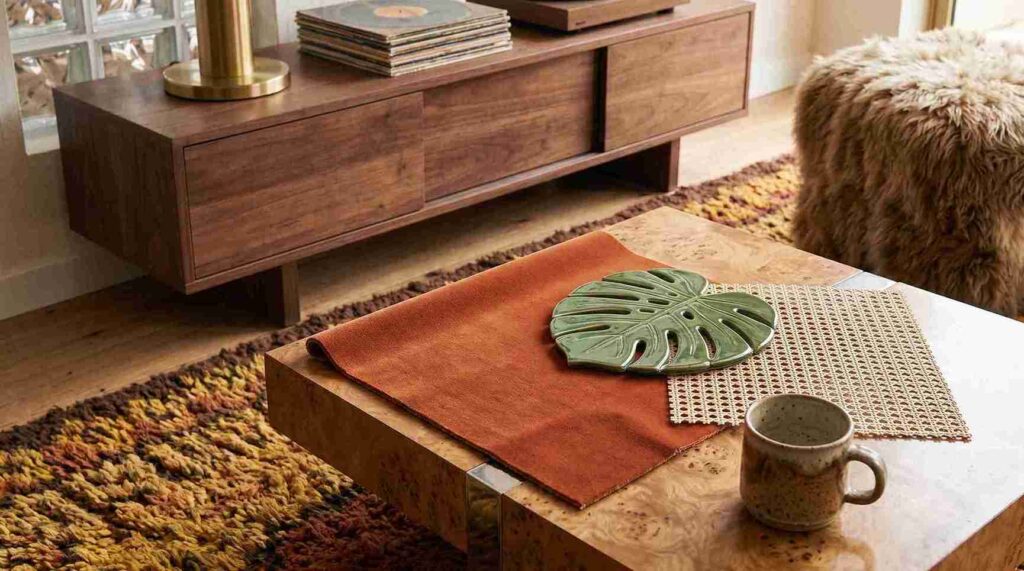
1. Woven Fibers (Rattan, Cane, and Wicker)
Woven textures instantly soften hard architectural lines. A cane sideboard, a wicker peacock-style accent chair, or simple woven pendant lights bring that breezy, global bohemian energy into a room.
2. Velvet and Boucle
Smooth, flat cotton can feel a bit lifeless when you’re aiming for a retro vibe. A deep olive or rust velvet armchair catches ambient light in a way flat fabrics simply can’t match.
3. Warm, Grained Wood
Skip the ultra-ashy, gray-washed flooring. The 70s loved the rich grain of teak, walnut, and warm oak. Adding a mid-century media console or a low-profile coffee table is often enough to anchor an entire room.
4. Chrome and Smoked Glass
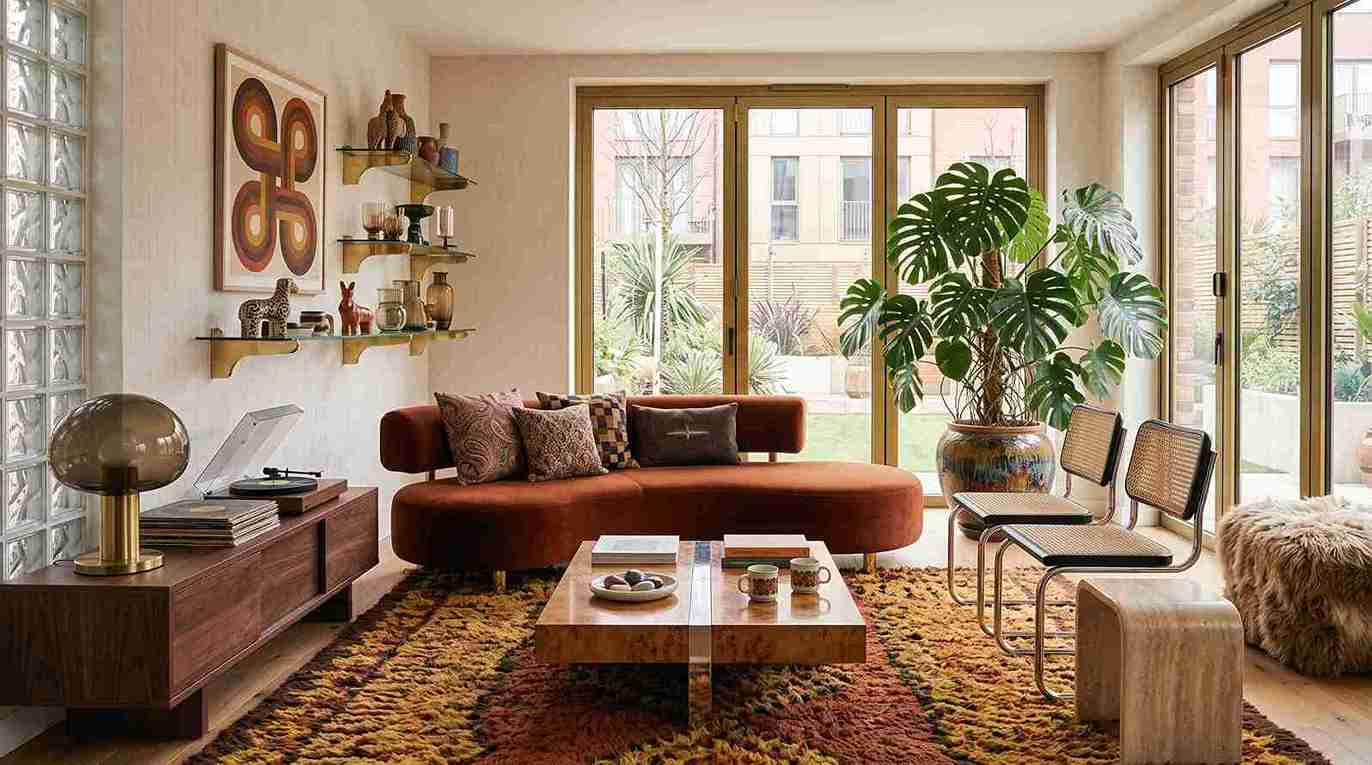
It wasn’t all just bohemian wicker. The mid-to-late 70s brought in a sleek, disco-infused edge. Tubular chrome chairs (like the classic Cesca chair) and smoked glass coffee tables add reflective contrast, keeping natural wood tones from feeling too heavy.
5 Practical Ways to Style 70s Home Decor Today
You don’t need to knock down walls to get this look going. Start small and layer things gradually:
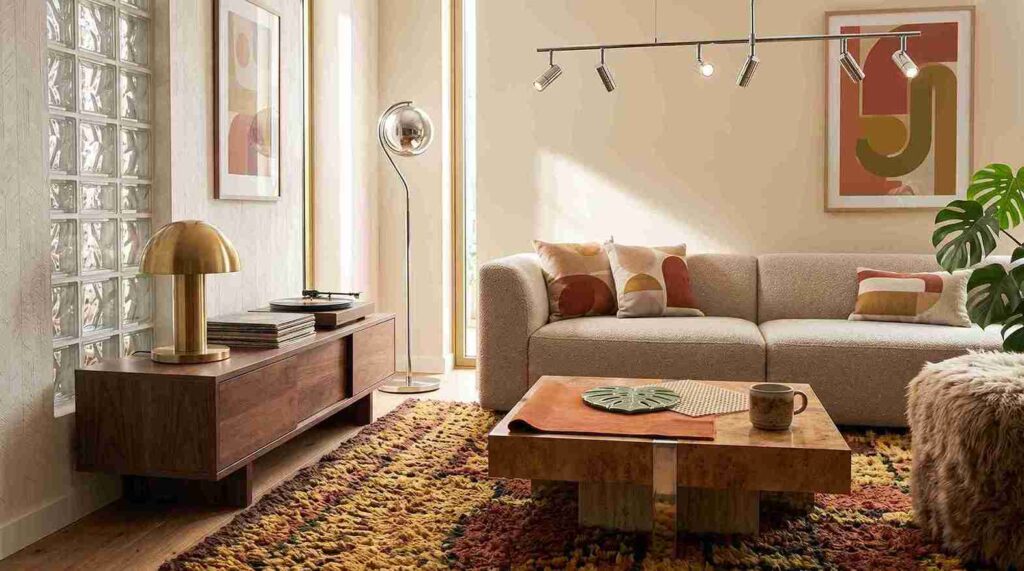
- 1. Invest in a “Mushroom” Lamp:Mushroom lamps whether in glossy white acrylic, amber glass, or brushed metal are the easiest entry point into this aesthetic. Place one on your bedside table or entryway console for an instant focal point.
- 2. Choose Low-Profile Seating:Seventies seating was all about slouchy, low-slung, lounge-heavy comfort. Modular sectionals, conversation pit-style seating, or curved bean-bag armchairs create a relaxed, casual gathering spot.
- 3. Bring in Big-Leaf Houseplants:You cannot pull off genuine 70s home decor without greenery. Snake plants, Monstera Deliciosa, Boston ferns, and hanging spider plants breathe immediate life into warm wood and earth-toned backdrops.
- 4. Try Graphic Shapes Instead of Wild Wallpaper:If covering an entire room in psychedelic swirls feels intimidating, opt for framed arch art, concentric circle prints, or a subtly patterned runner.
- 5. Curate Inspiration from Modern Creators:If you’re unsure how to piece eclectic items together without creating clutter, following
top home decor influencerswho specialize in retro revivals can show you how to stage vintage flea market finds alongside modern high-street furniture.
Room-by-Room Guide: Adding 70s Flair
The Living Room
Focus on the seating zone. A low-profile modular couch, a high-pile cream shag rug, a walnut slat media unit, and a couple of brass arched floor lamps will get you 80% of the way there. Keep the walls light think warm biscuit or linen white so the furniture does the talking.
The Bedroom
Make it plush. Think layered bedding: linen sheets paired with a heavy waffle or velvet quilt in ochre or terracotta. Add a rattan headboard, a pair of warm-tinted bedside sconces, and maybe a small macrame plant hanger in the corner.
The Kitchen & Dining Space
If you have simple flat-panel cabinets, swap out basic black pulls for brushed brass or warm amber handles. In the dining area, pair a rounded wooden table with cantilever chrome cane chairs. And don’t forget ceramic tableware speckled, earthy pottery feels right at home here.
Frequently Asked Questions
What defines authentic 70s home decor?
At its core, it is defined by warm earth tones (mustard, terracotta, olive green), organic and curved furniture silhouettes, natural tactile materials like wood and rattan, and layered, ultra-cozy textiles.
How do I make 70s decor look modern and not dated?
Balance is key. Pair one or two bold vintage statement pieces like a velvet swivel chair or an arched mirror with clean, minimal contemporary foundations. Avoid heavy dark paneling across all four walls and opt for bright, warm-neutral wall paints instead.
Are shag carpets still in style?
Yes, but in moderation. Instead of wall-to-wall bright orange carpets, modern interiors use high-pile, plush area rugs in neutral cream, ivory, or subtle geometric prints to add soft underfoot texture.
Where can I source authentic 70s decor pieces?
Thrift stores, flea markets, and vintage shops are great spots for authentic lamps, ceramics, and teak furniture. Modern retailers also carry extensive retro-inspired lines if you prefer brand-new furniture built to current safety and durability standards.
Final Thoughts
Styling your space with 70s home decor isn’t about following strict interior design rules or recreating a film set. It’s really just about leaning into warmth, comfort, and personality.
Start small. Grab a retro glass lamp, throw a rust-colored blanket over your sofa, bring in a leafy plant, and see how your space starts to feel softer, cozier, and a lot more welcoming.