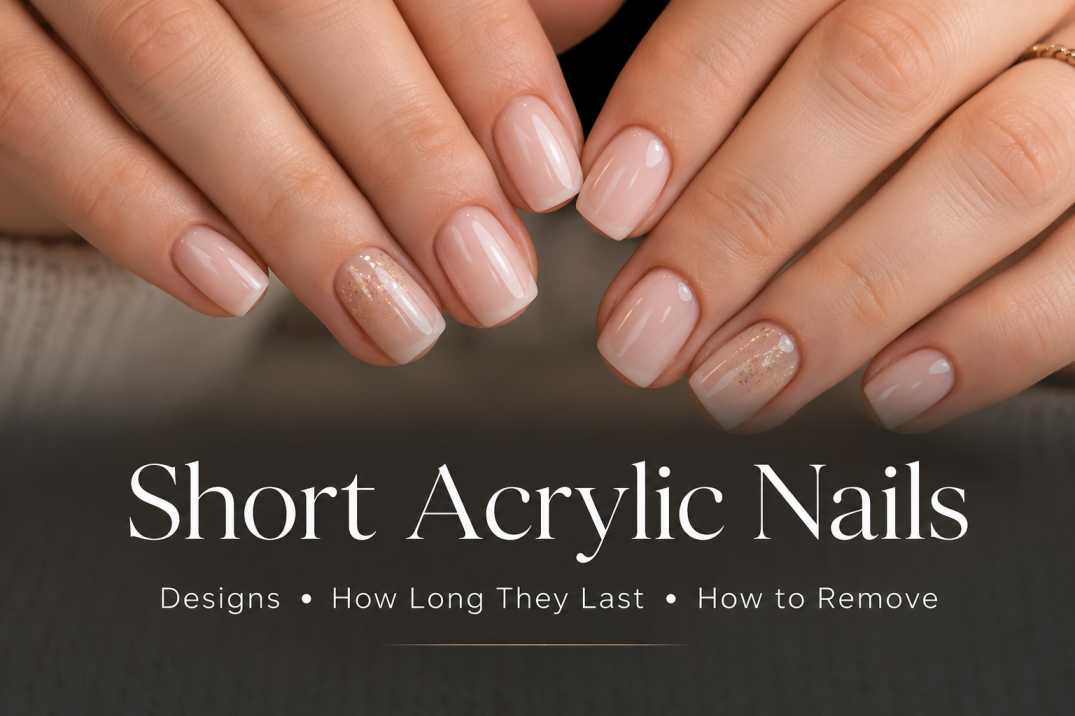
Short Acrylic Nails: Everything You Need to Know Before Your Next Appointment
There’s a reason short acrylic nails have their own corner of the internet.
Walk through any Pinterest board, any salon Instagram, or any nail art hashtag—and you’ll find them everywhere. Square tips in mocha brown. Rounded edges in soft pink chrome. Tiny coffin shapes with a barely-there French tip. Clean, polished, wearable every single day.
Short acrylic nails hit a sweet spot that longer nails simply can’t. They look done. They feel intentional. And unlike extra-long sets, you can actually type, open a can, and live your normal life without a second thought.
If you’re considering getting them for the first time — or you’ve had them before and want a refresher on designs, maintenance, and what products actually work — this guide covers everything.
Why Short Acrylic Nails Make So Much Sense
Long acrylics get all the attention, but short sets are genuinely more practical for most people — and just as beautiful when done right.
Here’s why they work so well:
They’re easier to maintain. Less length means less leverage. Short acrylics are less likely to catch on things, bend, or snap — which means fewer emergency repairs between appointments.
They suit every lifestyle. If you type all day, work with your hands, play a sport, or just find long nails annoying, short acrylics give you the polished look without the daily inconvenience.
They grow out more gracefully. A shorter set looks neat even two or three weeks after your appointment. The gap between your natural nail and the acrylic is less visible at shorter lengths.
More design options than you’d think. The idea that short nails can only do simple designs is outdated. Aura nails, chrome finishes, graphic French tips, negative space art, ombre—all of it works beautifully on a shorter canvas.
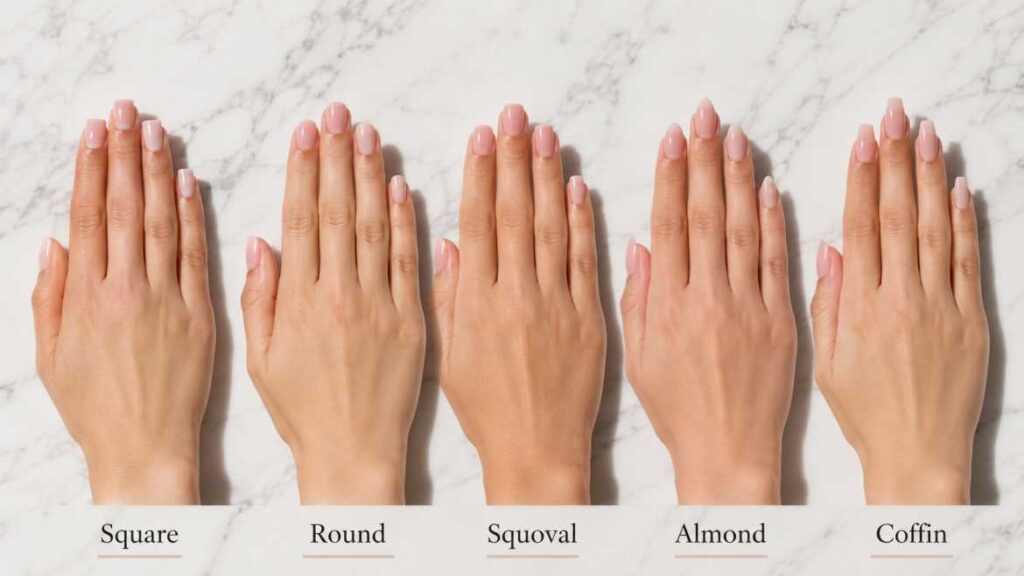
Best Shapes for Short Acrylic Nails
Shape changes everything. The same nail length can look completely different depending on the shape your technician files.
Square: Clean, flat tip with sharp corners. Very modern and graphic-looking. Works especially well with French tips, solid colors, and geometric nail art. The most popular short acrylic shape right now.
Round: Slightly oval tip that follows the natural shape of your fingertip. Soft and feminine. Great for everyday wear and natural-looking sets.
Squoval: A square shape with the corners slightly filed down. The most practical option — it has the clean look of a square without sharp edges that snag on things.
Almond: Slightly tapered sides that come to a soft, rounded point. Harder to achieve at very short lengths, but beautiful when it works. Elongates the finger visually.
Coffin (short version): Yes, you can do a mini coffin. A slightly tapered shape with a flat tip. Surprisingly chic at shorter lengths.
Short Acrylic Nail Design Ideas for 2025
Design trends shift, but certain looks hold up across seasons. These are the styles dominating right now — and all of them work beautifully on short nails.
Soft chrome and aura nails: A blended, glowing effect using chrome powder. Aura nails specifically create a halo of color at the center of the nail. Both trends translate to short sets perfectly — the smaller canvas actually makes the effect look more concentrated and striking.
Graphic French tips: Not your grandmother’s French manicure. Modern versions use bold lines, colored tips, negative space, or geometric shapes where the classic white tip would be. Square short nails and graphic French tips are a particularly strong combination.
Mocha and latte tones: Warm brown neutrals are everywhere right now. Mocha mousse, caramel, and coffee with cream—these shades are sophisticated, wearable with everything, and look especially polished on shorter nails.
Minimalist negative space: Designs that leave parts of the natural nail intentionally bare. Clean, modern, and effortless. Works on any shape at any short length.
Pastel ombre: Soft gradient from a pale base to a slightly deeper tip. Lavender, soft pink, and baby blue are all trending this year. Easy to wear, easy to love.
How Long Do Acrylic Nails Last?
This is one of the most searched questions before a first acrylic appointment—and the honest answer is it depends.
On average, acrylic nails last two to three weeks before they need a fill (also called an infill). A fill involves your technician filling in the gap that appears at the base of the nail as your natural nail grows out and refreshing the top coat or gel polish on top.
With regular fills every two to three weeks, the same acrylic set can technically last six to eight weeks before a full soak-off and replacement is recommended.
A few things affect how long your set lasts:
Your nail prep. A good technician dehydrates and primes the natural nail properly before application. Poor prep is the number one reason acrylics lift early.
Your daily habits. Exposure to water, harsh cleaning products, and chemicals breaks down the bond between the acrylic and your natural nail. Wearing gloves while cleaning genuinely extends the life of your set.
Nail length. Shorter nails have less leverage, which means less stress on the acrylic bond. Short sets consistently outlast long ones in terms of lifting and breakage.
The quality of products used. Professional-grade acrylic monomer and polymer last longer and bond better than budget alternatives.
If your acrylics are lifting before two weeks, it’s either a prep issue, a product quality issue, or your natural nails have excess oil (a common issue that a good dehydrator solves).
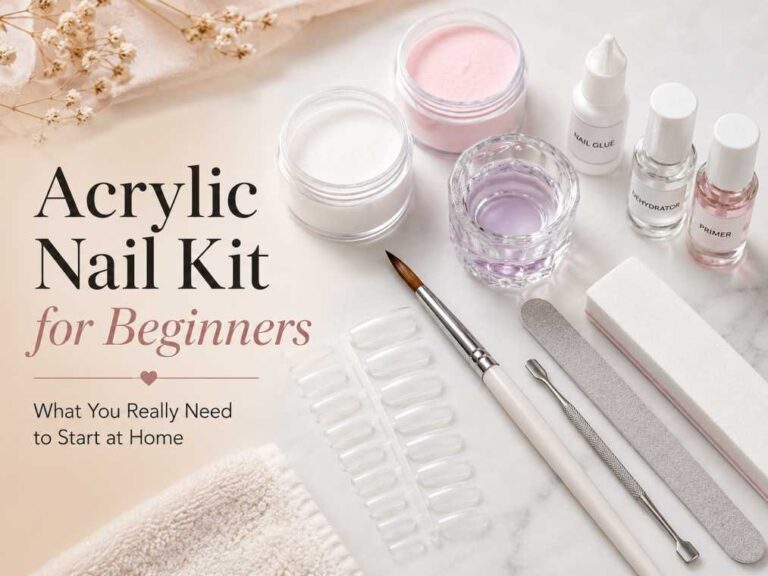
Acrylic Nail Kit: What You Need If You’re Doing It at Home
At-home acrylics have become much more accessible in recent years. Quality has improved, tutorials are everywhere, and a decent acrylic nail kit gives you the core products you need to get started.
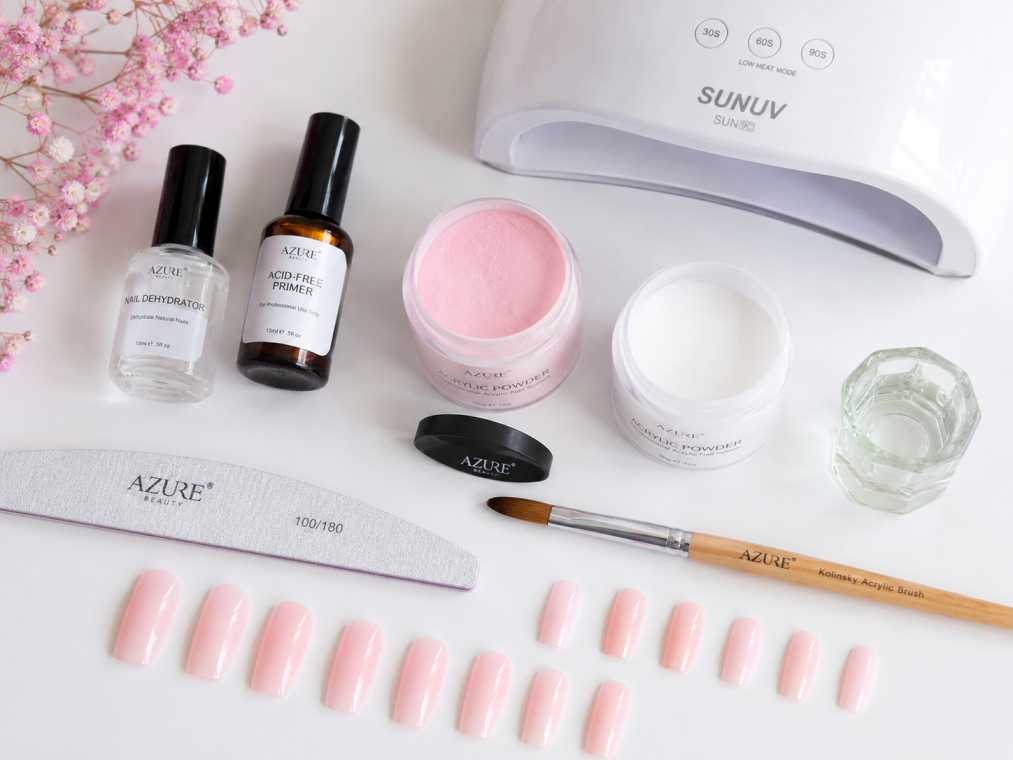
Here’s what a solid beginner kit should include:
Acrylic liquid monomer: The liquid component that activates the acrylic powder. Look for EMA (ethyl methacrylate)-based formulas—they’re safer and more flexible than MMA-based alternatives.
Acrylic powder (polymer): Comes in clear, pink, and white. For a natural look, pink or clear works best. For a French look, use white powder at the tip with pink or clear for the base.
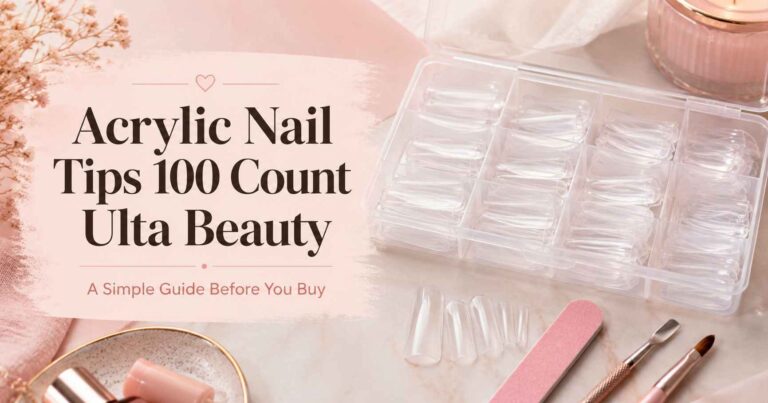
Nail forms or tips: Nail forms stick under your natural nail and let you sculpt an extension freehand. Tips are pre-shaped plastic nails you glue on and then overlay with acrylic. Tips are easier for beginners.
A Kolinsky acrylic brush: This is not the place to cut corners. A cheap brush makes acrylic application significantly harder. A mid-range Kolinsky brush picks up the right bead size and lets you place and shape cleanly.
Nail dehydrator and primer: Non-negotiable for adhesion. Apply the dehydrator first, let it dry, and then the primer. This step prevents lifting.
A nail file and buffer: For shaping the finished acrylic and smoothing the surface before the top coat.
Gel top coat and UV/LED lamp: Most people finish at-home acrylics with a gel polish top coat for shine and durability.
Things to avoid in kits: Any product listing MMA (methyl methacrylate) as the main monomer. It’s cheaper but causes lifting, is extremely difficult to remove, and can damage your natural nails.
How to Soak Off Acrylic Nails at Home
Knowing how to soak off acrylic nails properly is just as important as knowing how to apply them. Ripping or peeling acrylics off — even when they’re lifting — causes serious damage to your natural nail plate.
Here’s the correct process:
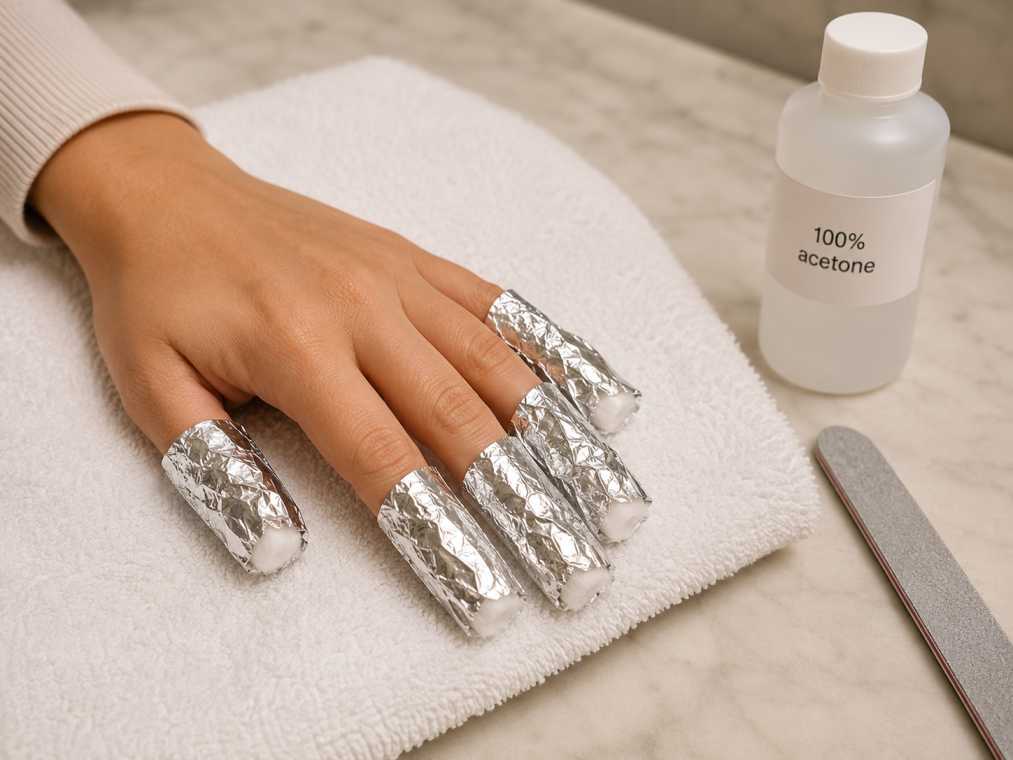
What you need: 100% acetone, aluminum foil, cotton balls, a nail file, a cuticle pusher or orangewood stick, and cuticle oil.
Step 1 — File down the top layer. Use a coarse nail file (100 grit) to file the surface of the acrylic until the shine is completely gone. You’re not filing all the way through—just breaking the seal so acetone can penetrate.
Step 2 — Soak cotton in acetone. Cut aluminum foil into squares large enough to wrap around your fingertip. Soak a cotton ball in 100% acetone and place it directly on the nail.
Step 3 — Wrap and wait. Wrap the foil tightly around each fingertip to hold the cotton in place. Wait 20 to 30 minutes. Don’t rush this step — insufficient soaking time is why people end up picking and peeling.
Step 4 — Check and push. After soaking, the acrylic should look white and chalky. Gently push it off with a cuticle stick. If it’s still firmly attached, re-wrap and soak for another 10 minutes.
Step 5 — Buff and nourish. Once all acrylic is removed, lightly buff the nail surface to smooth it. Apply a generous amount of cuticle oil and hand cream. Your nails have been under a seal for weeks—they need moisture.
Avoid doing a full soak-off more than once every few months. The process is drying, and your natural nails need recovery time between sets.
Frequently Asked Questions
Are short acrylic nails better for beginners?
Yes. Short lengths are significantly easier to apply, shape, and maintain — especially for first-timers doing their own nails at home. Less length means less risk of breakage and a more forgiving application process.
How much do short acrylic nails cost at a salon?
Pricing varies widely by location and salon level, but a full short acrylic set typically runs between $35 and $75. Fills are usually $20 to $45. Nail art, chrome, or 3D additions add to the total.
Can I shower with acrylic nails?
Yes, but prolonged water exposure weakens the bond over time. Pat your nails dry after washing, avoid soaking your hands, and wear gloves when washing dishes or cleaning with chemicals.
Do acrylic nails damage natural nails?
The acrylic itself doesn’t damage nails — improper removal does. As long as you soak off correctly and keep your natural nails moisturized, the damage is minimal. Frequent sets without breaks can thin the nail plate over time, so periodic rest periods help.
What’s the difference between acrylic and gel nails?
Acrylics use a liquid and powder system that air-cures. Gels use a pre-mixed formula that cures under UV or LED light. Acrylics are generally stronger and easier to repair at home. Gels tend to be more flexible and look more natural but are harder to repair between appointments.
Final Thoughts
Short acrylic nails sit at the intersection of practical and polished in a way that almost nothing else in nail beauty does.
They’re neat without being precious. Styled without being high-maintenance. And with the design options available in 2025—chrome, aura, graphic French, and minimalist negative space—short doesn’t mean simple anymore.
Whether you’re booking a salon appointment, shopping for an acrylic nail kit to try at home, or just trying to figure out how long acrylic nails last before you commit, the answer is the same: they’re worth it.
Start short. Stay consistent with fills. Learn the proper soak-off. And enjoy actually being able to use your hands.
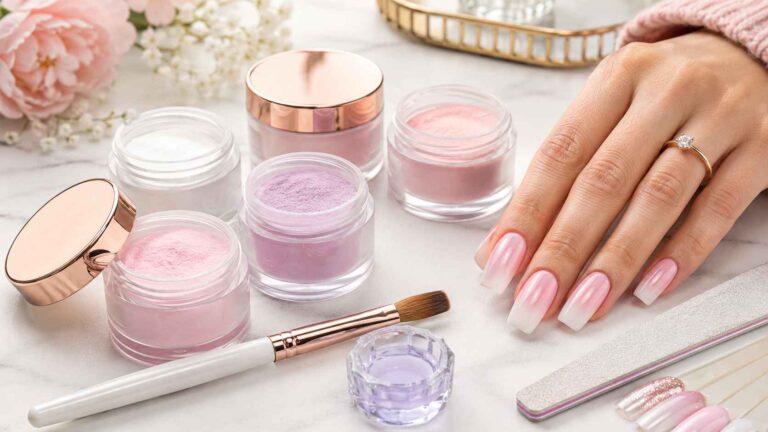
Cover and colored acrylic nail powder can create a smooth, long-lasting finish on shorter shapes.