How to Soak Off Acrylic Nails: 7 Safe Steps at Home
Acrylic nails can look flawless for weeks, but removal is the part that needs patience. When the edges start lifting, it is tempting to pull, peel, or slide something underneath. Don’t. That quick shortcut can take layers of your natural nail with it, leaving the surface thin, sore, and rough.
If you prefer a more practical and easy-to-maintain manicure, explore these short acrylic nail ideas before choosing your next set.
The safest answer to how to soak off acrylic nails at home is simple: shorten the extensions, carefully file the shiny top layer, soak the remaining product with acetone, and remove only what has softened. Then repeat if needed. It isn’t glamorous… but slow removal is much kinder to your nails than forcing the acrylic off.
How Do You Soak Acrylic Nails Off?
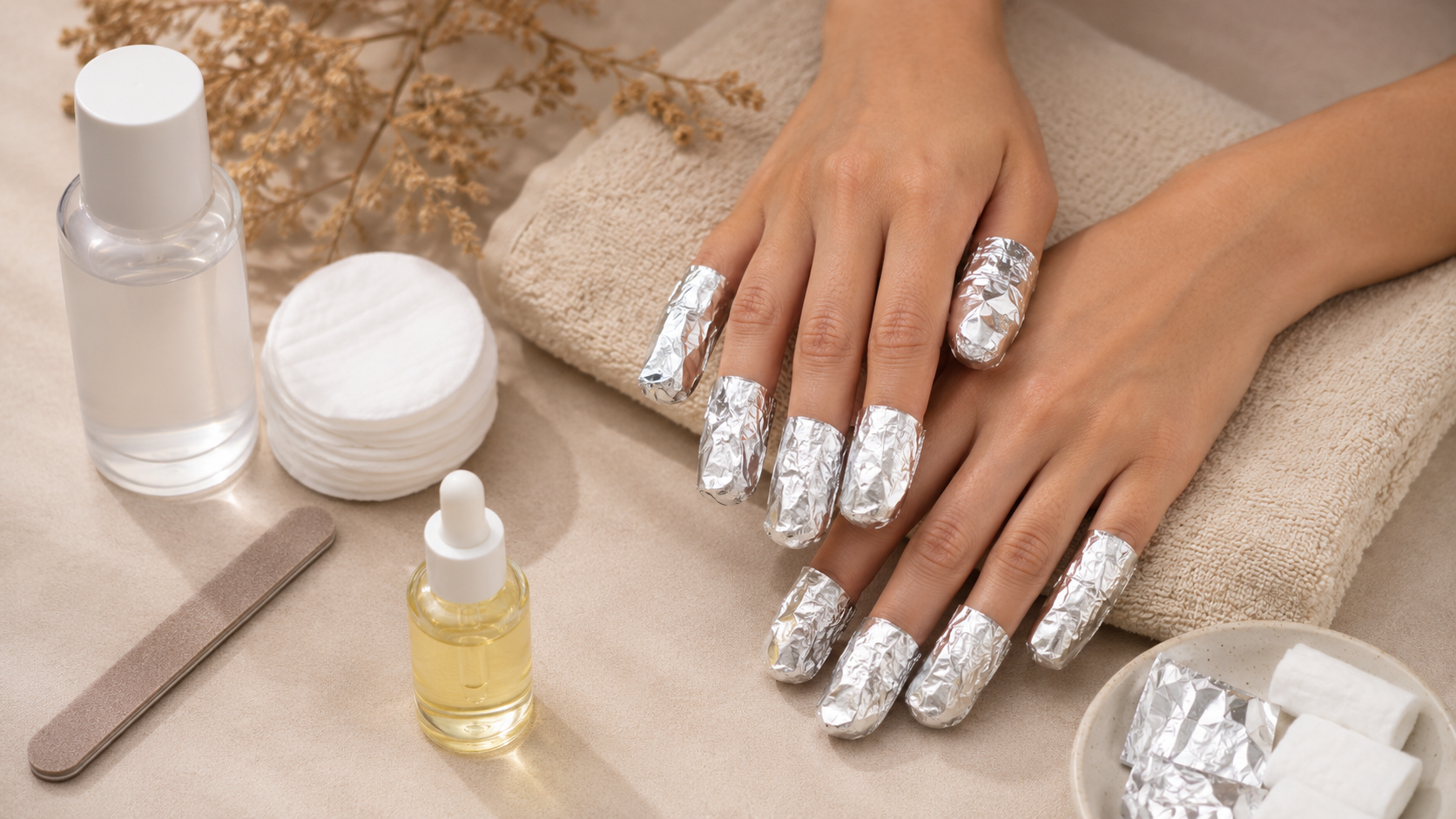
Clip the extensions shorter, file away the top coat and some acrylic bulk, then place acetone-soaked cotton on each nail. Wrap every fingertip with foil and wait about 20 to 25 minutes.
Remove one wrap at a time and gently move the soft, gummy acrylic away. If the product still feels hard, rewrap it and leave it for another 5 to 10 minutes.
Never pry, peel, bite, or force acrylic from the natural nail.
What You Need to Remove Acrylic Nails at Home
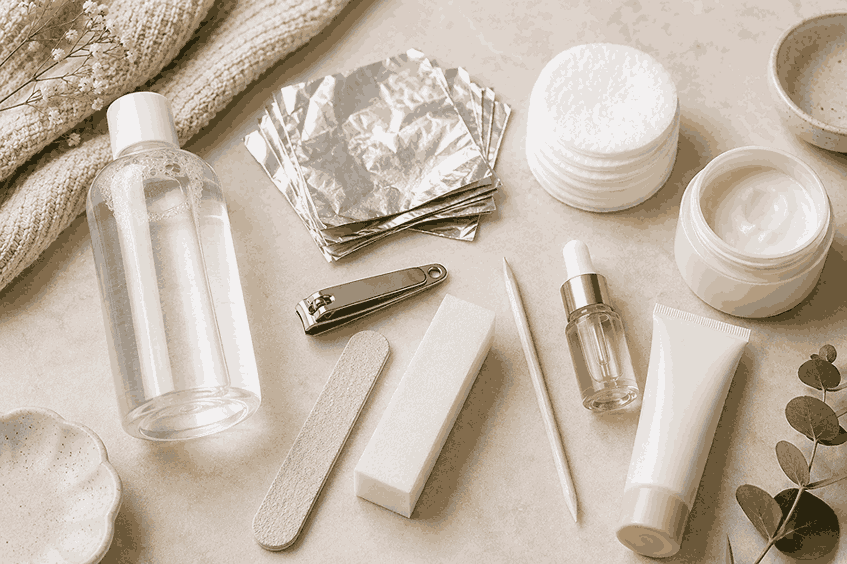
| Item | Purpose |
|---|---|
| Nail clippers or tip cutters | Shorten long extensions |
| Coarse nail file | Break the top seal and reduce thickness |
| Fine buffer | Smooth small amounts of residue |
| 100% acetone | Soften and break down acrylic |
| Cotton balls or pads | Hold acetone on each nail |
| Aluminum foil or removal clips | Keep the cotton in place |
| Orangewood stick | Break the top seal and reduce the thickness |
| Petroleum jelly | Help protect nearby skin |
| Cuticle oil and hand cream | Rehydrate nails and skin |
| Old towel | Protect the work surface |
Work in a well-ventilated area. Acetone can irritate the skin and eyes and is highly flammable, so keep it away from flames, sparks, heaters, and cigarettes. Never microwave or directly heat it.
If you are planning to do your own manicure after removal, an acrylic nail kit for beginners can help you understand which basic tools and products you actually need.
How to Soak Off Acrylic Nails at Home With Acetone
Step 1: Prepare Your Space
Cover the table with an old towel and place a paper towel on top. Wash and dry your hands before you start.
You can apply a thin layer of petroleum jelly around your cuticles to help protect the surrounding skin. Avoid putting it over the acrylic itself, though, because it may prevent the acetone from reaching the product properly.
If the skin around your nails is cracked, bleeding, swollen, or already irritated, delay the DIY removal and speak with a nail professional.
And take your time. Rushing is where most nail removal problems begin.
Step 2: Clip Down the Acrylic Length
Use nail clippers or an acrylic tip cutter to remove the extra length. Leave a small free edge so you do not accidentally cut your natural nail underneath.
You do not need to cut the acrylic right down to the fingertip. The goal is simply to reduce the amount of product that must be filed and soaked.
If clipping creates painful pressure, stop and file down the length instead.
Step 3: File Off the Shine
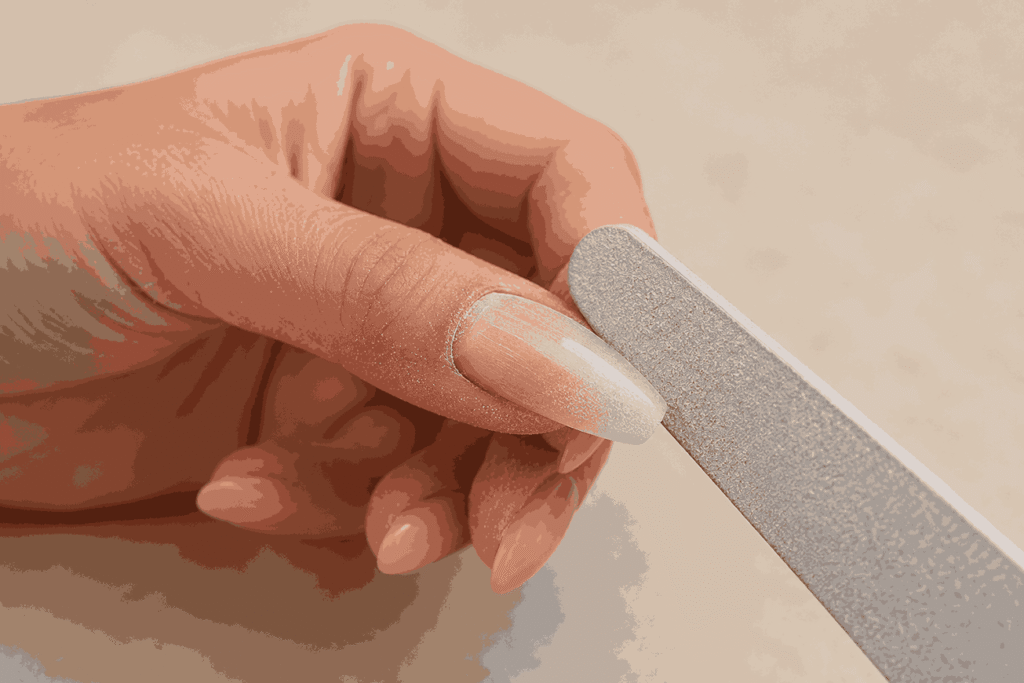
Use a coarse nail file to remove the glossy top coat. The entire surface should look dull rather than shiny.
Carefully file away some of the acrylic thickness as well. Keep the file moving instead of rubbing one small area repeatedly. This reduces uncomfortable heat and helps you avoid creating deep marks.
Do not file all the way down to your natural nail. Leave a thin layer of acrylic for the acetone to soften. Over-filing can thin and weaken the natural nail plate.
Once the shine and some bulk have been removed, wipe away the filing dust.
Step 4: Apply Acetone-Soaked Cotton
Cut cotton pads into nail-sized pieces or use small cotton balls. Saturate one piece with 100% acetone and place it directly over the acrylic.
The cotton should be properly wet, not just slightly damp.
Wrap your fingertip snugly with a small square of aluminum foil. The foil keeps the cotton pressed against the nail and slows down evaporation.
Repeat this process on all ten nails. Nail removal clips can replace foil.
Step 5: Let the Acrylic Soak
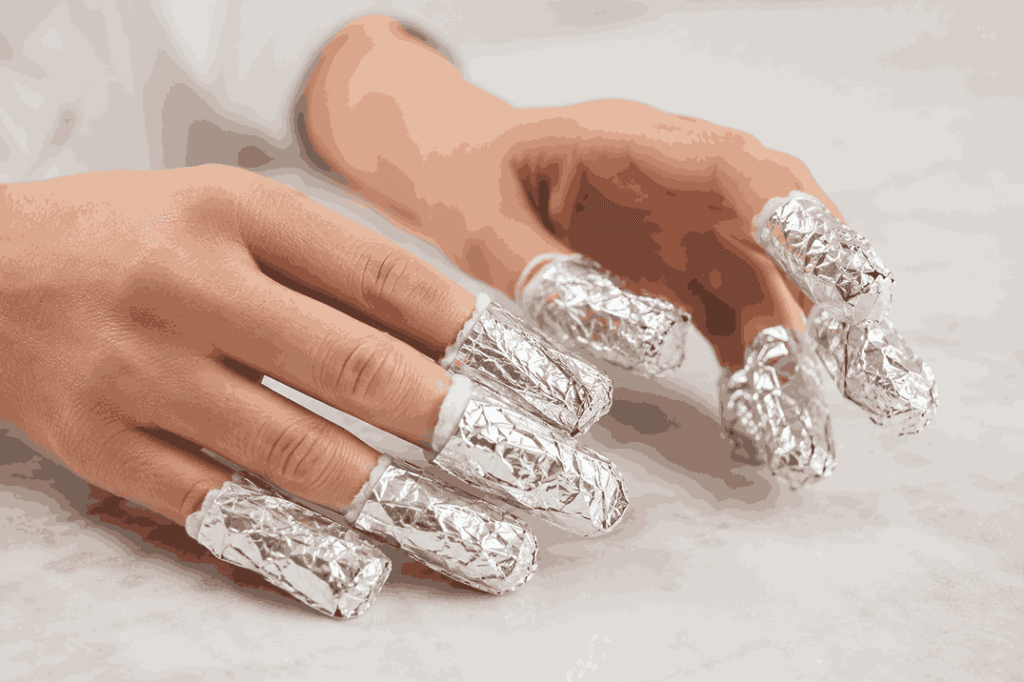
Leave the wraps in place for 20 to 25 minutes. Try not to keep opening them to check, as acetone evaporates quickly and the acrylic may start to harden again.
After 20 minutes, check one nail first.
Acrylic that is ready for removal usually looks
- Soft
- Swollen
- Flaky
- Gummy
- Slightly melted around the edges
If the acrylic still feels smooth and hard, add more acetone to the cotton, rewrap the nail, and wait another 5 to 10 minutes.
Thick acrylic sets or heavy nail art may need more than one soaking round. That is completely normal.
Step 6: Remove Only the Softened Product
Work on one finger at a time. Press and gently twist the foil as you slide it off. Some of the softened acrylic may come away with the cotton.
Use an orangewood stick to move the remaining soft product toward the free edge of the nail. There should be almost no force involved.
When you meet resistance, stop.
Do not dig, scrape harder, or try to lift the product from underneath. Apply the acetone-soaked cotton again and give that nail another few minutes.
A second soak is always better than removing layers of your natural nail.
Step 7: Buff Lightly and Moisturize
Once the acrylic has been removed, use a fine buffer to smooth away small pieces of loose residue. Buff lightly. You do not need to make the nail completely smooth in a single session.
Wash your hands with mild soap and water, dry them carefully, and massage cuticle oil into each nail and the surrounding skin.
Finish with a rich hand cream. Acetone can leave the skin feeling dry and tight, so this step really does make a difference.
How Long Does It Take to Soak Off Acrylic Nails?
The soaking stage usually takes 20 to 30 minutes, but the complete removal process may take 45 to 60 minutes after clipping, filing, rewrapping, buffing, and aftercare.
| Nail Condition | Estimated Soaking Time |
|---|---|
| Thin acrylic layer | 15–25 minutes |
| Standard acrylic set | 20–30 minutes |
| Thick acrylic or several fills | 30–45 minutes in rounds |
| Acrylic with gel polish or heavy nail art | Extra filing and soaking may be needed |
| Acrylic is still hard | Rewrap for another 5–10 minutes |
These times are estimates, not deadlines. The acrylic is ready when it moves easily without pressure.
So, how long does it take to soak off acrylic nails? Honestly, as long as the product needs to become properly soft. Trying to beat the clock often leads to scraping and damaged nails.
How to Soak Off Acrylic Nails Without Acetone
You may have seen videos recommending hot water, cooking oil, dish soap, dental floss, or a plastic card. These tricks look quick and gentle, but they do not properly dissolve a firmly attached acrylic set.
Water and oil may help loosen certain press-on nails or adhesive tabs. Salon acrylic is different. It is attached much more firmly to the natural nail.
There is no dependable household soak that works like acetone on traditional acrylic.
The most realistic acetone-free removal option is professional filing with an electric nail file. A trained nail technician can reduce the acrylic while controlling the pressure, speed, and distance from your natural nail.
Trying to drill off an entire set at home can cause heat, grooves, or painful thinning — especially when you have never used an electric nail file before.
How to Soak Off Acrylic Nails at Home Without Acetone
If acetone irritates your skin, you dislike the smell, or you simply do not have it available, do not replace it with a forceful DIY hack.
Safer options include:
- Book a professional file-off removal.
- Shorten the extensions and allow them to grow out gradually.
- Ask a nail technician to reduce the acrylic thickness.
- Wait until you have the correct removal supplies.
- Seek professional advice if the nail is painful, swollen, discolored, or separating.
Warm, soapy water is not a reliable answer for how to soak off acrylic nails at home without acetone. Vinegar, lemon juice, rubbing alcohol, and cooking oil will not safely dissolve solid acrylic either.
And please avoid dental floss. Sliding floss or a card under an already lifted acrylic nail creates pressure against the natural nail. The acrylic may come off, but part of your natural nail can come with it.
Common Acrylic Removal Mistakes
Peeling or Biting the Acrylic
Acrylic bonds strongly to the nail plate. Pulling it off can lift the upper layers of your natural nail and leave behind white, flaky, or painful patches.
Using Dental Floss or a Plastic Card
Sliding an object underneath the lifted acrylic creates leverage against the natural nail. This can cause tearing, separation, and sudden pain.
Filing Until the Nail Feels Hot
Heat is a warning sign. Stop filing, allow the nail to cool, and continue later using lighter pressure.
Forcing Product That Is Still Hard
If the acrylic does not move easily, it needs another soak — not a stronger push.
Skipping Nail Aftercare
Acetone removes oil from both the nail and the surrounding skin. Cuticle oil and hand cream help reduce dryness after removal.
Nail Care After Acrylic Removal
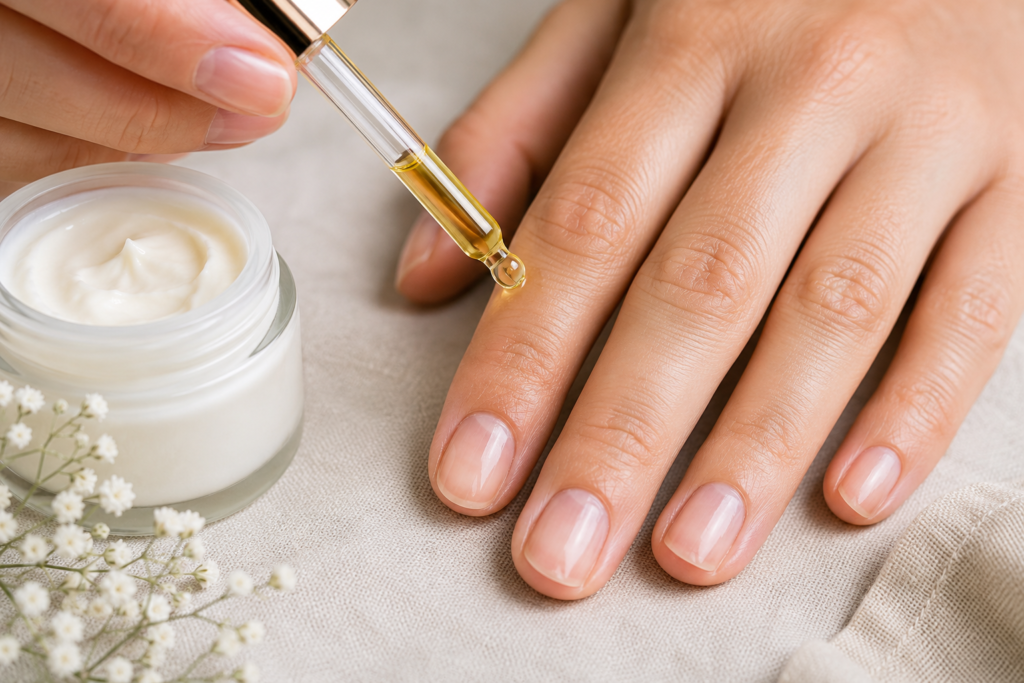
Keep your natural nails fairly short for a while so weakened edges do not catch on clothing or split.
Apply cuticle oil once or twice daily. You can also use hand cream after washing and wear gloves while cleaning, washing dishes, or using household chemicals.
A gentle strengthening base coat may protect the nail surface, but a healthy nail still has to grow forward over time. Taking a short break from acrylics and gel extensions can prevent additional stress.
See a dermatologist or qualified healthcare professional if you notice:
- Persistent pain
- Redness or swelling
- Pus around the nail
- Green, yellow, or dark discoloration
- An itchy rash around the fingertips
- Separation between the nail and nail bed
These signs may require more than normal cosmetic aftercare.
Frequently Asked Questions
Can I soak acrylic nails in a bowl of acetone?
Yes, but placing your fingertips in a bowl exposes more skin to acetone and may feel extremely dry. Cotton and foil keep the acetone focused on the nail and usually require less product.
Can regular nail polish remover remove acrylic nails?
It may work if it contains a high amount of acetone, but it will usually take longer than 100% acetone. Acetone-free nail polish remover generally does not dissolve traditional acrylic efficiently.
How do I know the acrylic is ready to come off?
The acrylic should look soft, flaky, swollen, or gummy. It should move with very light pressure. If it remains smooth and hard, soak it again.
Can I apply another acrylic set immediately?
You can, but nails that are thin, sore, peeling, or rough deserve a break. Keep them short, moisturize them daily, and wait until the nail surface and surrounding skin feel healthy.
Is it normal for nails to feel weak after acrylic removal?
Some dryness and temporary softness can happen after acetone exposure and acrylic removal. Severe pain, major thinning, discoloration, or nail separation is not something to ignore.
Final Thoughts
Learning how to soak acrylic nails off at home is mostly about patience. Clip the length, file the shiny surface, use acetone-soaked cotton and foil, and wait until the product becomes soft.
Never force what is still attached.
The process may take close to an hour, and that is normal. A second soak is far better than peeling away layers of your natural nail. Finish with cuticle oil and hand cream… your nails will thank you.