Navratri Decoration Ideas at Home: Complete Festive Styling Guide
Navratri is a vibrant nine-night festival celebrated with high energy, devotion, and artistic expression across millions of homes. Transforming your living space for Navratri requires a thoughtful balance between sacred tradition and modern interior design. Whether you reside in a compact urban apartment or a spacious independent house, creating an inviting, auspicious atmosphere relies on intentional color palettes, warm lighting layers, rich textiles, and botanical elements.
To successfully execute navratri decoration ideas at home, start by understanding the visual hierarchy of your space. The mandir or puja alter serves as the primary spiritual focal point, while the entrance (foyer), main seating area (living room), and dining space act as supporting zones. Aligning these areas through cohesive materials such as brushed brass, terracotta, marigold florals, and woven silks ensures your home feels harmonious rather than cluttered throughout the nine days.
Puja Room & Mandir Setup: Navratri Decoration Ideas at Home
The mandir is the heartbeat of Navratri home decor. Elevating this area requires attention to backdrop textures, elevated idol positioning, and ambient glow.
Backdrop Transformations
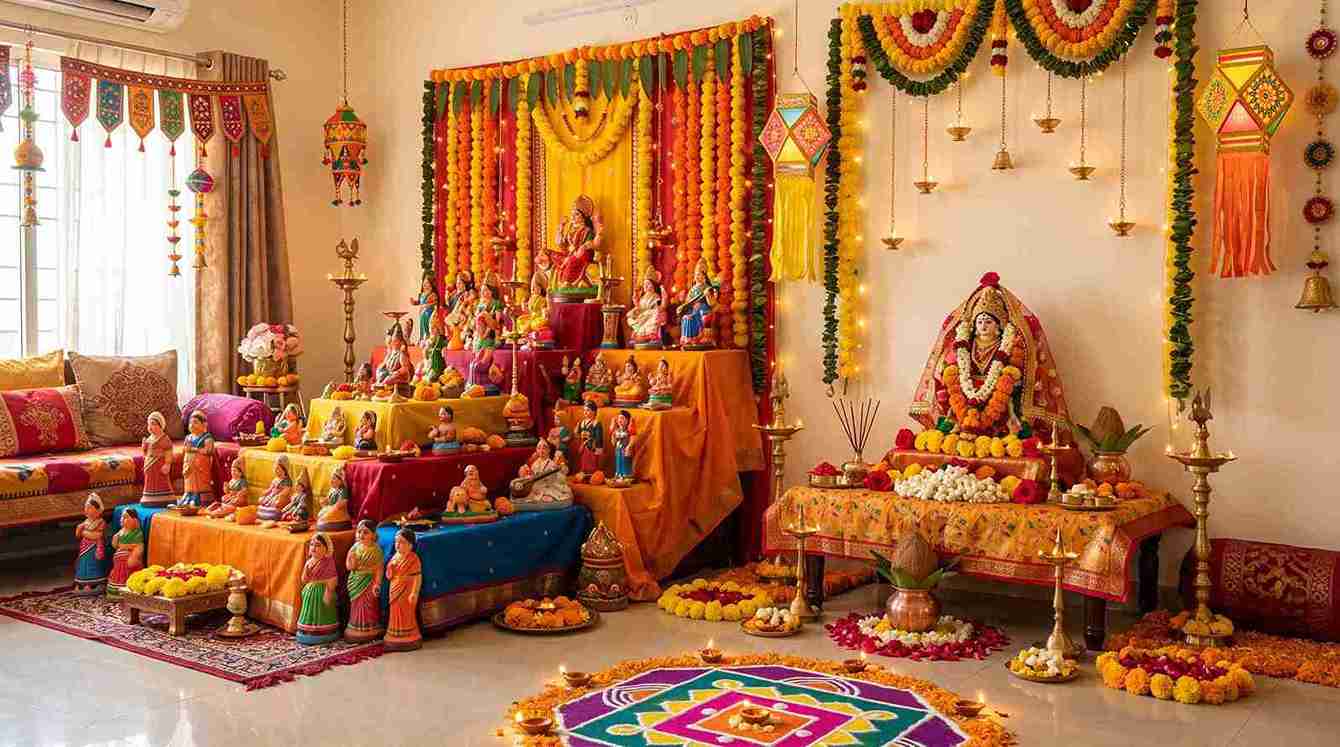
Replace plain walls behind your altar with rich, tactile backdrops. A silk saree in royal blue, deep red, or mustard yellow can be draped vertically behind the wooden or marble mandir. Alternatively, eco-friendly marigold walls made from strung fresh flowers or premium artificial fabric flowers create instant depth and sacred warmth. Brass or cane wall hangings positioned symmetrically on either side further frame the deity area.
Tiered Pedestals and Brass Accentware
Use raised wooden platforms (chowkis) or brass step stands to elevate idols and the Navratri Kalash. Covering these platforms with embroidered velvet or Bandhani cloths adds immediate texture. Flank the main altar with vintage brass urli bowls filled with fresh water, rose petals, and floating diyas. Incorporating heavy brass samai lamps or hanging brass bells enhances both the visual weight and spiritual authenticity of the sanctuary.
2. Festive Lighting Strategies: Diyas, Lanterns, and Ambient Glow
Lighting defines the evening mood during Navratri. Relying solely on harsh overhead fixtures dampens the festive warmth. Instead, implement a multi-layered lighting setup combining traditional fire elements with safe, modern accents.
Terracotta Diyas and Floating Candles
Hand-painted terracotta diyas remain an unmatched traditional element. Line your entrance steps, balcony railings, and interior window sills with oil diyas lit in the evening. For indoor coffee tables and dining consoles, opt for wide clay or brass urlis filled with water, floating tealights, and vibrant marigold buds. This adds dynamic light reflection across polished surfaces.
Warm LED Strips, Lanterns, and String Lights
To keep your home illuminated safely throughout the day and late night, layer warm white (2700K) LED string lights around doorways, curtains, and mandir backdrops. Moroccan or Indian-style cut-metal lanterns hanging in balcony corners or entrance lobbies cast intricate shadow patterns on plain walls, adding instant architectural interest without requiring permanent alterations.
3. Entrance & Foyer Decor: Torans, Rangolis, and Floral Welcomes
Your home’s entrance sets the energy for guests and family alike. Traditional Indian hospitality emphasizes inviting positive energy at the threshold.
Handcrafted Torans and Door Garlands
Hang fresh mango leaf and marigold torans (door hangings) across the main entrance doorframe. Mango leaves are prized for their auspicious nature and long-lasting freshness, while vibrant orange marigolds offer visual contrast. For a contemporary look, opt for handcrafted macramé or mirror-work (shisha) door borders that complement modern wooden doors.
Organic Rangoli Artistry
A well-crafted rangoli at the doorstep invites auspiciousness. You can choose between traditional powder rangoli using organic herbal colors or floral rangolis made entirely from fresh flower petals (marigold, rose, jasmine, and chrysanthemum). Geometric patterns, lotus motifs, or traditional footprints of Goddess Lakshmi add deep symbolism. If space is limited, place a raised wooden rangoli plaque or stencil art near the door matrix.
4. Textile & Seating Styling: Layering Bandhani, Silk, and Plush Cushions
Soft furnishings allow you to overhaul your interior aesthetic rapidly without replacing structural furniture. Navratri styling thrives on bright, rich, and festive textiles.
Floor Seating (Baithak) Setup
Navratri gatherings often involve long evenings of music, prayer, and conversation. Create an inviting floor seating arrangement (traditional baithak) in your living room by layering a thick dhurrie or oriental rug with a firm mattress. Cover the mattress with a vibrant cotton or silk bedsheet and stack a mix of bolster pillows and cushion covers featuring Gota Patti, mirror work, or traditional Kantha embroidery.
Drapery and Throw Swaps
Swap out muted everyday linen curtains for sheer dupattas or silk drapes in shades like saffron, fuschia pink, emerald green, and royal blue. Drape vintage sari fabrics over plain sofas as decorative throws. The subtle sheen of silk under warm lamps instantly elevates the overall festivity of the room.
5. Eco-Friendly & DIY Navratri Decoration Projects
Sustainable home decor is both cost-effective and environmentally conscious. DIY projects allow family members to collaborate while personalizing festive spaces.
Upcycled Fabric Backdrops and Wall Art
Instead of purchasing plastic decorative sheets, upcycle old silk sarees, dupattas, or block-printed cotton fabrics. Stretch these fabrics over lightweight wooden embroidery hoops of varying sizes and hang them as a collage on accent walls or behind the puja altar. You can also glue small craft mirrors (shisha) along fabric borders for added radiance.
Hand-Painted Clay Pots (Garbas)
The clay pot (Garba) symbolizes life and divinity during Navratri. Purchase plain terracotta pots from local artisans and paint them using acrylic colors in bright shades like turquoise, yellow, and red. Decorate the outer surface with mirror cutouts, pearls, or metallic gold paint lines. Insert a small LED tealight inside to create an authentic glowing center point for your living room floor display.
Navratri Decor Themes & Styles Comparison
Selecting the right theme depends on your available time, overall interior architecture, and budget considerations. Below is a structured analysis of four popular Navratri decor styles:
| Decor Theme | Primary Materials Used | Estimated Setup Time | Budget Range | Best Suited For |
|---|---|---|---|---|
| Traditional Royal Indian | Brushed Brass, Marigolds, Silk Fabrics, Terracotta Diyas | 3 – 4 Hours | Moderate to High | Classic homes, spacious mandirs, family gatherings |
| Modern Minimalist Festive | Warm LED Lights, Glass Urlis, Single-color Florals, Metallic Accents | 1 – 2 Hours | Low to Moderate | Urban apartments, busy working professionals |
| Boho-Ethic Fusion | Macramé Torans, Jute Rugs, Block-print Cushions, Cane Lanterns | 2 – 3 Hours | Moderate | Contemporary interiors, creative young households |
| 100% Eco-Friendly DIY | Hand-painted Clay Pots, Paper Garlands, Fresh Mango Leaves, Organic Powders | 2 – 4 Hours | Budget-Friendly | Families with children, eco-conscious homeowners |
Step-by-Step Practical Implementation: The 9-Day Navratri Styling Guide
Maintaining a fresh look across all nine days can feel overwhelming. Following a structured schedule allows you to adapt your home’s decor progressively without starting from scratch every morning.
Pro Tip: Focus on daily accent swaps such as cushion covers, flower choices, and rangoli motifs while keeping the core backdrop and lighting structures static throughout the nine days.
Days 1 to 3: Establishing the Base & Warm Earth Tones
- Preparation: Deep clean the entire house, focusing on the entrance, mandir, and main living areas.
- Backdrop Setup: Install your primary fabric or floral backdrop behind the mandir. Hang door torans.
- Color Focus: Use shades like Yellow, Green, and Grey. Incorporate fresh marigolds and brass urlis filled with water and floating candles.
Days 4 to 6: Introducing Mid-Festival Vibrant Layers
- Textile Refresh: Swap basic cushion covers for richer Bandhani, Gota Patti, or mirror-work textiles.
- Floral Maintenance: Replace faded fresh flowers with fresh white jasmine and red roses. Clean and polish brass lamps to remove oil buildup.
- Color Focus: Transition into bright Orange, White, and Royal Blue accents across table runners and seating throws.
Days 7 to 9: Maximum Radiance for Durga Ashtami & Navami
- Lighting Expansion: Increase ambient lighting by adding extra terracotta diyas along balconies and floor perimeters.
- Detailed Rangolis: Expand your entrance floral or powder rangoli into larger, more intricate mandala patterns.
- Color Focus: Highlight Pink, Purple, and Red tones, symbolic of power, celebration, and spiritual fulfillment.
Frequently Asked Questions About Navratri Home Decoration
How can I decorate my home for Navratri on a tight budget?
You can achieve a striking festive look on a budget by leveraging existing household textiles and natural elements. Upcycle old bright sarees as wall drapes or table runners, hand-paint affordable terracotta diyas, and use fresh mango leaves combined with marigold flowers for long-lasting, inexpensive doorway decorations. DIY paper flowers and clay garba pots are also cost-effective options.
Which flowers last longest for 9 days of Navratri decor?
Marigolds (both orange and yellow) are extremely durable and can stay fresh for 2 to 3 days without water. Chrysanthemums and orchids also hold up remarkably well in indoor environments. For urlis and open bowls, floating flower petals (like roses and lotus) should be replaced every 24 to 48 hours, while keeping green foliage like mango or ashoka leaves attached to torans fresh for up to 5 days.
How do I safely manage diyas and open flames around home fabrics?
Always place traditional oil diyas on stable, non-flammable surfaces such as brass trays, stone counters, or ceramic tiles, well away from flowing curtains, wooden furniture, or floor drapes. Never leave burning cotton-wick oil lamps unattended. For areas with high foot traffic or near fabric backdrops, substitute open flames with warm battery-operated LED candles or glass-enclosed tealight holders.
What are eco-friendly alternatives for Navratri backdrop decoration?
Instead of single-use plastic flowers or vinyl banners, use pure cotton, linen, or silk drapes, wooden lattice screens (jaalis), cane mats, and real botanical garlands. You can also build origami paper backdrops or craft hanging bells from recycled cardboard and jute twine, ensuring all materials are biodegradable or reusable for future celebrations.
Final Verdict: Achieving Festive Balance in Modern Homes
Successfully applying navratri decoration ideas at home is about creating an environment that feels spiritually authentic, visually warm, and comfortable for your daily lifestyle. By blending timeless Indian elements such as polished brassware, vibrant marigolds, and sacred diyas with structured modern interior touches like layered warm lighting and curated textiles, your home becomes a welcoming sanctuary during these nine blessed nights.
Focus on maintaining clean sightlines, keeping high-traffic paths clear, and choosing a cohesive decor theme that resonates with your personal style. With small progressive daily updates, your living space will maintain its vibrant energy and festive charm throughout the entire duration of Navratri.