11 Gothic Decor Home Ideas for a Dark, Elegant Space
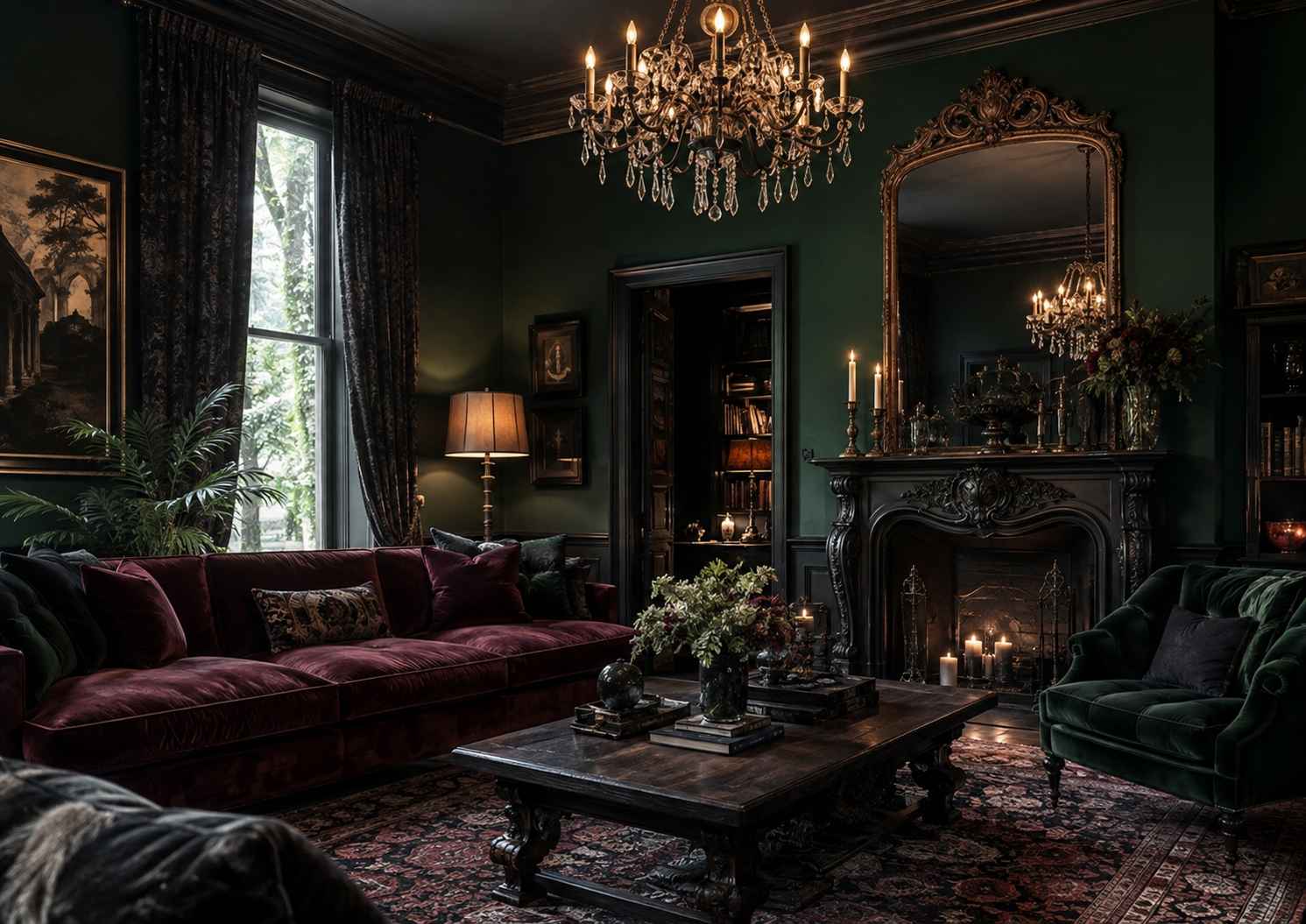
11 Gothic decor home doesn’t have to look like a movie set, and it definitely doesn’t need plastic bats hanging from every corner. The best Gothic-decor home style feels collected, dramatic, and slightly mysterious—but is still comfortable enough for everyday life.
The look borrows from medieval Gothic architecture and later Gothic Revival interiors, where pointed arches, carved wood, stained glass, rich fabrics, and detailed ornament were common. Modern homes use those ideas more softly. A dark wall here. An antique mirror there. Maybe a velvet chair that looks like it has a story.
And honestly, that’s where the charm begins.
What Is the Gothic Decor Home Style?
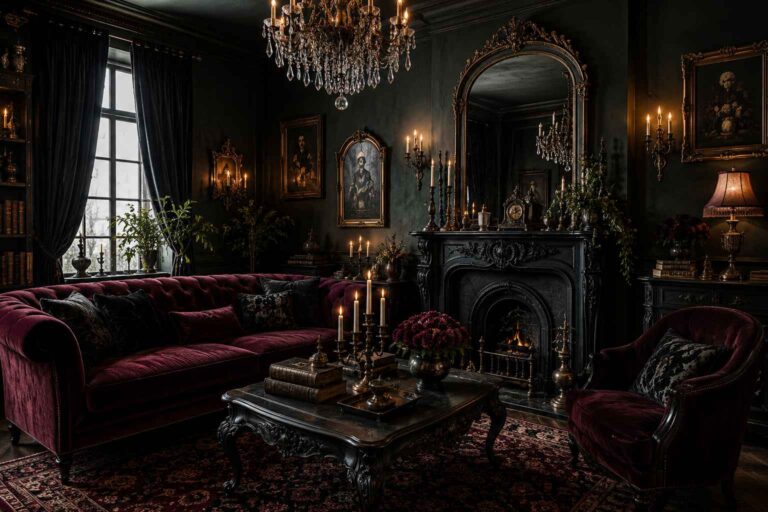
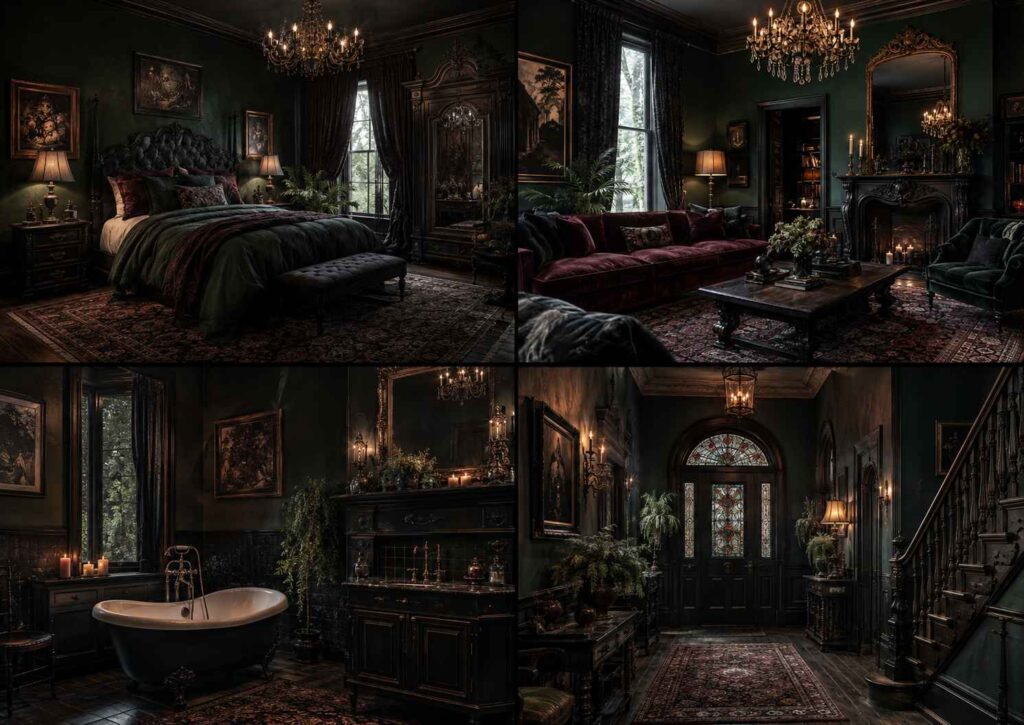
Gothic decor home design is a dark, romantic style built around moody colors, vintage shapes, architectural details, and layered textures. It may include Victorian furniture, wrought iron, candle-style lighting, dramatic artwork, old books, dark florals, and cathedral-inspired forms.
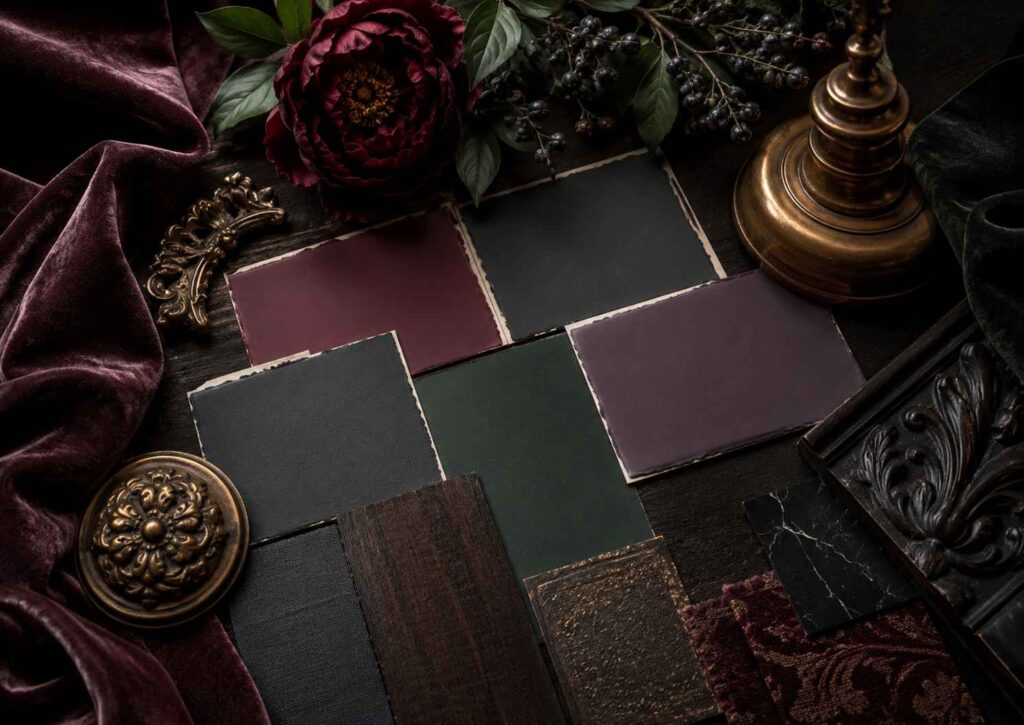
Black is common, but it shouldn’t be the only color. Burgundy, forest green, plum, navy, charcoal, brown, and aged gold make a room feel richer and more welcoming. Velvet, jacquard, stained glass, ornate moldings, and vintage furniture can create the look without turning the space into temporary Halloween décor. or Home Style at a Glance
| Element | Good Choices | Avoid |
|---|---|---|
| Color | Charcoal, burgundy, green, plum | Flat black everywhere |
| Furniture | Carved wood, velvet, vintage pieces | Matching novelty sets |
| Lighting | Chandeliers, sconces, warm lamps | Harsh white bulbs |
| Textiles | Velvet, lace, brocade | Too many patterns |
| Accessories | Mirrors, candles, books | Random clutter |
1. Begin With a Moody Color Palette
Paint is the quickest way to change a room. For a gothic decor home makeover, try charcoal, blackened green, oxblood, aubergine, or midnight blue.
But don’t rush into painting every surface black.
In a small or dim space, one feature wall may work better. Keep the ceiling warm white, soft beige, or muted blush. Jewel tones add richness without making the room gloomy, especially when they’re balanced with natural wood and aged metal.
A room with burgundy walls, dark brown furniture, and antique brass details can feel just as gothic as an all-black interior. Maybe even more elegant. Rich jewel tones are also being used in contemporary dramatic interiors to add depth without losing personality. One Statement Furniture Piece
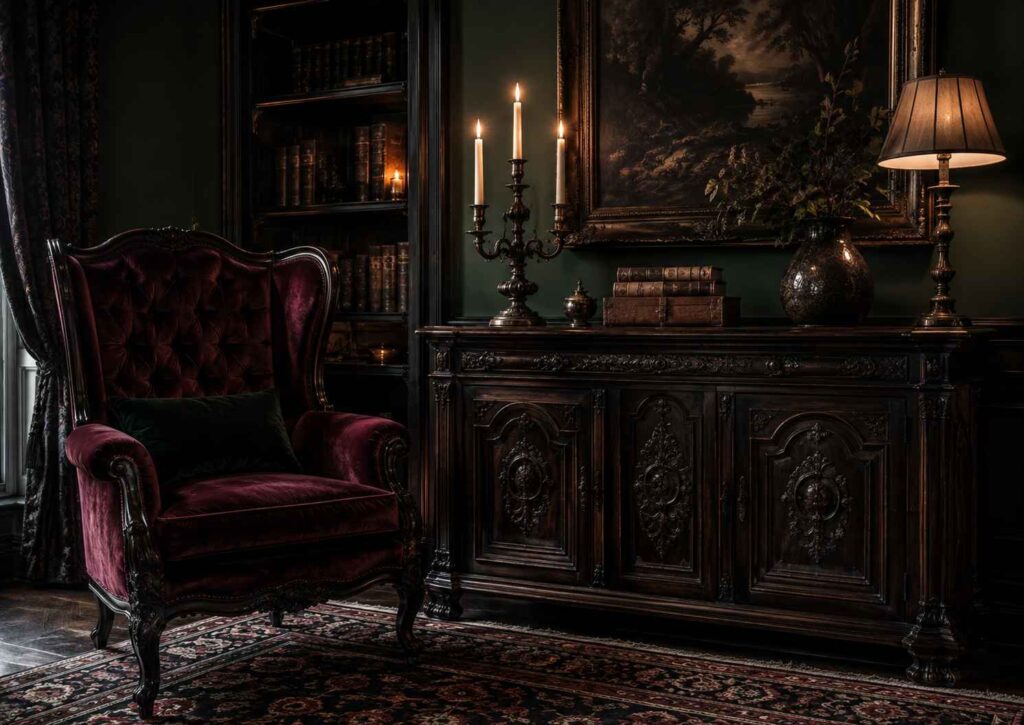
You don’t need a matching furniture set. It often looks more believable when the pieces aren’t perfectly coordinated.
Start with one item:
- A high-back velvet chair
- A carved wooden sideboard
- A wrought-iron bed
- A dark leather sofa
- An antique-style writing desk
Let that piece lead the room, then add simpler furniture around it. A gothic decor home should feel layered—not crowded just for drama.
Thrift shops, estate sales, vintage markets, and even online resale platforms can be useful places to find furniture with character. A few scratches or worn edges aren’t always a problem either. They can make the piece feel older and more authentic.
3. Layer Velvet, Lace, and Heavy Fabrics
Texture matters almost as much as color. Velvet curtains, a brocade cushion, lace panels, and a thick rug soften dark surfaces.
And warmth matters here.
Mix two or three textures rather than covering everything in velvet. Pair a velvet sofa with linen cushions, a distressed wooden table, and one lace-trimmed lampshade. Slightly imperfect. Much more interesting.
Heavy curtains also help create that enclosed, romantic atmosphere associated with Gothic and Victorian-style rooms. But in a small home, keep them slightly away from the window during the day so natural light can still enter.
4. Add Gothic Architectural Shapes
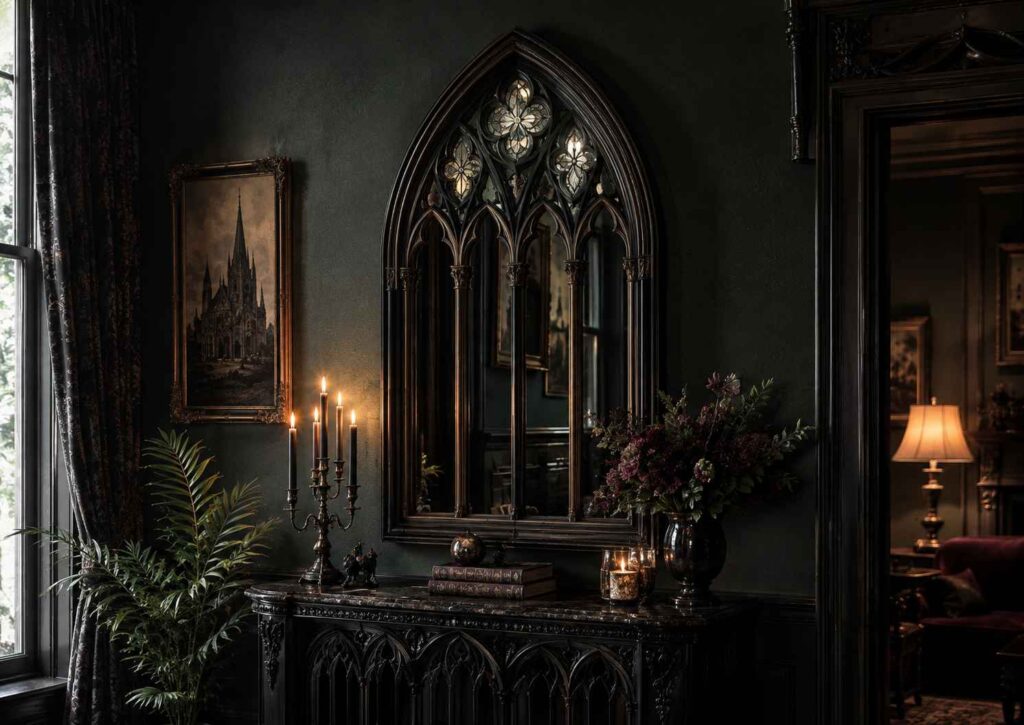
Pointed arches are among the most recognizable features of historic Gothic architecture, along with stained glass and decorative tracery. Those shapes are even in a plain modern home.
Try:
- Cathedral-shaped mirrors
- Arched wall shelves
- Tall pointed picture frames
- Carved wooden room dividers
- Gothic-style cabinet doors
- Removable wall molding
One cathedral mirror above a console can create more impact than ten small, themed objects. It gives the room a clear focal point—and doesn’t take up much floor space.
5. Make the Lighting Soft and Dramatic
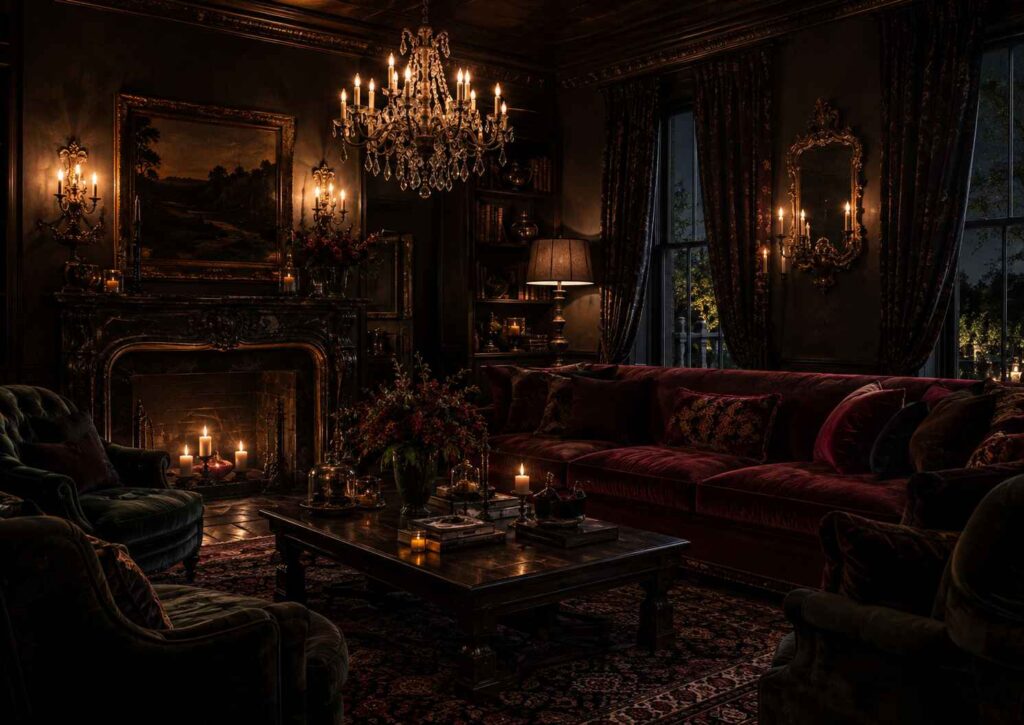
Bright white bulbs flatten texture and remove the mystery. Warm bulbs, lamps, sconces, and shaded fixtures create softer pools of light.
For a gothic decor home living room, use one chandelier with two smaller lamps placed at different heights. In the bedroom, candle-style sconces or a fringed vintage lamp can feel romantic without becoming theatrical.
Flameless candles are practical for bookshelves, bedrooms, and homes with pets. Place them inside dark metal lanterns or glass candleholders for a more finished look.
And don’t forget shadows. Gothic rooms are supposed to have a little depth. Not every corner needs to be brightly lit.
6. Create a Dark Gallery Wall
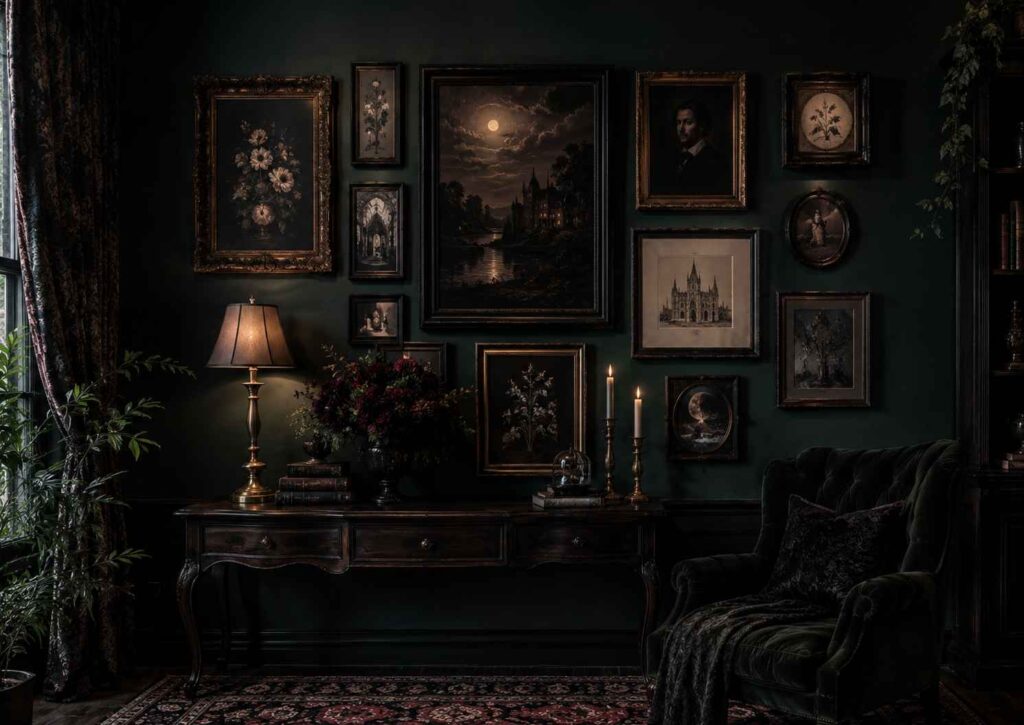
Mix vintage portraits, botanical drawings, old maps, moon illustrations, architectural sketches, and dark romantic art. Use black, tarnished gold, dark wood, and antique silver frames.
They don’t need to match.
In fact, slightly mismatched frames usually make a gallery wall look more collected and personal. Begin with one larger artwork in the center, then arrange smaller frames around it.
For more general wall styling and decorating inspiration, explore these home decor ideas from TheHomeTrotters.
7. Balance Old Pieces With Modern Ones
A room filled only with reproduction antiques may feel heavy. One filled only with novel gothic products can feel costume-like.
The answer is somewhere in the middle.
Hang an old carved mirror above a clean modern console. Add a simple sofa, then style it with dark floral cushions and a velvet throw. Architectural Digest recommends choosing a smaller number of well-made, unusual pieces instead of filling the room with obvious spooky clutter—especially in apartments. also makes a gothic decor home easier to update later. You can change cushions, art, or lighting without replacing every piece of furniture.
8. Bring in Dark Florals and Natural Details
Gothic interiors aren’t only skulls and candles. Flowers, branches, vines, and botanical art add softness.
Try deep red roses, dried eucalyptus, burgundy dahlias, dark calla lilies, or twisted branches in an aged vase. Plants with darker leaves work too.
And yes, faux flowers are fine… just choose realistic ones.
A dark floral wallpaper can also work beautifully behind a bed, dining table, or powder-room vanity. Keep the surrounding furniture fairly simple so the pattern doesn’t compete with everything else.
9. Give Each Room a Different Mood
The whole house doesn’t need the same level of darkness.
| Room | Easy Gothic Update |
|---|---|
| Living room | Feature wall, antique mirror, velvet cushions |
| Bedroom | Iron bed, heavy curtains, moody bedding |
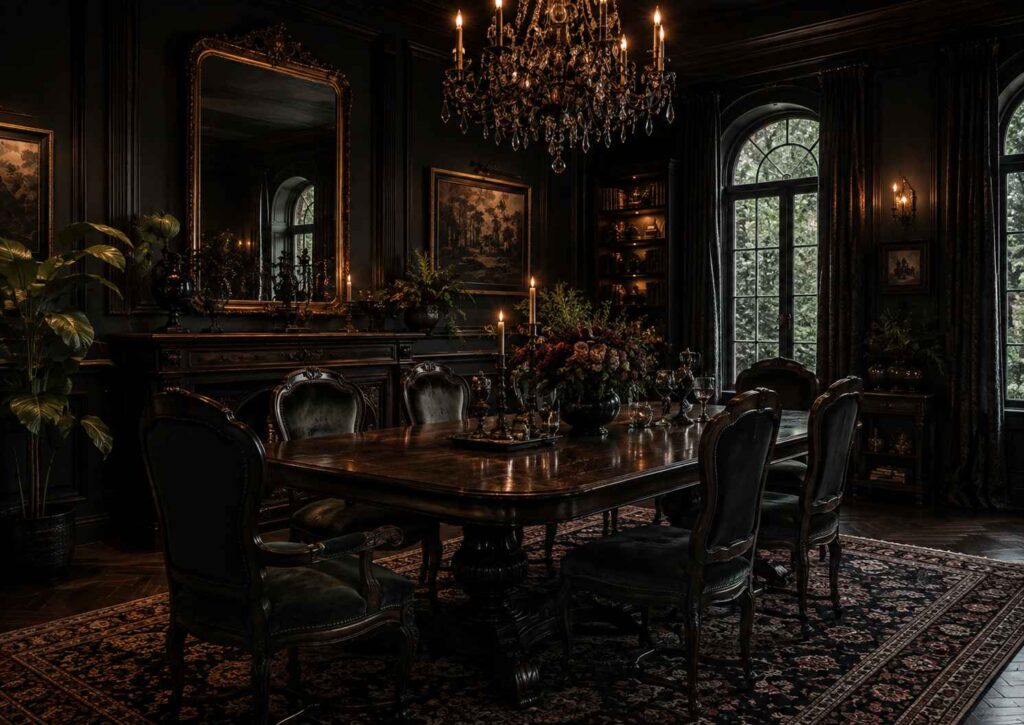
| Dining room | Candle chandelier, dark wood, vintage glass |
| Bathroom | Black mirror, brass fixtures, dramatic wallpaper |
| Entryway | Cathedral mirror, console table, framed art |
This room-by-room approach makes gothic decor home styling easier—and less expensive.
You might keep the living room soft and modern, then create a stronger gothic look in the bedroom or reading corner. There’s no rule saying every room must match exactly.
10. Mix Cultural Details Thoughtfully
Carved wood, metal lanterns, embroidered textiles, handmade pottery, and traditional patterns can add warmth and history.
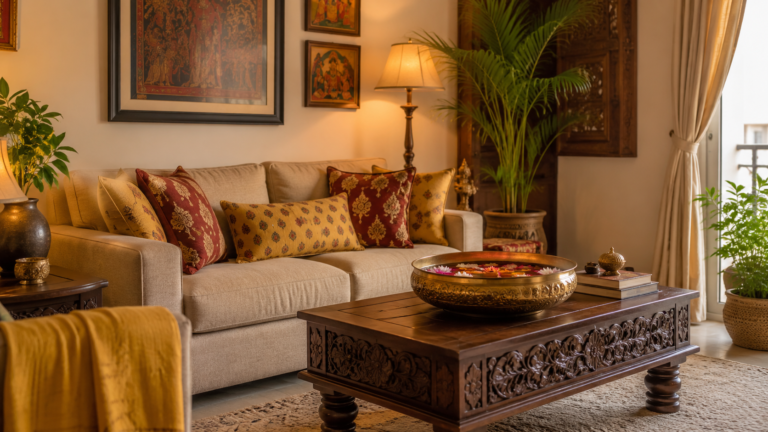
For more richly layered inspiration, visit this guide to Indian home decor. Indian interiors often use carved furniture, handcrafted metalwork, deep colors, and layered textiles, which can blend beautifully with gothic styling without making the two styles identical.
The key is thoughtful mixing. Choose pieces because you appreciate their craftsmanship and meaning—not simply because they look old or unusual.
11. Keep the Final Look Personal
The most convincing gothic decor home isn’t copied from one Pinterest photo. It has books you actually read, artwork you genuinely like, travel finds, inherited objects, and maybe one strange little piece nobody else understands.
That’s good. Keep it.
A gothic decor home works best when it grows slowly. Start with one room and build from there.
Dark paint and dramatic furniture get attention, but smaller layers make the space feel like yours. A worn frame. A warm lamp. A secondhand chair. Some corners polished, others slightly unfinished…
That’s often what makes a home feel alive.
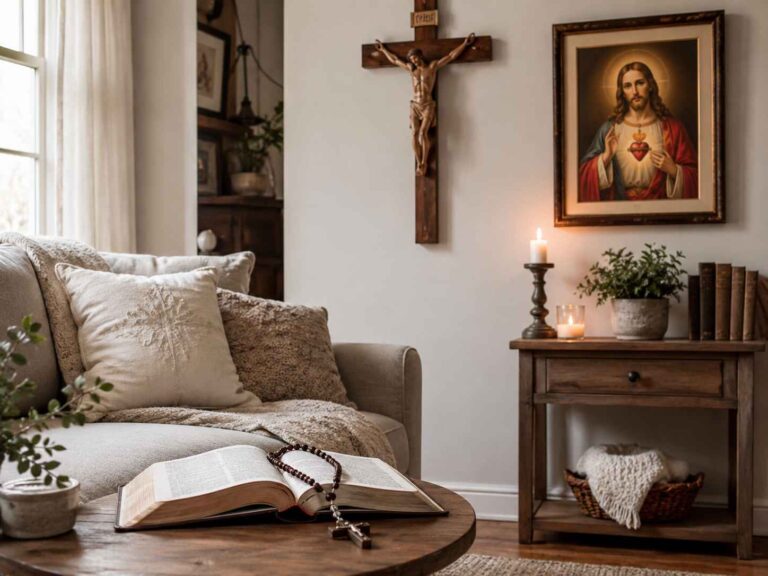
Religious artwork, antique crucifixes, and meaningful devotional pieces can also work beautifully in darker interiors. If faith-based styling is part of your home, these Catholic home decor ideas can help you blend sacred pieces with everyday décor without making the space feel crowded.
Frequently Asked Questions
Is gothic home decor always black?
No. Burgundy, plum, navy, forest green, charcoal, brown, and aged gold can create the same dark, elegant mood. Black can be used as an accent rather than the main color.
How can I create a gothic decor home on a budget?
Begin with paint, thrifted frames, secondhand furniture, dark cushion covers, candles, and DIY artwork. One strong feature usually works better than many cheap accessories.
Can gothic decor work in a small home?
Yes. Use one dark wall, mirrors, layered lighting, and a few carefully selected pieces. Keep surfaces fairly clear so the room doesn’t feel tight or overcrowded.
What is modern gothic decor?
Modern gothic decor combines dramatic colors, medieval or vintage-inspired details, and rich textures with cleaner furniture, practical layouts, and less clutter.
How do I stop gothic decor from looking like Halloween?
Use lasting materials such as wood, velvet, metal, glass, framed art, and quality lighting. Limit novelty items and focus more on shape, texture, color, and craftsmanship.